Mozambican President
Filipe Nyusi on Sunday announced that he will formally invite Afonso Dhlakama,
leader of the country’s main opposition party, the former rebel movement
Renamo, to a meeting intended to seek effective peace in the country.Nyusi made
the announcement during a service in central Maputo of the Brazilian
Pentecostal sect, the Universal Church of the Kingdom of God (IURD), in
response to request from an IURD pastor.“Here I have been asked to pay more
attention to the peace dossier”, said Nyusi. “I accept, because this is a
promise I have already made. And I tell you that tomorrow (Monday) I shall
issue a formal invitation to the Renamo leader so that we can talk”. “Our
differences and our ideas are less important than the interests of the people”,
he added. “They people want peace and tranquility. This I will do. The people
is not on one side. It is on all sides. The people also include those who
follow the President of Renamo. And let these two people, all of them, join
together and form the Mozambican people, who want peace and who want growth”. Nyusi
said that peace is a condition and a means to guarantee, political, social and
economic stability. “With peace and in peace, the energies of peoples are
channeled towards promoting the development that will lead them to spiritual
and material well-being”, the President said. “With peace, each Mozambican
citizen will concentrate on satisfying his individual and collective needs,
without fears of any kind”. He believed that, with peace, all Mozambicans will
be concerned to do more and better for the success of Mozambique as a nation
and for the welfare of its people. Spiritual well-being, he insisted, must be
accompanied with material well-being, which is only achieved through work and
dedication. He urged the IURD to continue with its “excellent work” , and to go
on contributing “to the consolidation of peace in Mozambique and throughout the
world”. Nyusi said he is well aware that Mozambique is a lay state, resting on
a separation between the state and religions. Nonetheless, he said there is a
sound and healthy relationship between the state and religious bodies, who have
been the government’s partner in implementing public policies, particularly in
the social area. Since he took office in January, Nyusi has met twice with
Dhlakama. Both occasions were in February, and Nyusi succeeded in persuading
Dhlakama to end the Renamo boycott of the country’s parliament, the Assembly of
the Republic.Since then, Dhlakama has not set foot in Maputo, Instead he has
repeatedly toured northern and central Mozambique, often threatening to “take
by force” the six provinces he claims Renamo should rule.
Tuesday, August 25, 2015

Monday, August 24, 2015
ATTACK POLICE IN TETE
 Armed men, believed to be members of the illegal militia of
the former rebel movement Renamo, on Saturday mounted five ambushes against a
unit of the Mozambican police in Moatize district, in the western province of
Tete.The gunmen were able to attack repeatedly because along the road they
placed 12 barricades made of tree trunks, at intervals of one and a half kilometers.
The ambushes occurred at about 09.00 when the police unit was travelling to the
area of Monjo, to relieve the policemen stationed there.The spokesperson for
the Tete provincial police command, Deolinda Matsinhe, cited by Radio
Mozambique on Sunday, said the policemen came under attack in the locality of
Ndande when they left their vehicles in order to remove the obstacles. In the
exchanges of fire no members of the police unit were killed or injured.
Matsinhe said she did not know whether the Renamo gunmen had suffered any
casualties.She said one of the attacks occurred in an inhabited area and, with
many people in the vicinity, “it was difficult for our force to react, since
they ran the risk of hitting members of the public”. She said the police
managed to relieve the unit in Monjo, The unit that came under fire has
remained in the area “to guarantee public order, security and tranquility”.This
is the latest in a spate of Renamo attacks against police units in Moatize and
the neighbouring district of Tsangano. Such attacks are flagrant violations of
the agreement on a cessation of military hostilities signed on 5 September last
year by the then President, Armando Guebuza, and Renamo leader Afonso Dhlakama.
Armed men, believed to be members of the illegal militia of
the former rebel movement Renamo, on Saturday mounted five ambushes against a
unit of the Mozambican police in Moatize district, in the western province of
Tete.The gunmen were able to attack repeatedly because along the road they
placed 12 barricades made of tree trunks, at intervals of one and a half kilometers.
The ambushes occurred at about 09.00 when the police unit was travelling to the
area of Monjo, to relieve the policemen stationed there.The spokesperson for
the Tete provincial police command, Deolinda Matsinhe, cited by Radio
Mozambique on Sunday, said the policemen came under attack in the locality of
Ndande when they left their vehicles in order to remove the obstacles. In the
exchanges of fire no members of the police unit were killed or injured.
Matsinhe said she did not know whether the Renamo gunmen had suffered any
casualties.She said one of the attacks occurred in an inhabited area and, with
many people in the vicinity, “it was difficult for our force to react, since
they ran the risk of hitting members of the public”. She said the police
managed to relieve the unit in Monjo, The unit that came under fire has
remained in the area “to guarantee public order, security and tranquility”.This
is the latest in a spate of Renamo attacks against police units in Moatize and
the neighbouring district of Tsangano. Such attacks are flagrant violations of
the agreement on a cessation of military hostilities signed on 5 September last
year by the then President, Armando Guebuza, and Renamo leader Afonso Dhlakama.“BY FORCE”
A meeting of demobilized fighters from Mozambique’s former
rebel movement Renamo ended in the central city of Quelimane on Friday, with
renewed threats to take over “by force” six northern and central provinces.The
declaration from the meeting, read out by prominent Renamo parliamentarian
Carlos Manuel, and broadcast by the independent television station STV,
contained three decisions.One was to set up a new barracks for the Renamo
militia in Morrumbala district in Zambezia province. The second announced that
Renamo will set up its own police force, while the third reiterated Renamo’s
determination to take control of Manica, Sofala, Tete, Zambezia, Nampula and
Niassa provinces, by force if necessary.Renamo has been threatening to seize
the six provinces since April, but so far nothing at all has happened, despite
insistent claims by Renamo leader Afonso Dhlakama that “we shall govern this
year”.Dhlakama himself explained that the new police force would be based on
the veterans of Renamo’s war, but might also include new recruits. The Renamo
veterans were all demobilized in 1994, over two decades ago, and so could
hardly be described as young.Dhlakama did not explain how he intends to pay or
equip the Renamo police. Indeed, the sources of Renamo’s current funding have
never been explained. The allowance Renamo receives from the state budget by
virtue of its parliamentary group, is not enough to pay for Dhlakama’s constant
travels round the country, and for his existing militia, let alone for new
forces and new barracks.At the meeting Dhlakama handed over a cheque for five
million meticais (about 128,200 US dollars) for the Renamo demobilized. He
insisted that this was not money from Renamo but was a personal donation from
his own funds.
DHLAKAMA SUSPENDS DIALOGUE
Wednesday, August 19, 2015
RENAMO DEMANDS SHARE-OUT OF ECONOMIC POSITIONS
Mozambique’s main
opposition party, the former rebel movement Renamo, has demanded a share-out of
positions in companies owned by, or participated in by the state, just as it
had earlier demanded a share-out of senior military and police positions. The
demand came on Monday, at the 114th session of the apparently interminable
dialogue between government and Renamo delegations. The dialogue has now moved onto the fourth
and final point of its agenda, simply labelled “Economic Questions”. The
dialogue moved onto this point over a month ago, on 13 July, but only now has
Renamo submitted any proposal. The delay is extraordinary. For the entire
agenda for the dialogue was designed over two years ago by Renamo. Yet in July,
Renamo told the government delegation it had been “too busy” to draft specific
proposals.
Renamo had proposed
this point in April 2013. The dialogue was being held at Renamo’s request,
using an agenda drawn up by Renamo. Yet it seemed that Renamo threw in the
point about “economic questions” without having the faintest idea what it
wanted to discuss.
 On Monday, the
Renamo proposal finally took shape – and was entirely unacceptable to the
government. At the press conference following the talks, the head of the
government delegation, Agriculture Minister Jose Pacheco, told reporters that
Renamo had demanded “parity” in public companies.
On Monday, the
Renamo proposal finally took shape – and was entirely unacceptable to the
government. At the press conference following the talks, the head of the
government delegation, Agriculture Minister Jose Pacheco, told reporters that
Renamo had demanded “parity” in public companies.
The Renamo document
(which has not yet been made public) “clearly shows a desire to politicize
economic matters”, said Pacheco. Renamo wanted a share-out of economic
positions “between the parties represented in parliament, excluding other
Mozambicans”. The demand for a political division of positions in companies
owned by the state was in clear contradiction to Renamo’s own demand for a
separation between political parties and the state, Pacheco added. For his
part, the head of the Renamo delegation, parliamentary deputy Saimone Macuiana,
called for an “equitable division” of public resources. “The principle cannot
continue according to which only those who hold the red cards of the ruling
Frelimo Party can have access to resources”, he said. “Our proposal is that all
Mozambicans, particularly members of Renamo, should benefit from these
resources”. The delegations also
discussed implementation of last September’s agreement on the cessation of
military hostilities, but once again made no advance on the key issue of
disarming and demobilizing the Renamo militia. Renamo was using alleged attacks
by government forces against its men in Tete province as an excuse for further
delays.
“We still have no
way to integrate men of Renamo’s residual forces into the army and the police,
because Renamo insists that interventions are being made against its forces”,
said Pacheco.
As for the
declaration agreed to by both sides on 23 June on the separation of the state
from political parties, an impasse remains on what further steps should be
taken. Renamo wants the document presented as a fait accompli to the Mozambican
parliament, the Assembly of the Republic, which would be expected to
rubber-stamp it (which is what happened with the amendments to the electoral
legislation in February 2014). The government, however, retorts that, if Renamo
wants the document to be passed by the Assembly, then the Renamo parliamentary
group can present it. At the end of the Monday session, Renamo returned five
cars which the government had lent its delegation for use during the dialogue.
The government had demanded them back, and so Macuiana handed the keys over to
Pacheco. He did so under protest, but admitted “we can’t keep the cars when the
owner wants them back”. This was the first public reference to the fact that
the government has been assisting Renamo with transport, in addition to paying
an allowance to the members of the Renamo delegation for attending
meetings. The mediators in the dialogue
once again called on the outstanding military issues to be referred to a
meeting between President Filipe Nyusi and Renamo leader Afonso Dhakama. Speaking
for the mediators, prominent academic Lourenco do Rosario said that the two
delegations had shown they were quite incapable of reaching consensus on the
military issues. “It is our perception that no solution is going to emerge from
the dialogue table”, he said. “We cannot see any solution that we can suggest
to the two delegations to solve the military question”. So the only thing to do
was to kick the issue upstairs. “These questions should be remitted to higher
bodies”, said Rosario. “They are very sensitive matters and I can see no
solution, unless there is a clear mandate from the two leaders, Filipe Nyusi
and Afonso Dhlakama”. As for the final
agenda point, on economic questions, the mediators believed this should not be
debated merely between the government and Renamo, but by all of Mozambican
society.
“THOSE WHO INNOVATE WIN”
Mozambican Prime
Minister Carlos Agostinho do Rosario on Monday urged the publicly owned cell
phone company m-Cel (Mocambique Celular) to improve its investment and
marketing strategies, in order to face the highly competitive environment in
the mobile telephony market.Rosario issued this warning while making what he
described as a “routine visit” to the m-Cel headquarters in Maputo, through
which the government hoped to understand the operations of the company that was
the pioneer in this field.The Prime Minister also urged m-Cel to invest in
technological modernisation. “In competition, those who innovate the most win
and those who don’t innovate lose”, he said. “Those who have the most highly
motivated staff win, and those who don’t have them lose. Those who promote
investment win, and those who do not, lose”.After meeting with the top m-Cel
management, the Minister of Transport and Communications, Carlos Mesquita, who
was accompanying Rosario, declared “this operator has enormous challenges ahead
of it. These are challenges which must be faced seriously in order for the
company to follow developments and compete”. Mesquita noted there had been “a
slight delay in the investment programme in the last three years. Things must
be speeded up. The company must also take into account human development from
the career structures to technological conditions”.
CONTAMINATED CHICKENS INCINERATED
 The Mozambican
customs service on Monday destroyed four tonnes of frozen chickens that had
entered the country illegally and were found to be unfit for consumption. There
were 3,990 chickens, each weighing 1.1 kilos, packed into 399 boxes. Customs
seized them in Namaacha district, near the border with Swaziland, about three
weeks ago, according to a report in Tuesday’s issue of the independent
newssheet “Mediafax”. The chickens had come from Swaziland, but had apparently
evaded the official border crossing and had been smuggled into the country.
When the smugglers found they were being pursued by an armed customs unit, they
abandoned the truck and fled into the bush. Nonetheless, Customs was able to
identify the owner of the merchandise, and sent him a summons, which he has so
far ignored.Tests on the chickens, undertaken in laboratories of the Ministry
of Agriculture, showed that they contained a high level of dangerous bacteria,
and thus were unfit for consumption. Customs believed it had no option but to
incinerate the chickens.The chickens had a customs value of 403,700 meticais
(about 10.600 US dollars), and should have paid around 163,000 meticais in
customs duties. The importer of this illicit merchandise will be liable to pay
a heavy fine, and the Customs Tribunal could even sentence him to a prison
term.
The Mozambican
customs service on Monday destroyed four tonnes of frozen chickens that had
entered the country illegally and were found to be unfit for consumption. There
were 3,990 chickens, each weighing 1.1 kilos, packed into 399 boxes. Customs
seized them in Namaacha district, near the border with Swaziland, about three
weeks ago, according to a report in Tuesday’s issue of the independent
newssheet “Mediafax”. The chickens had come from Swaziland, but had apparently
evaded the official border crossing and had been smuggled into the country.
When the smugglers found they were being pursued by an armed customs unit, they
abandoned the truck and fled into the bush. Nonetheless, Customs was able to
identify the owner of the merchandise, and sent him a summons, which he has so
far ignored.Tests on the chickens, undertaken in laboratories of the Ministry
of Agriculture, showed that they contained a high level of dangerous bacteria,
and thus were unfit for consumption. Customs believed it had no option but to
incinerate the chickens.The chickens had a customs value of 403,700 meticais
(about 10.600 US dollars), and should have paid around 163,000 meticais in
customs duties. The importer of this illicit merchandise will be liable to pay
a heavy fine, and the Customs Tribunal could even sentence him to a prison
term.RELIGIOUS LEADERS TO FIGHT AGAINST CHILD MARRIAGE
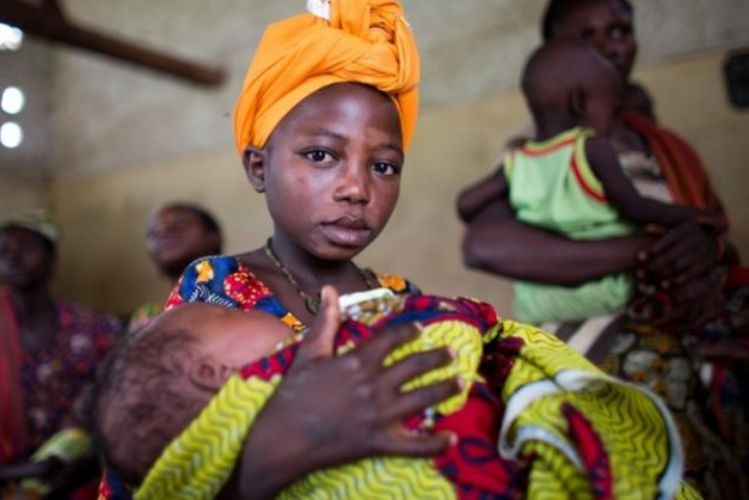 Mozambican religious
leaders say they are ready to work on reducing the level of child marriage in
the country.Speaking at a Maputo press conference on Tuesday, Bernardo
Ndimande, chairperson of the Inter-Religious Alliance for Advocacy and Social
Development (AIRDES), said 120 religious leaders are expected to attend the
first forum on child marriage due to be held in the southern city of Matola on
26-27 August. The Forum will draw up a declaration formalising the commitment
of the various religious denominations to the fight against child marriage.
Ndimande said the hope was that religious bodies will actively spread the
message among society persuading parents to prevent their daughters from
marrying while they are still children. Mozambique
has one of the highest rates of child marriage in the world, and this is
regarded as one of the main reasons for girls dropping out of school. A report
from the United Nations Children’s Fund (UNICEF) last year said that 48 per
cent of girls in Mozambique marry before their 18th birthday, and a shocking 18
per cent marry before they are 15 years old.Child marriage leads to pregnancy
at an early age, with all the risks this entails for the life and health of the
mother and her baby .Ndimande believed
that mobilising religious leaders against child marriage could have a major
impact. “The role of the religious leaders in this action is of fundamental
importance because a religious leader is always in contact with society”, he
claimed. “In these contacts, he can leave messages, and appeal to the community
against child marriage”. He wanted to
see a tougher line from the country’s parliament the Assembly of the Republic
in drawing up the legal framework to fight against child marriage. “All actions
in the fight against premature marriage should have a uniform approach”, he
said, “and if the Assembly were to draw up a law in their regard, that would be
of added value”.
Mozambican religious
leaders say they are ready to work on reducing the level of child marriage in
the country.Speaking at a Maputo press conference on Tuesday, Bernardo
Ndimande, chairperson of the Inter-Religious Alliance for Advocacy and Social
Development (AIRDES), said 120 religious leaders are expected to attend the
first forum on child marriage due to be held in the southern city of Matola on
26-27 August. The Forum will draw up a declaration formalising the commitment
of the various religious denominations to the fight against child marriage.
Ndimande said the hope was that religious bodies will actively spread the
message among society persuading parents to prevent their daughters from
marrying while they are still children. Mozambique
has one of the highest rates of child marriage in the world, and this is
regarded as one of the main reasons for girls dropping out of school. A report
from the United Nations Children’s Fund (UNICEF) last year said that 48 per
cent of girls in Mozambique marry before their 18th birthday, and a shocking 18
per cent marry before they are 15 years old.Child marriage leads to pregnancy
at an early age, with all the risks this entails for the life and health of the
mother and her baby .Ndimande believed
that mobilising religious leaders against child marriage could have a major
impact. “The role of the religious leaders in this action is of fundamental
importance because a religious leader is always in contact with society”, he
claimed. “In these contacts, he can leave messages, and appeal to the community
against child marriage”. He wanted to
see a tougher line from the country’s parliament the Assembly of the Republic
in drawing up the legal framework to fight against child marriage. “All actions
in the fight against premature marriage should have a uniform approach”, he
said, “and if the Assembly were to draw up a law in their regard, that would be
of added value”.MOZAMBIQUE ELECTED TO HEAD SADC SECURITY BODY
The heads of state
summit of the Southern African Development Community (SADC), meeting in
Gaberone on Monday, elected Mozambique to chair the SADC defence and security
body, generally referred to as the troika.The outcoming chairperson, South
Africa, remains a member of the troika, while the new, incoming member is
Tanzania.Botswanan president Ian Khama takes over the rotating presidency of
SADC from his Zimbabwean counterpart, Robert Mugabe. Swaziland becomes the
organization’s deputy chair – which means that Africa’s last absolute monarch,
King Mswati III, will head SADC in 2016-17. Handing over the chairmanship of
the troika to Mozambique, South African President Jacob Zuma said 'I am pleased
to report that we have developed a comprehensive counter-terrorism strategy, to
ensure our preparedness in confronting these threats facing the continent and
the world today. Similarly we are addressing other threats to our regional
stability such as the risks of natural disasters, poverty and
underdevelopment”.
 'As a region we have
committed ourselves to ensuring that our regional early warning system is
improved to ensure that it provides effective and efficient alerts to potential
areas of insecurity and instability', Zuma said.A key theme of the summit had
been the industrialization of southern Africa. Speaking to the reporters who
had accompanied him to Gaberone, Mozambican President Filipe Nyusi said “it
became clear at this meeting that implementing the SADC industrialization
programme implies raising more funds and recruiting human resources who can
carry out the task. The money can only come from production and from
contributions”. The report to the summit noted that while average world growth
last year was 3.4 per cent, the SADC region grew by five per cent.
'As a region we have
committed ourselves to ensuring that our regional early warning system is
improved to ensure that it provides effective and efficient alerts to potential
areas of insecurity and instability', Zuma said.A key theme of the summit had
been the industrialization of southern Africa. Speaking to the reporters who
had accompanied him to Gaberone, Mozambican President Filipe Nyusi said “it
became clear at this meeting that implementing the SADC industrialization
programme implies raising more funds and recruiting human resources who can
carry out the task. The money can only come from production and from
contributions”. The report to the summit noted that while average world growth
last year was 3.4 per cent, the SADC region grew by five per cent.
Inflation in the
region fell from 6.6 per cent in 2013 to 5.7 per cent in 2014, said Nyusi,
while the region’s indebtedness fell from 41.2 to 39.8 per cent of GDP.
The summit also
looked at food security in the region, concluding that 24 million people in
southern Africa are a risk of hunger, including 150,000 in Mozambique
Margaret Nyirenda,
head of SADC’s Food, Agriculture and Natural Resources Division, told the
summit that SADC is facing a deficit of about six million tonnes of grain, due
largely to the drought which hit parts of the region in the 2014-15 agricultural
year. Drought struck at Botswana,
Lesotho, Namibia, South Africa, Zimbabwe and southern Angola. Mozambique,
Malawi and Madagascar were also affected by floods. Nyusi said the summit also dicussed the
region’s growing shortage of electricity. “Southern Africa is facing a deficit
of about 8,000 megawatts of power”, he said, “which is required to make various
projects viable”. In Mozambique’s case,
the President said, the priorities were the coal fired power stations which are
on the drawing boards of several of the coal mining companies in Tete province,
and two new hydro-electric power stations on the Zambezi river. One of these is
a north bank power station at Cahora Bassa, complementing the existing power
station on the south bank. The second is the new dam and power station proposed
at Mpanda Nkua, some 60 kilometres downstream from Cahora Bassa. “Only with electricity can we make the SADC
industrialization programme viable in order to solve the problems of poverty”,
said Nyusi. “But money is needed for this, which can only come from work, from
taxes and from contributions”.
GOVERNMENT REVIVES ELECTRICITY PROJECTS UNIT
The Mozambican
government on Tuesday relieved Gildo Sibumbe of his responsibilities as
chairperson of the publicly-owned electricity company, EDM, and immediately
re-allocated him to a revived electricity Project Implementation Technical Unit
(UTIP). Speaking to reporters at the end of the weekly meting of the Council of
Ministers (Cabinet), the Minister of Mineral Resources and Energy, Pedro Couto,
said that a second former chairperson of EDM, Augusto de Sousa Fernando, will
also work at UTIP. UTIP’s task, Couto said, is to speed up investment projects
in electricity generation and transmission. He mentioned in particular the
planned “backbone” of the national electricity grid. This will be a new
transmission line from Tete province to Beira and Maputo. Talked about for
years, it has not so far gone beyond the stage of preliminary studies. Currently
power from the Cahora Bassa dam on the Zambezi flows directly from the dam town
of Songo to the Apollo sub-station in South Africa, since the South African
electricity company Eskom is the main client for Cahora Bassa power.
MOZAMBICAN GOVERNMENT MAKES TACHOGRAPHS MANDATORY
The Mozambican
government on Tuesday approved a decree obliging long distance bus and truck
drivers to spend no more than four hours uninterrupted at the wheel, in an attempt
to reduce the number of accidents on the country’s roads. Speaking to
reporters at the end of a meeting of the Council of Ministers (Cabinet), the
government spokesperson, Deputy Health Minister Mouzinho Saide, said “the
accidents with the greatest impact involve passenger transport vehicles and
trucks, mostly long distance vehicles. The drivers are subject to great
pressure, working for long hours without intervals for rest”. This led to greater
stress, and tired drivers were slower to react in the event of anything
unexpected, he added. To ensure
implementation of the decree, all long distance trucks and buses must be fitted
with a tachograph. This is a device that automatically records the speed of the
vehicle, the distance covered, and the time spent stationary, presumed to be
the driver’s rest periods. The tachograph will
allow the traffic police and the owners of the vehicles to check on the
driver’s activity, particularly whether the rest periods, and the maximum
period for uninterrupted driving are being respected. Tachographs are
mandatory in many countries, including the entire European Union and South
Africa. Modern trucks are manufactured with a tachograph already installed.
Older trucks in service on Mozambican roads must now have them installed. The use of the
tachograph becomes obligatory 180 days after the publication of the government
decree in the official gazette, the “Boletim da Republica”. That period provided
enough time for tachographs to become available on the Mozambican market, said
Saide.
DHLAKAMA DISPENSES WITH HIS POLICE ESCORT
Afonso Dhlakama, leader of Mozambique’s former
rebel movement, Renamo, declared on Monday that he no longer wishes to be
escorted by the police as he travels around the north and centre of the
country, reports the independent television station STV. Dhlakama was irritated when his police escort
left while he was addressing a rally in Chifunde district, in the western
province of Tete, last week. He accused the police of “abandoning” him, and
henceforth he could do without them. “I don’t need them any more”, Dhlakama said.
“Let (President Filipe) Nyusi keep his police, and his armed forces”. From now on, he would rely for protection
exclusively on Renamo’s own illegal militia. “I have my men. They are the
strongest in Mozambique”, he declared. The spokesperson for the General Command of
the police, Pedro Cossa, said the police had left Dhlakama in Chifunde, because
of “operational problems”, and this was not the first time the Renamo leader
had been left without a police escort. As for Dhlakama’s declaration that he was
dispensing with police escorts altogether, Cossa shrugged this off. As a
political leader, he said, Dhlakama “can take whatever decision he thinks
best”. Agriculture Minister Jose Pacheco, who heads
the government delegation in the long running dialogue between the government
and Renamo, told STV that Renamo had raised the question of Dhlakama’s police
escort as a “prior issue” at Monday’s dialogue session. Since Pacheco knew
nothing about the matter, all that he could tell the Renamo delegation was that
he would raise it with the police. Nonetheless, he thought it strange that Renao
should complain about the absence of the police, when Dhlakama had already made
his contempt for the police public knowledge, and had boasted, well before this
incident “that he has men who are capable of guaranteeing his protection”. Dhlakama also attacked Nyusi’s appointment of
the mayor of Beira, and leader of the opposition Mozambique Democratic
Movement(MDM), Daviz Simango, a member of the Council of State, a body that
advises the President, and urged Simango not to accept the position. Dhlakama claimed that Nyusi should not have
appointed someone who had run against him in last October’s presidential
elections. But under the Constitution, Nyusi can appoint any four people he
chooses to the Council, as long as they are of “recognized merit”. Dhlakama added that Simango should not accept
because the MDM, like Renamo, regarded last year’s elections as fraudulent.
However, the MDM has made it repeatedly clear that it jas no intention of
indulging in the politics of boycotting state institutions.Dhlakama himself is automatically a member of
the Council of State, since a place is reserved for the runner-up in the
presidential elections. Ever since the Council was set up, Dhlakama has been a
member, but he has never attended any meetings.
Sunday, August 16, 2015
Mozambican President...........
 .................Filipe Nyusi declared on Saturday
that the country’s school games should become permanent activities so that
young Mozambicans can occupy their necessary place in national sport, which is
clamouring for quality and competitiveness.Nyusi was speaking in Pemba, capital of the northern
province of Cabo Delgado, at the opening ceremony of the 12th Edition of the
School Games. This year, there are 1,347 athletes from schools in all 11
provinces, competing in football, volleyball, basketball, handball, gymnastics,
athletics, chess and traditional games.
.................Filipe Nyusi declared on Saturday
that the country’s school games should become permanent activities so that
young Mozambicans can occupy their necessary place in national sport, which is
clamouring for quality and competitiveness.Nyusi was speaking in Pemba, capital of the northern
province of Cabo Delgado, at the opening ceremony of the 12th Edition of the
School Games. This year, there are 1,347 athletes from schools in all 11
provinces, competing in football, volleyball, basketball, handball, gymnastics,
athletics, chess and traditional games.
Nyusi invited Mozambicans to invest in school sports,
since it was here that future word class athletes could be found.In the past there had been no follow-up to the school
games. “We have a duty to understand why our national teams, in almost all
sports, consist of athletes enlisted by chance, and are not the fruit of
consistent and systematic follow-up of talents”, he said.“From the first edition of the School Games in 1978,
the National Festivals of School Games are not just the display and climax of
our school sports, but show that we really do have youth who are capable of
offering the joy that Mozambicans always long for”, the President said.He argued that school sport should be a permanent
activity from primary school to university, and that the value chain from the
schools to the national sports federations must be cared for through investment
in coaches, infrastructures and equipment.Young Mozambicans, Nyusi added, should draw
inspirations from such stars as Chiquinho Conde in Football, Lurdes Mutola in
athletics, Clarisse Machnguana in basketball or Lucas Sinoia in boxing.
 He expressed his hope that from the Pemba games young
people would emerge who, in a few years time, would be wearing the colours of
the national team in various sports. For this to happen, those young athletes
needed to find the due attention and care from the government, from society and
from their own parents. He suggested that the organizers of the games, should,
in two or four years time, check on the progress of each of the student
athletes taking part.After the inaugural ceremony, the games began, opening
with a football match between Gaza and Cabo Delgado provinces. To the surprise
of the audience, the teams had a few extra players. Nyusi himself descended
from the podium to join the Gaza team, while the Ministers of Education, Jorge
Ferrao, and of Youth and Sport, Alberto Nkutumula, strengthened the side from
Cabo Delgado.Although he and the two ministers were only on the
field for about five minutes, Nyusi showed that he remains athletic, and his
brief moments with the ball delighted the reporters covering the event.Gaza won this inaugural match by two goals to zero.
He expressed his hope that from the Pemba games young
people would emerge who, in a few years time, would be wearing the colours of
the national team in various sports. For this to happen, those young athletes
needed to find the due attention and care from the government, from society and
from their own parents. He suggested that the organizers of the games, should,
in two or four years time, check on the progress of each of the student
athletes taking part.After the inaugural ceremony, the games began, opening
with a football match between Gaza and Cabo Delgado provinces. To the surprise
of the audience, the teams had a few extra players. Nyusi himself descended
from the podium to join the Gaza team, while the Ministers of Education, Jorge
Ferrao, and of Youth and Sport, Alberto Nkutumula, strengthened the side from
Cabo Delgado.Although he and the two ministers were only on the
field for about five minutes, Nyusi showed that he remains athletic, and his
brief moments with the ball delighted the reporters covering the event.Gaza won this inaugural match by two goals to zero.
Subscribe to:
Posts (Atom)