Wednesday, February 8, 2017

RENAMO REACTIVATING POLITICAL ACTIVITY IN MANICA AND SOFALA

Resultado de imagem para Alberto MondlaneResultado de imagem para helena taipo e pereiraThe Mozambican rebel movement Renamo has relaunched its political activity in the central provinces of Sofala and Manica, with formal visits by Renamo delegations, including Renamo parliamentarians, to the provincial governors, Helena Taipo and Alberto Mondlane.Judging by the footage of these meetings shown on Tuesday by the independent television station, STV, they took place in a cordial atmosphere, with the provincial governments guaranteeing that Renamo can undertake peaceful political activity unhindered throughout the provinces.These meetings are the latest fruits of the Renamo truce that took effect on 27 December. Since that date, there have been no further Renamo ambushes on the country’s roads, and no clashes between Renamo gunmen and members of the defence and security forces.
Renamo parliamentary deputy Manuel Pereira, who headed the delegation that met with Helena Taipo, told reporters that his party’s political activities in Sofala will resume this week. He said he had received security guarantees from the Sofala provincial government.
Resultado de imagem para manuel pereira renamoThus local Renamo offices that had shut down during the peak of hostilities will reopen, and Renamo officials who had gone into hiding are being urged to resume their activities.Pereira said his delegation will now relaunch Renamo political work in Dondo and Nhamatanda districts, following this up with a mass rally in the densely populated Beira neighbourhood of Munhava. At these activities, the Renamo Sofala provincial political delegate, Albano Bulaunde, will be presented to the public. Bulaunde has been out of circulation for months: he had gone into hiding for fear of what Renamo calls “death squads”.
Bulande had claimed his name was on a list of people to be eliminated by the “death squads”. So he locked up the Renamo provincial office in Beira, and all the smaller offices in Beira neighbourhoods, and made himself scarce. Pereira said that Bulaunde and the entire Renamo machinery in Sofala are now working again. Taipo told reporters that, since the declaration of the truce, ten schools shut down last year because of Renamo military activities have now reopened, and roads that had been obstructed have been cleared.Provincial government spokesperson Helcio Canda confirmed that the government has given the Renamo Sofala political delegation security guarantees, so that Renamo is free to work in any corner of the province.

The next step in this apparent normalization will be the reappearance in public of Renamo leader Afonso Dhlakama, who is still living in a military base in the Sofala district of Gorongosa. Wednesday’s issue of the independent newssheet “Mediafax” suggests that Renamo wants its leader to reappear as soon as possible, and certainly no later than April. He is regarded as Renamo’s trump card for the municipal elections scheduled for late 2018.Outstanding problems are to be settled by two working groups appointed by President Filipe Nyusi and by Dhlakama on Monday. 
Resultado de imagem para manuel pereira renamo
One group will deal with decentralization, and the other with military issues.“Decentralisation” has become shorthand for Renamo’s demand that it be allowed to govern the six provinces where it claims, untruthfully, to have won the 2014 general elections. Currently, provincial governors are appointed by the President of the Republic. Changing this system, so that the governors are elected, either directly or by the provincial assemblies, would require a constitutional amendment.The key military issue is to dismantle and disarm Renamo’s illicit militia. This will involve incorporating some of the Renamo gunmen into the armed forces (FADM) and the police. Renamo wants constitutional amendments and changes to the legislation concerning provincial governments to be deposited in the country’s parliament, the Assembly of the Republic, in time for them to be debated early in the forthcoming parliamentary sitting, due to begin in late February.

Members of working groups

Resultado de imagem para governo e renamoMozambican President Filipe Nyusi and the leader of the Renamo rebels, Afonso Dhlakama, have appointed the eight members of the two working groups which they agreed to set up last week. According to a Monday release from Nyusi’s office, he has appointed two academics and jurists, Albano Macie and Eduardo Chiziane, to the working group on decentralization. Macie is best known as the author of books on administrative law and parliamentary procedure.
Renamo’s appointees to this group are Saimone Macuiana and Maria Joaquina, who are both former members of the National Elections Commission (CNE). Macuiana headed the Renamo side in the negotiations that produced the September 2014 agreement on a cessation of hostilities, an agreement that Renamo refused to implement.For the working group on military questions, Nyusi appointed two retired army officers, and veterans of the independence war, Gen Armando Panguene and Col Ismael Mangueira. Panguene is also one of the country’s top diplomats who has served as Mozambican ambassador to Lisbon, London and Washington.The Renamo members of this group are parliamentary deputy Andre Magibire and Leovilgildo Buanancasso, who is currently a member of the Council of State, a body that advises the President of the Republic.Last Friday, Nyusi and Dhlakama announced separately that the next stage in the dialogue between the government and Renamo will take place within these small working groups, without any foreign mediation.The international mediating team returned to their home countries in mid-December, with little to show for their work. Nyusi and Dhlakama have agreed to dispense with their services, at least for the time being, but have left open the possibility of recalling the mediators, if necessary.The country is calm, since the truce declared by Renamo, which took effect on 27 December, is holding. No further Renamo ambushes, or clashes between government forces and Renamo gunmen have been reported.The truce, and the agreement on the working groups, were arranged in phone conversations between Nyusi and Dhlakama, who is still living in a military camp in the central district of Gorongosa. No dates have yet been announced for the first meetings of the two working groups.

Thursday, February 2, 2017

“AT AN ADVANCED STAGE”

Mozambique’s Central Office for the Fight Against Corruption (GCCC) on Tuesday announced that it has requested from Brazil the documents concerning the bribe paid by the Brazilian aircraft manufacturer Embraer in 2009 to Mozambican officials to secure the purchase of Embraer aircraft by Mozambique Airlines (LAM).
Resultado de imagem para Eduardo Sumana
Imagem relacionadaThe spokesperson for the GCCC, Eduardo Sumana, told reporters “we should mention that the facts in question occurred in four countries, Right now we are at an advanced stage and the countries have responded positively to our requests”.The four countries concerned must be Brazil and the United States, where Embraer confessed to paying bribes and was fined 225 million US dollars, Sao Tome and Principe, where a shell company was set up to handle the bribe, and Portugal where this company had an account where the money was paid.According to the documents from the Brazilian Federal Prosecutor’s office, the bribe was demanded by the then chairperson of the LAM board, Jose Viegas, and Mateus Zimba, then the Mozambique representative of the South African petrochemical company Sasol, was the intermediary who set up the shell company, named Xihevele and registered in Sao Tome, that handled the 800,000 dollar bribe. Xihevele sent Embraer two invoices for 400,000 dollars each, and the money was paid into the Xihevele account in Portugal. From Embraer’s viewpoint the bribe appeared successful, since it resulted in LAM acquiring two Embraer-190 planes, for 32 million dollars each.Sumana said the GCCC is now investigating all the staff employed by LAM in 2008-2009, and third parties involved in the acquisition of the Embraer aircraft. 
This goes beyond the 800,000 dollar bribe paid by Embraer. Sumana said there are suspicions of criminal mismanagement of the payments made by LAM in the expansion of its fleet of aircraft. 
Resultado de imagem para odebrecht aeroporto de nacalaAs for the second scandal involving a Brazilian company, Sumana said the GCCC expects to obtain from the Brazilian authorities the names of the Mozambican officials who took a bribe of 900,000 dollars from the construction company Odebrecht. “We believe that by May we will have the identities of the people involved”, he said. As in the Embraer case, it was the US authorities who first investigated Odebrecht, establishing that the company had paid bribes to guarantee contracts for over 100 projects in a dozen countries (Mozambique, Angola, Argentina, Brazil, Colombia, Dominican Republic, Ecuador, Guatemala, Mexico, Panama, Peru and Venezuela).
Resultado de imagem para odebrecht  guebuza
The 900,000 dollar bribe paid to as yet unnamed Mozambicans, during the period of the government of President Armando Guebuza, appears to have been connected with the construction of an international airport at Nacala, on the northern coast. The conversion of the old Nacala air base into an international airport cost 200 million dollars – and appears to have been a spectacular waste, since the only airline flying to Nacala is LAM. It was hoped that Nacala would be a hub, linking southern Africa and the Middle East, but to date no international airlines have shown any interest in Nacala.The bribery scandal could break Odebrecht. The company must pay fines of at least 2.6 billion dollars. Two of the countries where Odebrect paid bribes – Peru and Panama – have put Odebrecht on a black list of companies barred from taking part in tenders, and others might follow. 

$370M power tender in Mozambique

A Kenyan businessman has won a Sh38.9 billion (~USD370M) tender to build and operate a 250MW gas-powered plant in north-eastern Mozambique. Humphrey Kariuki’s company, GL Africa Energy, will build a power plant at Nacala District and utilize gas from the Rovuma basin to generate electricity.Kariuki say he is delighted that the company has been selected by the Government of Mozambique to harness the potential of the Rovuma Basin gas reserves.
Resultado de imagem para humphrey kariuki“Through state-of-the art power projects such as the Nakala District facility, GL Africa Energy is playing a vital role in generating affordable power to address the significant energy shortfall in the region and drive the development of the African Continent,” Kariuki commented.GL Africa Energy UK, is among three firms that have been selected from 14 firms that originally bid for the Natural Gas Development Projects in the Rovuma gas basin.

Norway’s Yara will produce fertilisers and 30-50MW of electricity, while Shell Mozambique will produce diesel and 50-80MW of power, Mozambique’s National Petroleum Institute said.GL Africa Energy (UK) currently operates a 103MW power plant, in Ndola, Zambia, and is working towards generating 1,000MW of power in the Great Lakes and Southern Africa region by 2020.Kariuki owns substantial stakes in businesses in Kenya including the Hub Karen Mall, The Fairmont Mount Kenya Safari Club, WOW Beverages (formally Wines of the World), Africa Spirits Limited, Dalbit Petroleum among others.

Tuesday, January 31, 2017

Maputo could be a mega-ship port

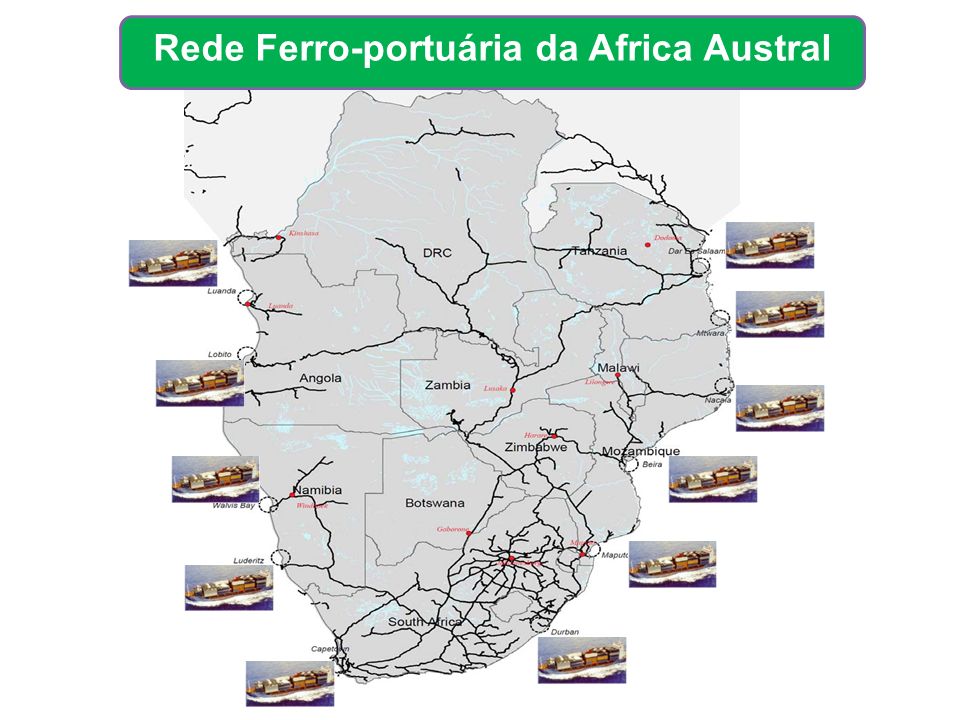
Resultado de imagem para portos de maputoThe Port of Maputo in Mozambique has excellent development potential. It is located along the east coast of Southern Africa, to the north of the Ports of Durban and Richards Bay. It is one of several ports that connect via road and railway line to South Africa’s mega-metropolis of Johannesburg that is still Africa’s leading financial hub.Roads and railway lines from ports of Maputo, Durban, Richards Bay, East London and Port Elizabeth cross over and pass through tunnels of the extensive and high elevations of Dragon Mountain (Drakensberg). Maputo offers the shortest railway distance to Johannesburg and so could be further developed at lowest cost.
Challenge at Durban
While South Africa has plans to expand Africa’s busiest container port, the Port of Durban, there has been much public opposition from groups of Durban residents to future port expansion. Durban has also experienced the ongoing problem of silt/sand build up at the port entrance that has a nominal depth of 12.8 meters (42 feet). This may be its natural depth caused the combination of the south flowing ocean current and wave action that stirs up sand to the north of the northward pointing entrance to the port. 
Resultado de imagem para durban port
The entrance to the 20 meter (66 foot) deep Richards Bay is perpendicular to the ocean current.The overland connection between Durban and Johannesburg operates near capacity and upgrading the railway line with its multiplicity of tunnels is both a costly and formidable undertaking. While some containers from overseas may arrive near Port Elizabeth, the overland distance to Johannesburg is extensive.It may cost less to upgrade and develop the railway line between Maputo and Johannesburg to double track than to redevelop the Durban – Johannesburg line. There may even be scope to explore the possible future operation of super-wide railway container technology that straddles over double track railway lines, to increase the number of containers trains carry.
Unexpected Mega Ships
Imagem relacionada
When expansion of the Panama Canal was first evaluated, the largest container ships entering service carried some 12,000 TEU and were to be later dubbed neo-Panamax ships. At the time, South Africa evaluated the logistics of developing a transshipment port for neo-Panamax ships near Port Elizabeth, where ships sailing to and from East Africa, West Africa, South America and Asia would converge. Then the unexpected happened when Maersk began to explore the possibility of a container ship built to a much larger scale than the neo-Panamax ships and capable of sailing through the Suez Canal between Europe and Asia.The superior economics of the larger container ship made the concept attractive on the trans-Pacific services between Asia and the west coast of North America. Several major ports internationally were dredged and modified to berth the mega-ships and articles appeared suggesting that such ships could operate the South America –Asia service, sailing via Southern Africa. Plans were subsequently announced to dredge Port of Santos and the develop Port of Pecem located on the northern outskirts of Fortaleza, Brazil that could serve as a transshipment port for smaller ships that could connect to South American and Africa ports.
Revising the Logistics
Resultado de imagem para portos d emoçambiqueThe development of South American ports for mega-size container ships creates and uncertain future for South Africa’s transshipment port for neo-Panamax size of container ships. Mega-size ships that sail via Southern Africa between South America and Asia can be built to a larger size than Suezmax container ships, perhaps up to 26,000 or 27,000 TEU and even extend the range of operation between South America and Western Europe.One option is that future mega-ships that sail the Western Europe – Brazil – Asia service sail by South African ports while another option would be to investigate future prospects at Port of Maputo.South Africa’s second largest city is Cape Town which is the closest South African port to the sea route that mega-size container ships would sail between Asia and South America. Sections of Table Bay just outside the port area are 15.6 meters (51 feet) deep. The combination of dredging Table Bay and either extending the present breakwater or building a new breakwater could provide a deep water zone for mega-ships. Deep dredging a section of the port plus some port reconstruction could provide a quay to berth mega-size container ships that would undergo partial unloading and partial loading at Cape Town.
Options for Maputo
Sections of Port of Maputo were dredged from 9.8 meters (32 feet) to over 14 meters (46 feet). However, unlike Port of Durban that has no river flowing into the port area, several rivers flow into Maputo Bay and could carry sand/silt into the port. There may be future need to install deflector barriers along some sections of some rivers to redirect the silt toward the river banks, from where local industries may excavate the silt for use in construction or sent to farms. 
Resultado de imagem para portos d emoçambique
A rock breakwater northeast of the port area may be able to deflect the sand laden ocean current toward ocean.At present, the DP Ports container terminal is 300 meters (984 feet) in length. The combination of lengthening the quay to over 400 meters (1,312 feet) and dredging the channel between the container terminal and deeper water at Maputo Bay would enhance prospects for mega-size container ships to call at Port of Maputo while sailing between South America and Asia. These ships would undergo a partial unloading and reloading of containers to/from the Greater Johannesburg area.Further development of the Port of Maputo could make it suitable for transshipment of containers involving smaller ships that would connect to Kenyan and Tanzanian ports.
Conclusions
Resultado de imagem para portos de moçambiqueThere has been public opposition at Durban to expanding Africa’s busiest container terminal. The overland connection between Durban and Johannesburg is operating at capacity, with a massive projected future increase in container traffic along this link.Within the next few years, mega-size container ships will sail between Asia and South America, with a possible port of call in Southern Africa. Port of Maputo has prospects for future expansion and future development of the container terminal to berth larger ships after the quay is extended and navigation channel dredged to greater depth.Port of Maputo could require future breakwaters to limit future silt build up.The comparatively short railway line between Maputo and the Pretoria – Johannesburg area would cost less to upgrade than the railway lines extending inland from Durban, East London and Port Elizabeth.While Cape Town has potential for future development to berth mega-size container ships, perhaps such development would occur after development of Port of Maputo.