Tuesday, April 25, 2017

Meiya Pico

Director of Crime Investigation Bureau, Director of Cyber Police department, Second Secretary of Ambassador from Mozambique visited Meiya Pico for learning the digital forensics products and technology. During the visiting, the situation and problems in combating cyber crime that Mozambique are facing were introduced by delegates,and during the communictationand Meiya Pico marketing officers shared with each other some valuable suggestions.The smart idea and digital forensics of Meiya Pico attract more and more oversea law-enforcement departments.
mozdigital
Meiya Pico is the leading digital forensics and information security products and service provider in China, and dominates 45% digital forensic market share in China. Established in 1999, Meiya Pico started as an EnCase reseller and provided forensic service and training. Till now, Meiya Pico has established 24 offices across mainland China. Listed on the ChiNext board of Shenzhen Stock Exchange on March 16, 2011, Meiya Pico has been developing own hardware and software products of digital investigations and information security protection. Meiya Pico has six service centers, focusing on digital forensic authentication, data recovery, digital forensic training, intellectual property protection, and technical support respectively. Meiya Pico entered the international market since 2011 and is providing digital forensic products , forensic solution and service to worldwide clients.


Thursday, April 6, 2017

MITSUI FINAL INVESTMENT

Resultado de imagem para MitsuiThe Japanese company Mitsui does not expect to take its final investment decision on the liquefied natural gas (LNG) project in the northern Mozambican province of Cabo Delgado until April-June 2018, according to a Wednesday report from the Reuters news agency.Mitsui holds a 20 per cent stake in Area One of the Rovuma Basin, off the Cabo Delgado coast. The operator of Area One is the Texas-based company Anadarko, with a 26 per cent stake. The other partners in the consort are ONGC Videsh and BRPL Ventures of India (20 per cent and 10 per cent, respectively), the Thai Group PTT (8.5 per cent) and Mozambique’s own National Hydrocarbons Company, ENH (15 per cent).
Resultado de imagem para Rovuma Basin project
Anadarko estimates the known recoverable reserves of natural gas in Area One at 75 trillion cubic feet. It plans to produce LNG in two factories (known as trains) onshore, in the Afungi Peninsula in Palma district. Those factories will produce 12 million tonnes of LNG a year. Construction can only begin once all the partners have taken their final investment decision. Building the two trains will take around four years, and so the start of LNG production will not be before 2022. 'We had hoped to have finalised the negotiations with (the) Mozambican government by December,' Hirotatsu Fujiwara, Mitsui's Executive Managing Officer, told Reuters on the sidelines of a gas conference in Chiba, Japan. 'We are four months behind.'
The partners in the Anadarko consortium are in talks with Japanese power and gas utilities, aiming to finalize binding long-term offtake agreements within a year, Fujiwara said.
The project has secured more than 8 million tonnes a year (mtpa) of non-binding long-term commitments. It needs to secure binding commitments to account for about 80 percent of the total 12 mtpa capacity to get the necessary funding for a final investment decision, he said.Fujiwara said Qatar's decision to restart development of the world's largest natural gas field, North Field, was a surprise but would not likely have a significant impact on the Rovuma Basin project because it had already taken into account a substantial growth in demand beyond 2025.It is likely that the second Rovuma Basin consortium, that in Area Four, led by the Italian energy company ENI, will start production before the Anadarko consortium. ENI and its partners have all, with the exception of the China National Petroleum Corporation (CNPC), taken their final investment decisions.ENI intends to build a floating LNG facility above the Coral South gas field in Area Four. It has signed a contract to sell the LNG from Coral South to BP-Poseidon, a subsidiary of British Petroleum. This contract covers the sale of all LNG from Coral South for 20 years.

KROLL AUDIT WILL COVER GUEBUZA’S ACCOUNTS

Resultado de imagem para martelo da justiça
Mozambican prosecutors have asked the country’s banks to provide details of the accounts held by former President Armando Guebuza, as part of the investigations into the security-linked companies Ematum (Mozambique Tuna Company), Proindicus and MAM (Mozambique Asset Management), according to a report by the Bloomberg news agency.Bloomberg said it had obtained a copy of the letter sent to the banks by the Attorney-General’s Office (PGR) which requested information on Guebuza, 17 other named individuals and one institution, for the period January 2012 to December 2016.PGR spokesperson Georgina Zandamela told Bloomberg that the request is part of the audit into Ematum, Proindicus and MAM being undertaken by the London branch of the US company Kroll. She said Mozambique’s sub judice rules made it impossible for her to say anything further.
Contacted by the independent newssheet “Mediafax”, Zandamela said “the PGR does not comment on ongoing cases”. But she added that the document quoted by Bloomberg “did not come from the PGR. We are not the source for this information”.
Resultado de imagem para guebuza
The only other plausible explanation is that somebody in one of the banks leaked the letter to Bloomberg.According to “Mediafax”, in addition to Guebuza himself, the accounts which the PGR/Kroll wants to investigate belong to, among others, two of the former President’s sons, Ndambi and Mussumbuluko, and to people who had worked in Guebuza’s presidential office, including Renato Matusse, Edson Macuacua (currently chairperson of the parliamentary constitutional and legal affairs commission), Neuza Matos and Marlene Magaia. When Bloomberg contacted Guebuza’s office, asking for comment, it was told that a response would be ready in 21 days. Isalcio Mahanjane, a lawyer who represented Guebuza when he was questioned last year by a parliamentary commission of inquiry, said he had not seen the PGR request.
Resultado de imagem para KrollThe companies covered by the Kroll audit received over two billion dollars in loans from European banks (mainly Credit Suisse and the Russian bank VTB) in 2013 and 2014. These loans were illegally guaranteed by the Guebuza government, and thus became part of the country’s foreign debt stock. The guarantees smashed the limits on government guarantees fixed in the 2013 and 2014 budget laws, and also violated the Constitution which stipulates that only the country’s parliament, the Assembly of the Republic may authorise such debts.Predictably, none of the three companies were able to service their debts, and it soon proved that their viability studies were based on wildly optimistic assumptions. The Minister of Economy and Finance, Adriano Maleiane, has told the creditors that the government cannot repay the loans either, and has urged them to negotiate a debt restructuring.While the Ematum loan (of 850 million US dollars) was known, because it took the form of a public bond issue, the Proindicus and MAM loans (of 622 and 535 million dollars respectively) were kept hidden until April 2016. The International Monetary Fund (IMF), and other western partners, accused Mozambique of misreporting its debt situation, and cut off financial assistance.The IMF insisted that relations can only return to normal after an independent, international audit of the three companies. Kroll has until 28 April to submit its audit report. It is hoped that this will reveal what assets and services were purchased with the loans, whether the assets purchased arrived in Mozambique, whether they were properly priced, and whether any of the money has gone missing.

DREAM OF CHEAP BIODIESEL NOW OVER

Resultado de imagem para jatrofa moçambiqueThe dream of producing cheap biodiesel from the shrub jatropha is over, according to the Mozambican Ministry of Mineral Resources and Energy.Under the previous government, led by President Armando Guebuza, a great deal of hope was placed in jatropha. The plant grows readily enough in Mozambique, and it was imagined that the production of biodiesel from jatropha seeds might be a way of reducing Mozambique’s dependence on imported fuels.Indeed, crushed jatropha seeds can produce high quality diesel, and the plant has also been used to produce aircraft fuel. Several countries, including Brazil and Pakistan, grew jatropha commercial, and produced diesel from it.But in Mozambique, jatropha cultivation was on a small scale, and most farmers declined the invitations to grow jatropha, preferring to concentrate in food crops.
Resultado de imagem para jatrofa moçambiqueBut the final nail in the jatropha coffin was the sharp fall in oil prices. Cited in Thursday’s issue of the independent daily “O Pais”, Almirante Dima, deputy national director of hydrocarbons in the Ministry of Mineral Resources and Energy, pointed out that, at the height of the enthusiasm for jatropha, a barrel of crude oil was selling for 130 US dollars. There was talk that prices could reach 200 dollars a barrel.That would certainly have made biodiesel from jatropha highly competitive. But, contrary to the prophecies, the price of oil has tumbled. Dima said no-one would buy biodiesel at 70 dollars a barrel, when conventional fuels cost 50 or 60 dollars a barrel.“Nowadays it is not viable to use biodiesel because the cost of producing it is higher than the cost of conventional fuels”, he said.The government had once planned to make it compulsory to add biofuels to conventional fuels. As from 2012, fuel companies were supposed to sell diesel that was a mixture of three per cent biodiesel and 97 per cent ordinary diesel. Petrol would be 10 per cent ethanol and 90 per cent orthodox petrol. This measure, it was believed, would cut the annual fuel import bill by 22 million dollars.But it never happened. Despite the announced support of the Brazilian government, the project fell victim to the global financial crisis, which halted funding for biofuel initiatives. In 2014, the then National Director of Renewable Energies, Eusebio Saide, said the financial crisis had blocked the development of the biofuel industry in Mozambique. Chances of revival seem slim. Nowadays, the main alternative to imported liquid fuels is Mozambique’s own natural gas, and the words “biofuel” and “jatropha” can no longer be heard in official discourse.

Friday, March 31, 2017

“Rotten Meat”

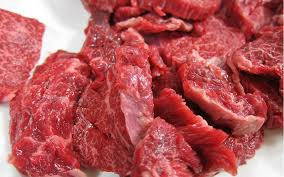
The Mozambican government on Thursday announced a ban on the import of Brazilian meat and of imported chickens from anywhere in the world.The decision follows the Brazilian federal police operation codenamed “Carne Fraca” (“Rotten Meat”) aimed at fighting corruption and crimes against public health in the Brazilian meat trade.The Brazilian police uncovered a scandal whereby certain meat companies used food additives (such as ascorbic acid or sodium nitrate) to disguise the fact that their meat was going rotten, or had passed its expiry date.
Resultado de imagem para Moçambique proibe compra de carne brasileira
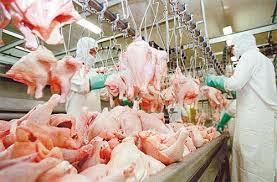
These food additives are authorized for use in many countries, including Mozambique, and, when used correctly, present no threat to the health of consumers. But in Brazil the additives were being used to disguise the true state of the meat, and make it appear fresh and thus fit for human consumption.At a Maputo press conference on Thursday, the National Director of Trade, Zulmira Macamo, said a team from the Ministries of Industry and Trade, Agriculture, and Health, and from the Tax authority (AT) had checked across the country to see what Brazilian imports were being sold on the Mozambican market.They found no meat imports from Brazil. But between October and February 360 tonnes of Brazilian chickens (whole chickens and chicken pieces) had been imported. Most of these imports came from the companies BRF and Seara International, which had been cited in the “Carne Fraca” investigations.
Resultado de imagem para galinhas brasileiras supermercado
The government has decided to suspend temporarily the import of all meat from Brazil, and all chickens from anywhere. Macamo explained this is because Brazilian chickens are sent all over the world, and are often re-packaged and re-exported. Thus chickens labelled as from South Africa or from European countries could, in reality, be Brazilian chickens.
Mozambican poultry producers have complained for years at what they regard as unfair competition from cheap Brazilian chickens. Now they have an unexpected opportunity to rise to the challenge and supply the market without any Brazilian competition.Macamo believed this is possible, with the major domestic poultry producers (in Maputo, Manica and Nampula provinces) able to provide around 1,000 tonnes of chicken a month.
Resultado de imagem para Maria Rita Freitas INAeAs for the imported chickens already on sale, the head of the National Inspectorate of Economic Activities (INAE), Maria Rita Freitas, said that 603 brigades had fanned out across the country, finding Brazilian chickens on sale in every province except Niassa in the far north. The inspectors seized a total of 526 tonnes of imported chicken, valued at 76.8 million meticais (about 1.15 million US dollars).These chickens have been placed in sealed bags inside freezers, in the care of the shops or other companies that own them, while laboratory inspections are undertaken. Samples have been sent for microbiological analysis in laboratories abroad, and the results are expected within a week.If the samples find no health problems, the chickens can be unsealed and put back on sale. But anything that is unfit for human consumption will be destroyed.A spokesperson for the AT, Ariano Chauque, assured the press conference that the customs service, at all the border posts, has been alerted to the situation, and that no chickens and no Brazilian meat will be allowed to enter the country until the ban has been lifted.

Mozambique’s largest bank

Resultado de imagem para millennium BIMMozambique’s largest commercial bank, the Millennium-BIM (International Bank of Mozambique) has announced net profits of about five billion meticais (75 million US dollars, at current exchange rates) in the 2016 financial year.
Resultado de imagem para millennium BIM
A general meeting of the bank’s shareholders, held in Maputo on Wednesday, approved the annual report and accounts, which showed that Millennium-BIM increased its deposits in 2016 by 9.7 per cent, reaching a total of 97.8 billion meticais.
Resultado de imagem para millennium BIMThe bank’s credit portfolio grew by 19.7 per cent, and reached 84.4 billion meticais. Financing of companies during the year was 68.4 billion meticais, an increase of 25.6 per cent on the 2015 figure. During the year, the bank paid the Mozambican state about 3.7 billion meticais in tax.A statement issued by Millennium-BIM on Thursday declared that the bank’s solvency ratio remains 18.8 per cent – much higher than the eight per cent demanded by the Bank of Mozambique.The bank declared that it now has about 1.6 million clients, served by around 2,500 bank workers. It remains the largest bank in Mozambique and occupies the 56th position in the ranking of the 100 largest banks in Africa.

Friday, March 24, 2017

Iron ore mining

Resultado de imagem para nampula mapaThe Indian company Damodar Ferro intends to resume the extraction of iron ore in Lalaua district, in the northern Mozambican province of Nampula, reports Monday’s issue of the Maputo daily “Noticias”.Mining at Lalaua was suspended a year ago because of declining iron ore prices on the world market. But a recent recovery in prices has encouraged the company to resume production.
Resultado de imagem para nampula mapaOlavo Deniasse, the Nampula Provincial Director of Mineral Resources and Energy, told the paper that the establishment of an industrial unit to process iron ore was a further factor behind Damodar Ferro’s decision.He added that the company will negotiate terms for transporting the ore with the managers of the railway running from Moatize, in Tete province, to the port of Nacala-a-Velha on the Nampula coast. Trains carrying coal for export return to Moatize with their wagons empty. But Damodar wants to move the ore to Tete for processing.Achieving agreement on the transport issue “will be a great success”, said Deniasse, “since it will make operating the mine viable and will guarantee jobs in Lalaua”.The Damodar Ferro mine has the installed capacity to mine 75 tonnes an hour. From the start of its activities in 2009 until it interrupted production last year, the company exported about 23,000 tonnes of ore to China.

‘Jewel of Africa’

Resultado de imagem para hotel polanaResultado de imagem para hotel polanaKnown as the “Great Lady of Africa”, the Hotel Polana in Maputo is undergoing a major remodelling and will reopen in May with a new face. Work in the Polana Mar (Polana Sea), next to the gardens and the swimming pool, has been ongoing since June of last year and represents an investment of US$4 million (about EUR 3.7 million) by the Serena Hotels group, owner of the Polana Hotel since 2013 and whose main shareholder is the Aga Khan Fund for Economic Development.The new Polana is being unveiled at the Tourism Exchange of Lisbon (BTL), which started yesterday and runs until March 19, underlining the fact that Portuguese visitors comprise the majority of guests at the Maputo hotel, where the country’s president, Marcelo Rebelo de Sousa, likes to stay on his visits to Mozambique.
Resultado de imagem para hotel polanaResultado de imagem para hotel polanaWork at the Polana is not taking place on the main building, whose facade was renovated in 2011, but in the Polana Mar unit next to the gardens, which is being enlarged from 55 to 66 rooms, and differentiated in its style of decoration. In addition to personalized butler services, the Polana Mar will also have a ‘Kids Club’ to entertain younger ‘customers’.“The Polana is much more than a hotel. It is a 95-year-old institution through which many kings, queens and presidents have passed, as well as other public figures. Some call it ‘a state within the state’, and Samora Machel even called the Polana ‘the mirror of the nation’,” General Director Miguel Afonso dos Santos said at the Lisbon tourism fair.
Resultado de imagem para hotel polanaResultado de imagem para hotel polanaThe director stressed that any work on the hotel was critical and drew great attention because of “the emotional relationship that the hotel awakens in people. Everyone thinks it is a little bit theirs in some way; there are lots of people who have learned to swim in the Polana pool”.
In addition to the Polana Mar renovation, the group is investing US$5 million (EUR 4.7 million) in the construction of six 170-square-metre ocean view villas, bringing the group’s overall new investment in the Polana to US$9 million.“Mozambique at this moment generates mixed feelings. It is a country where there is no longer talk of conflict, and where much is happening,” Miguel Afonso dos Santos emphasizes, drawing attention to the tourism potential of a country “with 2,700 kilometers of coast, a people with a unique smile – and new lessons in humility every day”.