Tuesday, June 9, 2020

Tourism companies and workers in Inhambane


BAHIA MAR BOUTIQUE HOTEL (VILANCULOS): 424 fotos, comparação de ... Unlike tourist establishments, Hotel Baía Mar in Vilankulo decided to keep its doors open despite the crisis, but only at a cost – the hotel had to lay off much of its workforce and was left with only 30 of its previous 80 workers.
Before the COVID-19 pandemic, the hotel had a satisfactory flow of tourists, and had invested in new rooms and hired personnel to satisfy demand.
Bahia Mar Boutique Hotel - Peaks Of AfricaBut since the end of February, more than 200 reservations have  cancelled. Some of these were rescheduled for next year, but the hotel had to reimburse many customers.In order to survive, the company reached an agreement with the workers cutting the wages of those still working, but the situation is getting worse every day. Suzana Vidal says that the outlook is bleak, since there is no business, nor any concrete support from the government.

Jeremias, one of thousands without a job
‘O País’ spoke to Jeremias Júnior, one of the thousands of workers left without a job. The company he worked for decided to terminate his contract, but failed to pay any compensation.
Bahia Mar Restaurant, Vilanculos - Menu, Prices & Restaurant ...
He and other workers were presented with two proposals. The first was termination of contract with one year’s compensation but with a commitment, that as soon as the crisis passed, he would be reinstated if there was a need for additional manpower. The other proposal was definitive termination of contract without any subsequent commitment, but with all rights guaranteed. This was the option chosen by Jeremias, but he has so far come out empty-handed, since the company does not yet have the money to pay him. In order to survive, Jeremias has had to spend the savings he spent years building up. Now even his savings are running out, and he doesn’t know what July will be like. Jeremias will only receive the first instalment of compensation in October, and even so, without any guarantee.

Alcidio
Bahia Mar Boutique Hotel, Vilanculos, Moçambique, Garantia de ...Without a job, wages or savings, Alcídio Huo has to improvise in order to survive.
He worked at a tourist resort in the city of Inhambane and had his contract terminated as a result of the Covid-19 pandemic. For now, Alcídio lives on the proceeds of odd jobs, which pay him just about enough to eat.
The hotel workers’ union speaks of more than 1,400 employees put out of work, either furloughed or dismissed all together.


Nacala Logistics in Mozambique


Denmark-based towage operator Svitzer has received a five-year contract from Mozambique’s Nacala Logistics for work on the port of Nacala. The company will be responsible for the harbour towage, pilot transfer and potential salvage work at the port.
Additionally, Svitzer received a five-year extension of its contract with Egyptian LNG to provide four tugs, two mooring boats and one pilot boat to the Idku liquefied natural gas (LNG) plant. Svitzer AMEA managing director Nicolai Vinther Friis said: “We see great potential and opportunities on the African continent, and I am, therefore, very pleased that we succeeded in securing the contracts with Nacala Logistics and Egyptian LNG.
“We have had close collaboration and strong relations with both Nacala Logistics and Egyptian LNG and the contracts are of great strategic importance to us and will support our efforts and ambitions to further strengthen our presence and operations on the continent.”
Svitzer aims to ensure that its operations aid in the prosperity and growth of the communities where it operates. Friis added: “We understand that with size and scale comes responsibility, the responsibility to all those we engage with, especially our employees and customers. We, therefore, go to great lengths to ensure that our operations bring jobs and long-term prosperity to the communities in which we operate.” With the contract, Svitzer has operations in Egypt, Angola, Morocco, Liberia and Mozambique. In 2019, Svitzer signed a ten-year contract with the Suez Canal Authority, which was the second contract in Egypt. In January 2019, Schottel and Svitzer developed a new hybrid propulsion concept for use in both newbuild and retrofit vessel projects.

Accelerating from 1.5% rate in Q4


Nampula | MOZREALMozambique’s economy in the first quarter of this year was 1.7% larger than in the same period last year, marking an acceleration from the growth rate of the final quarter of last year, according to data released by the National Statistics Institute (INE). According to information released late on Monday, the year-on-year increase in the first quarter as 1.7%, up from 1.5% in the final quarter of 2019.
Activity in the agricultural sector was up 2.9%, while mining activity was down 12%. For 2020 as a whole, the World Bank estimates that Mozambique’s economy will expand by 1.3%, making it the only Portuguese-language country in Africa to escapes recession this year. For sub-Saharan Africa the institution is forecasting a 2.8% shrinkage of output, the largest such negative growth ever recorded, according to its World Economic Outlook, released on Monday in Washington.

Creates Cotton and Oilseeds Institute


Venda Macadamia em São Caetano do Sul SP à venda. Compre direto 360535 Council of Ministers this Tuesday approved the creation of a new Institute of Cotton and Oilseeds to replace the old Mozambique Cotton Institute (IAM), and the creation of the Mozambique Institute of Nuts [Instituto de Amêndoas de Moçambique] to replace the Institute for the Promotion of Cashew (INCAJU).

Minister of Agriculture and Rural Development Celso Correia said that the measures would encourage production of these crops.
Governo aprova decreto que cria o Instituto de Algodão e ...
“This decision aims to create specialty and strategic guidance for our governmental structure so that, in the next two years, Mozambique can return to producing cooking oil in a structured manner through the national production of these crops. The constitution and transformation of the Institute for the Promotion of Cashew into the Institute of Nuts was also approved in this session , expanding the spectrum of action of the institute to other nuts, with particular emphasis on the macadamia, which has been gaining traction and will hopefully represent a strategic gain for the country. It should be noted that Mozambique currently imports US$150 million of cooking oil, and the regional market is worth a billion dollars. It is our goal for Mozambique to look at other nuts, and introduce the macadamia as a family culture, generating greater income. The global nut market is worth around US$92 billion, and Mozambique has been exploring its fringes with the cashew,” Minister Correia said. The cabinet on Tuesday also approved a decree on the continued disbursement of subsidies to the victims of the Hulene dump landslide in Maputo.

War is destabilisation by competing gas producers


Jacinto Veloso lança “A Caminho da Paz definitiva”"I am convinced that we are facing a major operation whose objective is to block the natural gas projects of Cabo Delgado," writes Jacinto Veloso in Savana Friday (5 June). "We are confronted with a mega-operation of destabilisation very probably directed by a competent and powerful hub located somewhere outside the country."
MHN: SNASP"We are dealing with a mega-operation conceived, directed, and executed from outside the country to, at least, slow the natural gas projects, because they are considered a serious commercial threat to the giant economic interests of big companies involved in identical projects in the region which are competing for the same markets." He cites as a model the United States use of Islamic fundamentalists, notably Osama bin Laden, in Afghanistan from 1979 to eventually defeat the Russians. He argues that Mozambique is confronting Islamic State, not local insurgents. To respond, "prompt external help is inevitable," he argues. The Savana article (in Portuguese) is on http://bit.ly/VelosoDestab
Veloso does not say which competing gas producers are using Islamic state. The world's 8 biggest natural gas producers (in order) are USA, Russia, Iran, Qatar, Canada, China, European Union, Norway and Saudi Arabia.
Livros Ultramar - Guerra Colonial: Moçambique & FRELIMO ...
: The 83-year-old Jacinto Veloso has the standing to be taken seriously on these claims. A Portuguese air force pilot who flew his plane to Tanzania to join Frelimo in 1963, he was Security Minister (1980-83) and continued in government until 1994. He is currently a member of the government's National Defence and Security Council (CNDS). A minister during the 1982-92 war, he saw big power destabilisation first hand. He was an important back channel to apartheid South Africa and other security services, and probably retains some of those links.
da esquerda: Jacinto Veloso, Jorge Rebelo, Marcelino dos Santos e ...
And the current oil war between Saudi Arabia, Russia and the United States is real. The US promoted fracking of shale and became self-sufficient in oil and gas. There was already over-production and climate emergency concerns were curbing oil consumption. Russia refused to cut production and the Saudis hoped that by keeping up production they would bankrupt US shale producers, who are relatively expensive, and could force Russia to cut production. But Russia was also responding to US sanctions, which were partly against its oil. Prices fell from $80 to $20 in two years. Covid-19 has hit the global economy, which has made the issue worse. Gas prices have also fallen, as they are indirectly linked to oil prices.  the oil price war is also linked to hot wars. The on-going war in Libya can be seen as a proxy war between Russia, Saudi Arabia, the US and other oil producers.
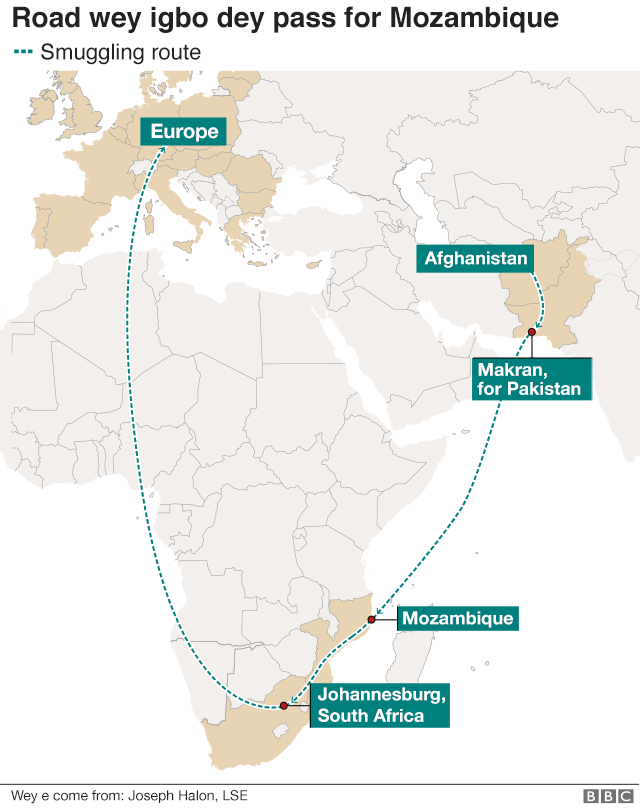
Map wey dey show road wey smugglers dey followVeloso explicitly dismisses the idea that this is an internal war based on "local discontents", and rejects the views of journalists and academics (which includes me) who argue this is mainly a domestic insurgency. Clearly destabilisation by the security services of one of the major gas producers, using Islamic State, is possible. But it does seem a stretch to suggest that the security services of any of the gas producers want to turn Mozambique into another Libya or Afghanistan.
 is not an either-or issue, as Veloso would have it. Veloso seems to have forgotten one of the key lessons of both of his wars - that outside intervention gains traction only though local discontents. All three of Mozambique's wars have been guerrilla wars in which the guerrillas had outside support, but that local support or at least tolerance was decisive. Frelimo moved south from Tanzania, with external support, and built on discontent with Portuguese colonial oppression - and won. Renamo with support of the US and apartheid South Africa, swept across Zambezia and Nampula because they were at least tolerated by rural communities who felt they had gained little from independence and were still poor. And in the north of Mozambique inequality has increased since then. When writing various books, people we talked to in the rural north had a common refrain - "my children may go to school, but my wallet is still empty." And they see an elite whose wallets are not empty and who appear to be growing fat. The independence war started in Chai, Macomia district, Cabo Delgado. The new war also started in Macomia district, with discontent at growing inequality meaning that local people at least tolerate the insurgents and do not support Frelimo, increasingly seen as new colonisers.

The supreme irony is that in the same place, Frelimo is fighting the new war in the same way the Portuguese fought the war 50 years, saying it is foreign backed destabilisation that must be defeated militarily. It did not work then, and is unlikely to work now. Helicopter gunships shooting at civilians will not defeat insurgents beheading civilians. Frelimo must win back the support of local people, and that requires dealing with the grievances and inequalities - local people must see some locals gains from the gas, rubies, graphite, heavy sands and other resources.
Even if Veloso is right and this is "mega" destabilisation by gas companies and security services, they will not be defeated by mercenaries and foreign soldiers if Frelimo does not resolve the internal inequalities and grievances.  jh

Foram as piores eleições de sempre de Moçambique″, diz ... Corp: insurgency local,despite international links

BOTH articles are on the Rand Corporation blog https://www.rand.org/blog.html in short form.

Editor: Joseph Hanlon 

Wednesday, June 3, 2020

Rizwan Adatia


Folha de Maputo - Notícias - Nacional - Resgatado patrono da ...
Eight days after his release, philanthropist and businessman Rizwan Adatia, kidnapped on April 30, met media professionals to share some details of his captivity.
In his first public statements on the issue, Adatia started by saying that he never thought that he would be a victim of this type of crime, which seemed to him to have created a whole new class of wealthy people in the country.
About his kidnapping, he said that, on the day of its occurrence (April 30), he had just left one of his offices at “Matola Jumbo” and was intercepted by two vehicles while speaking on his mobile phone. According to him, the two vehicles surrounded him and one of the occupants, who was at the wheel of one of the vehicles, ordered him to close his eyes before he was forced into one of the vehicles.
Gujarati businessman Rizwan Adatia kidnapped in Africa ...“When we arrived at my place of captivity, they put me in a bathroom. They said they wanted money and that they had unpaid debts,” said Adatia, patron of the foundation which carries his name.
In his short press conference, Rizwan praised the work of the National Criminal Investigation Service (SERNIC), adding that he never imagined that he would remain in captivity for such “a short time”.
SERNIC spokesman Leonardo Simbine said that investigations to identify those behind the kidnapping were still ongoing, while the entrepreneur himself reported that his commercial establishments had continued to function normally despite his absence.
The Rizwan Adatia Foundation has meanwhile announced that, over the next few days, it would support 10,000 families from Maputo, Gaza and Inhambane provinces with food products, a number of Mozambicans having returned from neighbouring South Africa completely without means of livelihood because of the Covid-19 pandemic.

Cumulative number of coronavirus


Mozambique today reported nine more positive Covid-19 cases,bringing the country’s cumulative total  316.. Four of the newly diagnosed cases are from Niassa province  and five from Maputo City. Three are  children. Between Tuesday (02) and Wednesday (03) 324 tests were performed in the country. Mozambique today reported 11 more recoveries, with the total of people who have fully recovered from the disease now standing at 109.
Covidttins

Energy sector caught in Southern Africa’s


By James Hall

Analysis in brief: Southern Africa’s first terrorist insurgency is casting doubt on progress to commercially exploit Mozambique’s promising natural gas deposits. Mozambique’s government has been unable to thwart the terror attacks, offering little hope for relief to multinational energy giants at work in the country.

The reaction of two of the largest oil companies at work in Mozambique, Total and ExxonMobil, to the insurgency of Islamist militants in the country’s northern Cabo Delgado province has signalled their perception of where the conflict is headed. Meeting with government authorities, the company officials did not press for a cessastion of violence that was threatening their investments, but merely for the deployment of more troops to guard their operations. Some oil installations have already been attacked. By their request for security, the oil majors were admitting there was no immediate solution to the terror operations now five years old, or their faith that government has a plan or ability to suppress the insurrection. Rather, the oil firms want protection beyond what their private security companies can provide. Clearly, they believe Mozambique is being challenged by a long-term problem; one that the Southern African Development Community has finally admitted has regional repercussions. Ironically, through their unkept promises to the people of Cabo Delgado, the energy companies are also responsible for their unsettled security situation.

An insurgency from the north takes root in Southern Africa
If energy companies are nervous about the Cabo Delgado insurgency, they require introspection regarding their own culpability. Reports have documented the disatisfaction of the region’s residents that they have not received the promised benefits of oil production and have suffered evictions, loss of livelihoods and environmental destruction. The militants have exploited these grievances to gain adherents and to prolong their insurgency. Attacks on oil infrastructure have been a distant after-thought for the Ansar al-Sunna (“Supporters of the Tradition”). The followers of Kenya’s radical cleric Aboud Rogo settled in Tanzania after his death in 2012 before moving southward one more country and appearing in Cabo Delgado in 2015. Five years before, in 2010, the US energy company Anadarko discovered a major gas reserve off the Cabo Delgado coast. Another large field was found by Italy’s ENI the following year, 2011. A rush followed as the world’s major energy companies descended upon the province with assurances that the locals would be impoverished no more. That was not to be, as local populations were evicted from ancestral lands to make way for oil and gas facilities, and jobs on a large scale failed to materlise. Meanwhile, Ansar al-Sunna announced itself by storming mosques with weaponry, declaring that the Islam practiced in Mozambique was unfaithful to their vision of the Prophent Mohammed, and that they would set up an Islamic Caliphate in the area. When local populations rejected their movement, years of brutal attacks on civilians ensued. Beheadings were the terror act of choice, and schools and clinics were targeted as being instruments of Western culture that was opposed by the extremists. Since the terror campaign against civilians began in 2017, 700 people have been killed and many more injured. Insurgents are believed to finance their activites through trade in illegal drugs and ivory.
 
People who have been displaced gather as food is distributed in Mocímboa da Praia, Cabo Delgado


Mozambique’s military, distracted by political infighting, sometimes armed, between the ruling Mozambique Liberation Front (FRELIMO) party and the perennial opposition party the Mozambique National Resistance (RENAMO), mounted a desultory counter-insurgency. The militant group’s disorganisation – Ansar al-Sunna split into as many as eight separate cells – prevented a coherent anti-state campaign but permitted attacks to continue in an ad hoc manner. Mercenaries from Somalia’s terror group al-Shabaab were hired by Ansar al-Sunna to assist with attacks, although there was no formal alliance between the two groups. Nor was ISIS an ally, at least until mid-2018 when that group announced its presence with an attack on security forces.  By this time, the counter-productiveness of bloody attacks against civilians was tacitly acknowledged by Ansar al-Sunna, which changed tactics by appealing to widespread resentment against social injustices. One of the people’s greviences – widespread youth unemployment despite the energy sector boom – was successfully exploited to recruit youth members. Portuguese, the official language of Mozambique, replaced East African Swahili as the group’s means of communication, and foreigners have been outnumbered by Mozambican members, mostly from the districts of Macomia, Mocimboa da Praia and Palma. Thus, what began as a foreign incursion into Cabo Delgado motivated by a religious agenda has now become a militant social movement. The most potent counter-insurgency, then, would be state programmes focused on reducing poverty, improving social services and providing youth employment. However, such a plan is not only difficult for an impoverished country devastated by cyclones in 2019, but is the type of massive people-oriented project that has proved beyond the ability or interest of a corruption-plagued government.

Impact on the energy sector
Several factors impacting the future of Mozambique’s energy sector are occuring at a decisive time, when energy companies must fully commit with their Final Investment Decisions (FIDs). The stakes are huge. Africa’s three largest liquid natural gas (LNG) projects are in Cabo Delgado: Total’s US$ 20 billion Mozambique LNG Project, ENI/ExxonMobil’s US$ 4.7 billion Coral LFNG Project, and the US$ 30 billion ExxonMobil/ENI/CNPC Rovuma LNG Project. Falling energy prices worsened by the Covid-19 pandemic’s drag on energy demand is a discouraging but ultimately temporary matter. Such cycles are part of the energy business. More of a wild card is the Cabo Delgado security situation, which changed for the worse as the pandemic struck. On 23 March, militants took the fight to the military for the first time, attacking police and army installations in Ocimboa da Praia and routing the security forces. Then in another reversal of its previous tactic of terrorising civilians, Ansar al-Sunna fighters distributed food to villagers. Reportedly, the gesture contributed to local populations’ more receptive attitude toward the extremist group; an attitude grounded in growing resentment of the consequences of energy exploration. Cabo Delgado citizens are seeing that what is happening to them is a repeat of what occurred in Tete Province, when 60% of the residents’ land – farms, homes, shops, whole villages – were given to coal extraction companies. Locals now know that LNG extraction is occuring offshore, offering no jobs, while pipelines and on-shore support facilities are causing mass evictions. Physical relocation or loss of access to farmlands has affected 1500 families and some 3000 fishermen have lost access to fishing grounds. Relocated farmers are given fields near or overlapping fields of existing communities, causing conflict. Fishermen have been relocated 10km away from the sea.
 
Map of LNG discoveries, where insurgency is gaining momentum


Jihadist insurgents on Africa’s eastern shores


Societal security will lead to overall security
It seems inconceivable that the large energy companies could be so insensitive to the lives of local people, or offer jobs they knew would not exist or promise poverty alleviation without any plan. If the companies were relying on government to use energy industry revenues for anti-poverty and social welfare programmes, this seems willful naivete given government’s record of corruption and fiscal responsibility that was uncovered by the International Monetary Fund at the very time energy companies were making lease deals with government. However, a hopeful sign has come from government itself. President Filipe Nyusi has admitted that Ansar al-Sunna is finding support not through religious conversion or terror but because of “poverty and unemployment.” With the military proving unable to contain the insurgency, Nyusi has turned to the SADC for help. At an Extra-Ordinary Summit of the Troika on SADC Organ on Polics, Defence and Security Cooperation in Harare on 20 May 2020, SADC leaders agreed that an attack on any member country was an attack on all countries, and condemned the Cabo Delgao terror attacks. However, no troops were committed, and the summit concluded with a plan to “study” the situation in Mozambique.
None of this augurs well for an immediate cessation of insurgent violence. The energy industry’s short-term business decisions require a stable security situation now. However, only long-term programmes aimed at ending poverty and inequity will undercut the advances Ansar al-Sunna has enjoyed in 2020, with the increasing support of ISIS.

Critical points:
  • The Islamic insurgency of Mozambique’s Cabo Delgado Province is growing after five years, threatening the country’s new and promising energy sector
  • By failing to fulfil promises to end poverty and provide jobs, energy companies have worsened social welfare conditions and have generated support for insurgents
  • Government has been unable to mount an effective counter-insurgency, and military action to achieve security for the energy sector is insufficient without addressing the fundamental problem of poverty.
The views expressed are the opinion of the author and do  not necessarily reflect the position of In On Africa.

Sunday, May 31, 2020

Strengthen cooperation


Mozjapan.not_
President of the Republic, Filipe Nyusi, on Wednesday received in audience the new Extraordinary and Plenipotentiary Ambassador of Japan, Hajime Kimura, with whom he exchanged views on the stage of cooperation between the two countries and the need for their strengthening.
A note from the Presidency of the Republic sent to our editorial staff indicates that, with the experience of Ambassador Kimura, the Government of Mozambique expects the excellent relations of friendship and cooperation between Mozambique and Japan to be boosted.
Meanwhile, the Minister of Foreign Affairs and Cooperation, Verónica Macamo, present at the audience, classified relations between Mozambique and Japan as excellent, adding that as proof of this there has been constant exchange of visits between public and private government entities, as well as an increase in volume of the Japanese investment in Mozambique.
At the political level, Macamo highlighted the exchange of visits at the highest level, the realization of political dialogue and business forums. The Minister of Foreign Affairs and Cooperation also highlighted the visit of the Prime Minister of Japan to Mozambique in 2014, when the two governments established political and friendly relations.
She also recalled that, in March 2017, the President of the Republic, Filipe Nyusi, made a working visit to Japan to strengthen bilateral cooperation.
Bilateral relations between the two countries are developed through non-reimbursable financial assistance, loans, commercial and mineral projects, electricity, gas, roads and bridges, health and education, among others.
“In the Maputo Corridor, the Maputo Thermoelectric Power Station, the Fish Market in Maputo, the Infulene Health Sciences Institute was built and, with support from Japan, the closure of the Hulene dump is underway,” Verónica Macamo said.

Soldiers of misfortune


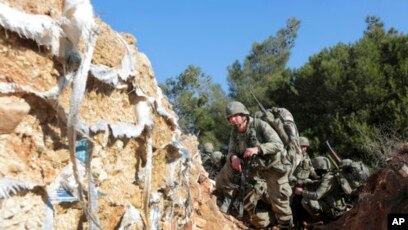
WHEN PRESIDENT  wanted help last year to tackle a jihadist insurgency in northern Mozambique, various private military firms were keen to oblige. Mr Nyusi chose Russia’s Wagner Group, which vowed to make short work of the rebels. But after a bunch of its men were killed, it pulled out, humiliated.
Seven Russian contractors from Wagner Group killed in an ambush in ...
In its place, the government has hired a firm with a very different pedigree: the Dyck Advisory Group (DAG), led by a South Africa-based colonel, Lionel Dyck. Mr Dyck served in the army of Rhodesia, the white-run state that became Zimbabwe at independence in 1980. In the 1970s, when Mr Dyck wore its uniform, the Rhodesian army used to attack Mozambique and the Zimbabwean guerrilla bases that Mr Nyusi’s Frelimo party was hosting. ´
Prof. Adriano Nuvunga, Ph.D. on Twitter: "#Mozambique Gov't again ...
Times change, as do alliances. Despite a UN treaty banning mercenaries, their day is far from over. Some analysts think there are now more of them in Africa than ever. But can they ever be a force for good? Some of them served in special forces known for their ruthlessness during the dying days of white rule in southern Africa.
Since then many have worked in Iraq and Afghanistan before returning closer to their old haunts. In the years after most African countries gained independence, mercenaries were notorious for supporting secessionist movements and mounting coups. They fought for Moïse Tshombe in Katanga as it tried to break away from Congo in the early 1960s, and in Biafra when it sought to secede from Nigeria in the late 1960s.
Nigeria 'hires 250 South African mercenaries' to battle Boko HaramMore recently Simon Mann, a former officer in Britain’s special forces, tried to overthrow the dictator of oilrich Equatorial Guinea in 2004, but ended up in jail.
Western governments have in the past winked at mercenary activity that served their commercial interests. But nowadays Russia is seen as the leading country egging on mercenaries to help it wield influence. It does so mainly through Wagner, whose founder, Yevgeny Prigozhin, is close to President Vladimir Putin.
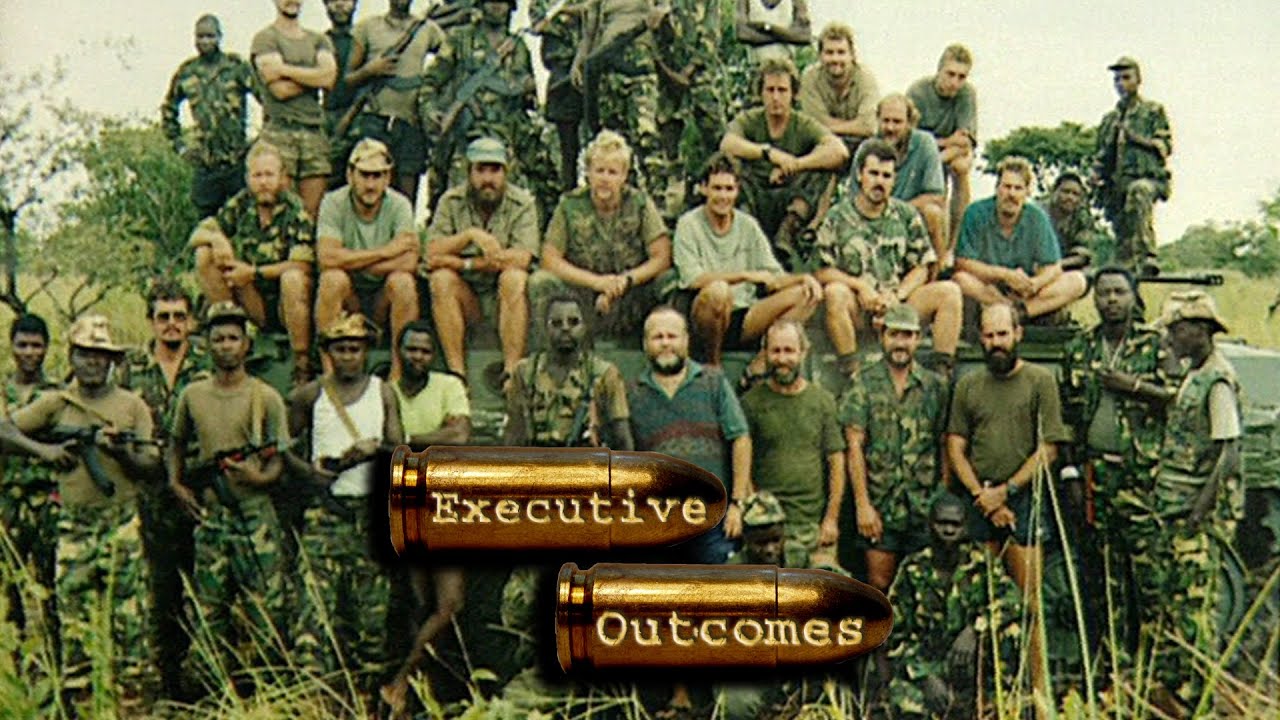
Executive Outcomes - Trailer - YouTubeShortly after Mr Nyusi met Mr Putin in Moscow last year, Wagner was awarded the contract for Mozambique, which has rich gasfields and is developing Africa’s largest energy project. Wagner has been hired to prop up a number of shaky African regimes. In Sudan it tried to sustain the blooddrenched dictatorship of Omar al-Bashir.
He was ousted last year after big protests. In 2018 hundreds of Wagner men arrived in the Central African Republic to guard diamond mines, train the army and provide bodyguards for an embattled president, Faustin-Archange Touadéra. In Guinea, where Rusal, a Russian aluminium giant, has a big stake, Wagner has cosied up to President Alpha Condé, who has bloodily faced down protests against a new constitution that lets him have a third term in office.
In Libya, despite a UN arms embargo, Wagner is reported to have deployed 800-1,200 operatives in support of a rebel general, Khalifar Haftar, who has been trying to defeat the UN-recognised government. On May 26th America’s military command for Africa said Russia had flown modern fighter jets to Libya to give air support to Wagner.


It released satellite photos purporting to show the jets at al-Jufra airbase. It seems, however, that Wagner has been failing in Libya too, with hundreds of its men being forced to retreat. Private military firms typically say they fill gaps in security that would otherwise lead to chaos. In the Central African Republic, for example, France withdrew almost all of its peacekeeping troops in late 2016, leaving a UN force and a small European training mission that struggled to keep order.
Mercenários" russos deixam Cabo Delgado e vão para NacalaWagner has hardly fared better. In north-eastern Nigeria in 2015 a South African firm called STTEP (Specialised Tasks, Training, Equipment and Protection), had some success in bolstering the Nigerian army in its fight against the jihadists of Boko Haram. However, its contract was cancelled by a new president, Muhammadu Buhari, who reckoned his own forces should finish the job alone.
elmundo.es Obituarios. Líder mundial de información en castellano have signally failed to do so. Mercenaries have three main advantages over regular armies. First, they give plausible deniability. Using them, a government such as Russia’s can sponsor military action abroad while pretending not to. Second, they tend to be efficient, experienced, nimble and flexible. Third, they are cheaper than regular armies. Whereas soldiers receive lifelong contracts and pensions, mercenaries are often paid by the job.
They are also better value for money than the heavy, expensive weaponry that African governments often import, which is not much use against terrorists.
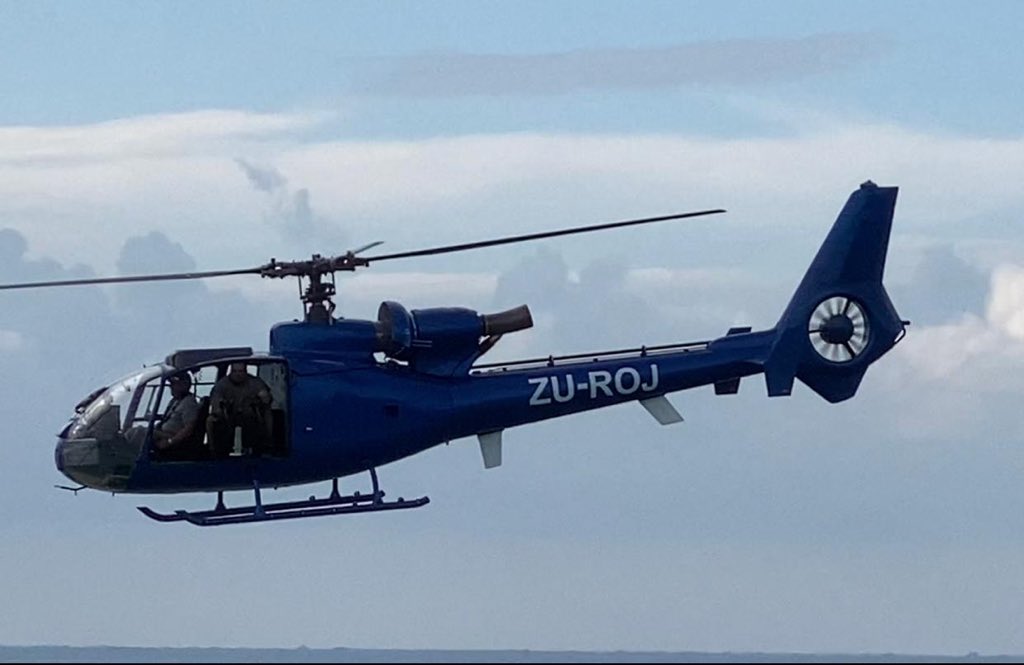
DAG’s hardware in Mozambique is reported to include several helicopters (one of which recently crashed after being shot at by jihadists) and some small aircraft, but nothing hugely expensive. Colonel Tim Collins, a veteran of Britain’s Iraq campaign who has been running a private military firm in Afghanistan, says that “for the money Britain spends on booze at Christmas” such firms could provide African governments with a continental force (not that they would ask for one).
Mercenary 'Mad Mike' Hoare dies at 100 | Daily Mail OnlineEl retorno del Mercenario - Defensa - Comunidad Militar... en Taringa! points out that in Sierra Leone in 1995, mercenaries from Executive Outcomes played a key part in routing the murderous rebels of the Revolutionary United Front. That bare-bones force was co-founded by a South African, Eeben Barlow, who now chairs STTEP. Manned mainly by former apartheid-era commandos, Executive Outcomes had previously helped the Angolan government to defeat the rebels of UNITA, which South Africa had  fostered. DAG’s website claims it has undertaken “security-based operations” in at least eight countries, including the Central African Republic, Malawi and South Africa. Zimbabwe’s president, Emmerson Mnangagwa, is said to be close to Mr Dyck, who caught his eye back in 1981.
That was when he led a battalion of the mainly black Rhodesian African Rifles in suppressing a mutiny of disgruntled ex-guerrillas loyal to Prime Minister Robert Mugabe’s bitter rival, Joshua Nkomo, leaving many dead.
OAM Middle East, another security firm run by a former Rhodesian, John Gartner, lists no fewer than 18 African countries where it has operated. Many such companies stress their credentials as wildlife conservationists, using helicopter gunships to deter poachers. Although opposed to mercenaries on paper, the UN may have softened its stance of late.
It now has a code of conduct for how they may work and has itself used them to help with things such as logistics, neutralising landmines and training security teams.
Chris Kwaja, a Nigerian who chairs a “working group on the use of mercenaries” for the UN’s High Commissioner for Human Rights, thinks they can be useful as long as they are subject to “binding international instruments”. Some private military firms now accept ethics clauses written into their contracts.
THE ECONOMIST – 30.05.2020

George Floyd’s Sister On His Death In Minneapolis Police Custody: ‘They ...