Tuesday, May 15, 2018

Port of Macuse – Mozambique


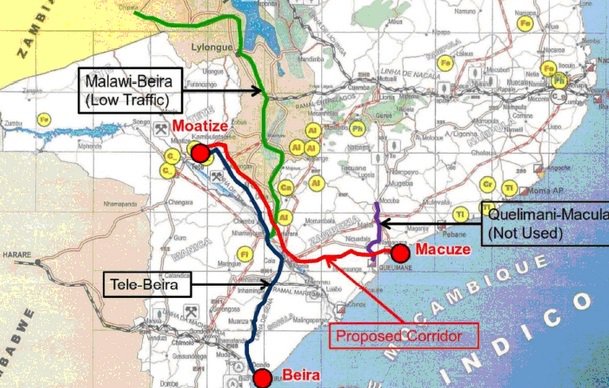
Seventy-three families living in the Supinho region of Quelimane district in Zambézia province are in the process of being transferred to make way for the construction of the Macuse Deep Water Port, which will be used to export coal from Tete.In order to safeguard against potential future conflicts involving stakeholders, the resettlement process of these families is being preceded by four public consultation sessions.
Resultado de imagem para Port of Macuse – MozambiqueMamede Latif, executive director of Thai Mozambique Logistic (TMZ), told Notícias that the first two public consultation sessions involving the local community, the company and the provincial government of Zambézia were held last week in the Supinho region, where the infrastructure is to be built.
Imagem relacionadaLatif did not specify the overall amount to be spent on the resettlement operation, but said that a detailed assessment would be made under the law to determine the actual amounts to be paid to each affected family, so as to safeguard their continuity of life in the resettlement sites.Apart from the 73 families, 10 hectares of fields belonging to the Supinho communities will be affected by the project. Latif said that the survey of home improvements in the places where the project will be implemented starts on May 20.
A concession agreement for the implementation of the project has been signed between the Ministry of Transport and Communications and the Thai Mozambique Logistic company, and the laying of the first stone took place last year.In addition to the Port of Macuse, the project includes the construction of a 600-kilometre railway line linking the port to the coal-mining area of Chitima in Tete province. The new railway line will carry 25 million tonnes per year from 2022 to 2028, and, in the second phase, 40 million tonnes per year from 2029 on.The construction of the port will take place in several stages, including the preparation and levelling of the construction site, the establishment of offices and temporary road works, building the berth itself, laying the foundations for and installing goods handling equipment and dredging the access channel.Once completed, the port will stimulate national and foreign entrepreneurs to explore the Zambezia Development Corridor (CODIZA), linking Quelimane-Nicoadala-Namacurra-Mocuba-Milange and hinterland countries. The Mocuba-Milange road, more than 200 kilometres long, is in the final phase of being asphalted, raising expectations of development in Zambézia.

Sanctions against Moza directors


The Bank of Mozambique on Monday published the list of eight former directors of Moza Bank, once the fourth largest commercial bank in the country, whom it has fined for their alleged roles in serious irregularities leading up to the bank’s near collapse in 2016.The crisis in Moza Bank, became public knowledge on 30 September 2016, when a liquidity crisis led the Bank of Mozambique to step in and sack the entire board of directors, imposing a provisional board, headed by one of the country’s most experienced bankers, Joao Figueiredo.
Resultado de imagem para Joao Figueiredo mozabancoThe central bank injected large amounts to keep Moza Bank afloat while it was restructured. As a result, Kuhanya, the company that manages the central bank’s pension fund, became the majority shareholder.
The Monday statement from the central bank said the former directors were “implicated in the deterioration of the financial and prudential position of the institution from December 2015 until the intervention by the Bank of Mozambique in September 2016”.
The penalties imposed include fines ranging from 200,000 to 500,000 meticais (3,300 to 8,250 US dollars, at current exchange rates), and a ban on holding office in any bank for period of between two and three years.These penalties cover all eight members of the board who were in office on 30 September 2016. The most prominent of these is the then chairperson of Moza Bank, Prakash Ratilal, who is a former governor of the Bank of Mozambique.The central bank release said publication of these sanctions “seeks to prevent similar situations and guarantee transparency in the management of credit institutions and financial companies, as well as to protect the interests of depositors, investors and other creditors, and to safeguard the normal functioning of the monetary, financial and exchange markets”.
Resultado de imagem para Joao Figueiredo mozabanco
The sanctions will come as no surprise to anyone who follows the Mozambican press closely, since the independent weekly “Savana” ran the story in late April.While the release from the Bank of Mozambique gives no details about the alleged irregularities, the “Savana” piece said the inspection by the central bank, found that Moza Bank did not comply with its duty to draw up policies and procedures for managing operational risks, had not identified and measured those risks, and had not approved policies to guide the management of liquidity. Among many other alleged irregularities, there were also no contingency plans to deal with situations of shortages of liquidity, and no policy to manage conflicts of interest.The former Moza directors have 15 days to appeal against the penalties through the courts, but must pay the fines first (although the money will be returned if the appeals are successful).Asked by “Savana” if he intended to appeal, Ratilal said that, “even with the option of resorting to the courts, my stance is to comply with the decision of the regulator”.
Ratilal pointed out that he was one of those who helped build the Bank of Mozambique, and it was an institution “of which I am proud, and for which I have deep respect”. He had always acted in good faith, he said, and had always respected the country’s institutions.

Mozambican makes motorbike out of wood


This motorcycle could not be just anything… In fact, it is made out of wood, and by a 25-year-old man from the village of Maniamba, Lago district, Niassa province, who, not having the money for a conventional solution, set about devising his own.
He is a secondary student, and his name is Julio Eugénio, although as an inventor, he is Mota Madeiraknown as ‘Mr. Contralio’.
The Niassa inventor’s conveyance is supported by sticks and has a one-litre fuel tank that allows it to travel long distances. Maintenance is not expensive, since it relies solely on locally available materials.Mr. Contralio’s engineering career took off in 2011, when he created a wooden bicycle. A few years later, he crafted a car out of tin cans. The car, which alas no longer functions, once made it through the streets of Maniamba village.Mr. Contralio is currently attending Grade 11 at night school.