 The Mozambican
customs service on Monday destroyed four tonnes of frozen chickens that had
entered the country illegally and were found to be unfit for consumption. There
were 3,990 chickens, each weighing 1.1 kilos, packed into 399 boxes. Customs
seized them in Namaacha district, near the border with Swaziland, about three
weeks ago, according to a report in Tuesday’s issue of the independent
newssheet “Mediafax”. The chickens had come from Swaziland, but had apparently
evaded the official border crossing and had been smuggled into the country.
When the smugglers found they were being pursued by an armed customs unit, they
abandoned the truck and fled into the bush. Nonetheless, Customs was able to
identify the owner of the merchandise, and sent him a summons, which he has so
far ignored.Tests on the chickens, undertaken in laboratories of the Ministry
of Agriculture, showed that they contained a high level of dangerous bacteria,
and thus were unfit for consumption. Customs believed it had no option but to
incinerate the chickens.The chickens had a customs value of 403,700 meticais
(about 10.600 US dollars), and should have paid around 163,000 meticais in
customs duties. The importer of this illicit merchandise will be liable to pay
a heavy fine, and the Customs Tribunal could even sentence him to a prison
term.
Wednesday, August 19, 2015
CONTAMINATED CHICKENS INCINERATED
The Mozambican
customs service on Monday destroyed four tonnes of frozen chickens that had
entered the country illegally and were found to be unfit for consumption. There
were 3,990 chickens, each weighing 1.1 kilos, packed into 399 boxes. Customs
seized them in Namaacha district, near the border with Swaziland, about three
weeks ago, according to a report in Tuesday’s issue of the independent
newssheet “Mediafax”. The chickens had come from Swaziland, but had apparently
evaded the official border crossing and had been smuggled into the country.
When the smugglers found they were being pursued by an armed customs unit, they
abandoned the truck and fled into the bush. Nonetheless, Customs was able to
identify the owner of the merchandise, and sent him a summons, which he has so
far ignored.Tests on the chickens, undertaken in laboratories of the Ministry
of Agriculture, showed that they contained a high level of dangerous bacteria,
and thus were unfit for consumption. Customs believed it had no option but to
incinerate the chickens.The chickens had a customs value of 403,700 meticais
(about 10.600 US dollars), and should have paid around 163,000 meticais in
customs duties. The importer of this illicit merchandise will be liable to pay
a heavy fine, and the Customs Tribunal could even sentence him to a prison
term.
RELIGIOUS LEADERS TO FIGHT AGAINST CHILD MARRIAGE
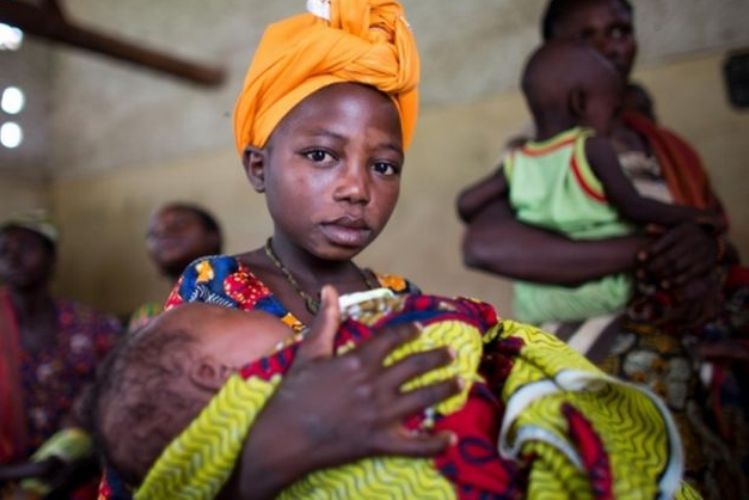 Mozambican religious
leaders say they are ready to work on reducing the level of child marriage in
the country.Speaking at a Maputo press conference on Tuesday, Bernardo
Ndimande, chairperson of the Inter-Religious Alliance for Advocacy and Social
Development (AIRDES), said 120 religious leaders are expected to attend the
first forum on child marriage due to be held in the southern city of Matola on
26-27 August. The Forum will draw up a declaration formalising the commitment
of the various religious denominations to the fight against child marriage.
Ndimande said the hope was that religious bodies will actively spread the
message among society persuading parents to prevent their daughters from
marrying while they are still children. Mozambique
has one of the highest rates of child marriage in the world, and this is
regarded as one of the main reasons for girls dropping out of school. A report
from the United Nations Children’s Fund (UNICEF) last year said that 48 per
cent of girls in Mozambique marry before their 18th birthday, and a shocking 18
per cent marry before they are 15 years old.Child marriage leads to pregnancy
at an early age, with all the risks this entails for the life and health of the
mother and her baby .Ndimande believed
that mobilising religious leaders against child marriage could have a major
impact. “The role of the religious leaders in this action is of fundamental
importance because a religious leader is always in contact with society”, he
claimed. “In these contacts, he can leave messages, and appeal to the community
against child marriage”. He wanted to
see a tougher line from the country’s parliament the Assembly of the Republic
in drawing up the legal framework to fight against child marriage. “All actions
in the fight against premature marriage should have a uniform approach”, he
said, “and if the Assembly were to draw up a law in their regard, that would be
of added value”.
MOZAMBIQUE ELECTED TO HEAD SADC SECURITY BODY
The heads of state
summit of the Southern African Development Community (SADC), meeting in
Gaberone on Monday, elected Mozambique to chair the SADC defence and security
body, generally referred to as the troika.The outcoming chairperson, South
Africa, remains a member of the troika, while the new, incoming member is
Tanzania.Botswanan president Ian Khama takes over the rotating presidency of
SADC from his Zimbabwean counterpart, Robert Mugabe. Swaziland becomes the
organization’s deputy chair – which means that Africa’s last absolute monarch,
King Mswati III, will head SADC in 2016-17. Handing over the chairmanship of
the troika to Mozambique, South African President Jacob Zuma said 'I am pleased
to report that we have developed a comprehensive counter-terrorism strategy, to
ensure our preparedness in confronting these threats facing the continent and
the world today. Similarly we are addressing other threats to our regional
stability such as the risks of natural disasters, poverty and
underdevelopment”.
 'As a region we have
committed ourselves to ensuring that our regional early warning system is
improved to ensure that it provides effective and efficient alerts to potential
areas of insecurity and instability', Zuma said.A key theme of the summit had
been the industrialization of southern Africa. Speaking to the reporters who
had accompanied him to Gaberone, Mozambican President Filipe Nyusi said “it
became clear at this meeting that implementing the SADC industrialization
programme implies raising more funds and recruiting human resources who can
carry out the task. The money can only come from production and from
contributions”. The report to the summit noted that while average world growth
last year was 3.4 per cent, the SADC region grew by five per cent.
Inflation in the
region fell from 6.6 per cent in 2013 to 5.7 per cent in 2014, said Nyusi,
while the region’s indebtedness fell from 41.2 to 39.8 per cent of GDP.
The summit also
looked at food security in the region, concluding that 24 million people in
southern Africa are a risk of hunger, including 150,000 in Mozambique
Margaret Nyirenda,
head of SADC’s Food, Agriculture and Natural Resources Division, told the
summit that SADC is facing a deficit of about six million tonnes of grain, due
largely to the drought which hit parts of the region in the 2014-15 agricultural
year. Drought struck at Botswana,
Lesotho, Namibia, South Africa, Zimbabwe and southern Angola. Mozambique,
Malawi and Madagascar were also affected by floods. Nyusi said the summit also dicussed the
region’s growing shortage of electricity. “Southern Africa is facing a deficit
of about 8,000 megawatts of power”, he said, “which is required to make various
projects viable”. In Mozambique’s case,
the President said, the priorities were the coal fired power stations which are
on the drawing boards of several of the coal mining companies in Tete province,
and two new hydro-electric power stations on the Zambezi river. One of these is
a north bank power station at Cahora Bassa, complementing the existing power
station on the south bank. The second is the new dam and power station proposed
at Mpanda Nkua, some 60 kilometres downstream from Cahora Bassa. “Only with electricity can we make the SADC
industrialization programme viable in order to solve the problems of poverty”,
said Nyusi. “But money is needed for this, which can only come from work, from
taxes and from contributions”.
GOVERNMENT REVIVES ELECTRICITY PROJECTS UNIT
The Mozambican
government on Tuesday relieved Gildo Sibumbe of his responsibilities as
chairperson of the publicly-owned electricity company, EDM, and immediately
re-allocated him to a revived electricity Project Implementation Technical Unit
(UTIP). Speaking to reporters at the end of the weekly meting of the Council of
Ministers (Cabinet), the Minister of Mineral Resources and Energy, Pedro Couto,
said that a second former chairperson of EDM, Augusto de Sousa Fernando, will
also work at UTIP. UTIP’s task, Couto said, is to speed up investment projects
in electricity generation and transmission. He mentioned in particular the
planned “backbone” of the national electricity grid. This will be a new
transmission line from Tete province to Beira and Maputo. Talked about for
years, it has not so far gone beyond the stage of preliminary studies. Currently
power from the Cahora Bassa dam on the Zambezi flows directly from the dam town
of Songo to the Apollo sub-station in South Africa, since the South African
electricity company Eskom is the main client for Cahora Bassa power.
MOZAMBICAN GOVERNMENT MAKES TACHOGRAPHS MANDATORY
The Mozambican
government on Tuesday approved a decree obliging long distance bus and truck
drivers to spend no more than four hours uninterrupted at the wheel, in an attempt
to reduce the number of accidents on the country’s roads. Speaking to
reporters at the end of a meeting of the Council of Ministers (Cabinet), the
government spokesperson, Deputy Health Minister Mouzinho Saide, said “the
accidents with the greatest impact involve passenger transport vehicles and
trucks, mostly long distance vehicles. The drivers are subject to great
pressure, working for long hours without intervals for rest”. This led to greater
stress, and tired drivers were slower to react in the event of anything
unexpected, he added. To ensure
implementation of the decree, all long distance trucks and buses must be fitted
with a tachograph. This is a device that automatically records the speed of the
vehicle, the distance covered, and the time spent stationary, presumed to be
the driver’s rest periods. The tachograph will
allow the traffic police and the owners of the vehicles to check on the
driver’s activity, particularly whether the rest periods, and the maximum
period for uninterrupted driving are being respected. Tachographs are
mandatory in many countries, including the entire European Union and South
Africa. Modern trucks are manufactured with a tachograph already installed.
Older trucks in service on Mozambican roads must now have them installed. The use of the
tachograph becomes obligatory 180 days after the publication of the government
decree in the official gazette, the “Boletim da Republica”. That period provided
enough time for tachographs to become available on the Mozambican market, said
Saide.
DHLAKAMA DISPENSES WITH HIS POLICE ESCORT
Afonso Dhlakama, leader of Mozambique’s former
rebel movement, Renamo, declared on Monday that he no longer wishes to be
escorted by the police as he travels around the north and centre of the
country, reports the independent television station STV. Dhlakama was irritated when his police escort
left while he was addressing a rally in Chifunde district, in the western
province of Tete, last week. He accused the police of “abandoning” him, and
henceforth he could do without them. “I don’t need them any more”, Dhlakama said.
“Let (President Filipe) Nyusi keep his police, and his armed forces”. From now on, he would rely for protection
exclusively on Renamo’s own illegal militia. “I have my men. They are the
strongest in Mozambique”, he declared. The spokesperson for the General Command of
the police, Pedro Cossa, said the police had left Dhlakama in Chifunde, because
of “operational problems”, and this was not the first time the Renamo leader
had been left without a police escort. As for Dhlakama’s declaration that he was
dispensing with police escorts altogether, Cossa shrugged this off. As a
political leader, he said, Dhlakama “can take whatever decision he thinks
best”. Agriculture Minister Jose Pacheco, who heads
the government delegation in the long running dialogue between the government
and Renamo, told STV that Renamo had raised the question of Dhlakama’s police
escort as a “prior issue” at Monday’s dialogue session. Since Pacheco knew
nothing about the matter, all that he could tell the Renamo delegation was that
he would raise it with the police. Nonetheless, he thought it strange that Renao
should complain about the absence of the police, when Dhlakama had already made
his contempt for the police public knowledge, and had boasted, well before this
incident “that he has men who are capable of guaranteeing his protection”. Dhlakama also attacked Nyusi’s appointment of
the mayor of Beira, and leader of the opposition Mozambique Democratic
Movement(MDM), Daviz Simango, a member of the Council of State, a body that
advises the President, and urged Simango not to accept the position. Dhlakama claimed that Nyusi should not have
appointed someone who had run against him in last October’s presidential
elections. But under the Constitution, Nyusi can appoint any four people he
chooses to the Council, as long as they are of “recognized merit”. Dhlakama added that Simango should not accept
because the MDM, like Renamo, regarded last year’s elections as fraudulent.
However, the MDM has made it repeatedly clear that it jas no intention of
indulging in the politics of boycotting state institutions.Dhlakama himself is automatically a member of
the Council of State, since a place is reserved for the runner-up in the
presidential elections. Ever since the Council was set up, Dhlakama has been a
member, but he has never attended any meetings.
Sunday, August 16, 2015
Mozambican President...........
 .................Filipe Nyusi declared on Saturday
that the country’s school games should become permanent activities so that
young Mozambicans can occupy their necessary place in national sport, which is
clamouring for quality and competitiveness.Nyusi was speaking in Pemba, capital of the northern
province of Cabo Delgado, at the opening ceremony of the 12th Edition of the
School Games. This year, there are 1,347 athletes from schools in all 11
provinces, competing in football, volleyball, basketball, handball, gymnastics,
athletics, chess and traditional games.
Nyusi invited Mozambicans to invest in school sports,
since it was here that future word class athletes could be found.In the past there had been no follow-up to the school
games. “We have a duty to understand why our national teams, in almost all
sports, consist of athletes enlisted by chance, and are not the fruit of
consistent and systematic follow-up of talents”, he said.“From the first edition of the School Games in 1978,
the National Festivals of School Games are not just the display and climax of
our school sports, but show that we really do have youth who are capable of
offering the joy that Mozambicans always long for”, the President said.He argued that school sport should be a permanent
activity from primary school to university, and that the value chain from the
schools to the national sports federations must be cared for through investment
in coaches, infrastructures and equipment.Young Mozambicans, Nyusi added, should draw
inspirations from such stars as Chiquinho Conde in Football, Lurdes Mutola in
athletics, Clarisse Machnguana in basketball or Lucas Sinoia in boxing.
 He expressed his hope that from the Pemba games young
people would emerge who, in a few years time, would be wearing the colours of
the national team in various sports. For this to happen, those young athletes
needed to find the due attention and care from the government, from society and
from their own parents. He suggested that the organizers of the games, should,
in two or four years time, check on the progress of each of the student
athletes taking part.After the inaugural ceremony, the games began, opening
with a football match between Gaza and Cabo Delgado provinces. To the surprise
of the audience, the teams had a few extra players. Nyusi himself descended
from the podium to join the Gaza team, while the Ministers of Education, Jorge
Ferrao, and of Youth and Sport, Alberto Nkutumula, strengthened the side from
Cabo Delgado.Although he and the two ministers were only on the
field for about five minutes, Nyusi showed that he remains athletic, and his
brief moments with the ball delighted the reporters covering the event.Gaza won this inaugural match by two goals to zero.
Court counselors judges live in rented houses USD6mil / month
Estad In January this year, when inauguration of the Filipe
Nyusi, as the fourth Head of State of Mozambique independently, a new fashion
took over the political discourse and management's thing public: the fight
against profligacy. However, at a time that the watchword
is "crisis," the review by the numbers, the word save not part of the
vocabulary Supreme
Court (TS), the highest organ of the hierarchy of the courts court where spend
millions for residential leases "Decent" for the venerable judges counselors
and privileges inherent the noble function. Indicate data the TS monthly
spending about USD36 thousand (1.44 million meticais / month) in property
rental for directors judges. In total there are six leased properties by the
Supreme Court in luxury neighborhoods like Sommershield and Triunfo to serve
six judges and, for each of them, taxpayers pay a total of six thousand Net
US dollars, the equivalent of 240,000 meticais to average exchange rate of 40
meticais. This
list of expenditure, the Court Supreme also affected three cars to each of the
directors judges. Despite the Status of Magistrates Judicial predict decent
perksm for directors judges, in
some sectors these perks They are considered "immoral" in a country which
defined the fight against profligacy as a slogan and has largely dependent on
your budget foreign
aid. The post of counselor judge of that court is the ultimate parent the
judicial career. Five judges, namely, Matilde Augusto Monjane, Osvalda Joana
António Paul Namburete, Peter Sinai Nhatitima and Fertilizers of Augusto Silva
Hunguana were sworn in October 2012 by then President of the Republic, Armando Guebuza.
There is obtained determine the full list of six members benefiting judges the
houses, but the newspaper know Osvalda that Joan lives in a building leased for
TS in the neighborhood Triumph and Nhatitima still holds his own residence in
the Towers Red. Immoral perks The range of big bucks perks judges TS counselors
is not limited only decent real estate, second prays to 7/2009 law establishing
the Statute of Judicial Magistrates. This legal provision, stresses the Article
43, paragraph i) the magistrate court
is entitled to an accommodation decent, properly furnished, provided free of
charge by State
or, failing that, allowance amount of household income to be fixed Government,
being the cost of water and electricity supported by State in both cases. In addition
to a decent housing fully furnished with employees, energy and water paid by State
councilors are entitled yet to be treated with deference, special protection
for his person, spouse, descendants and goods, medical assistance free for you,
spouse andfamily in charge at the expense of State. The list of benefits
includes Car staff allocation, passport diplomatic for you, children and
spouse, vehicle for personal use service in addition to a car protocol as well
as passages areas
in the executive class. Such as It happened to many former members Government,
a senior judge president of TS sold a house owned by the Court.
What
does the TS?
Contacted
Peter Nhatitima, TS spokesman acknowledged the facts and said that result from houses
cramped to house the its judges. Nhatitima explained that as with other senior
staff Government,
counselors judges TS are between various perks, conferred by law, the right to House.
In the view of Nhatitima taking into account the sensitivity and the risk of
their activities, judges Counsellors should dwell in safe places and in the
city of Maputo, the
properties located in these zones have a different fee structure of common
practice. "The values the TS paid by income will according to the
requirements security
that each home offers " He needed the counselor judge Pedro Nhatitima. He
stressed that the judiciary has houses Vault of the Courts, however, they are
not sufficient to accommodate all judges. "With this in mind, as there is
not always money to build new houses, we are forced to lease, because one can
not help vulnerable judges. However, I assure you that as soon as the
conditions are created, all judges will be transferred to state houses, " He
promised. With regard to vehicles, our interviewed also recognized that each of
the directors judges has three car State in its power. However, noted that only
one vehicle
is that it is definitelym with the judge and two return to the State when it
ends its mission. "The salary is earned by the judge will often not in
line with the risk sensitivity and type
of work required of it. Accordingly, in order to encouraged it does, taking
into account working on an exclusive basis, the State created by law, certain
perks for judges and one of them is the allocation of a vehicle for use particular.
Remember that the car is not offered to the judge. He paid, but an easier way,
"elucidated, and then stress that pay the counselor judge earns is not
enough to get anew car.
Tuesday, August 11, 2015
OZAMBIQUE’S HIGHER MASS MEDIA COUNCIL INOPERATIVE
 Tomas Vieira Mario, the Chairperson of Mozambique’s Higher Media
Council (CSCS) complains that this body, which has a mandate to oversee the
press freedom and the right to information in the country, has virtually come
to a standstill due to lack of quorum.There should be seven members of CSCS
chosen by the Assembly of the Republic, the Mozambican parliament, appointed by
the three parliamentary groups, namely the ruling party Frelimo, the main
opposition movement Renamo and the second largest opposition party Mozambique
Democratic Movement (MDM).However, Renamo rejects the presence of MDM in the
Council, claiming that it doesn’t have the minimum number of deputies required
to appoint a member in that body. 'The CSCS is a collective body that works by
deliberation and the Chairperson is unable to do anything because of this
parliamentary dispute over the presence of political parties in the CSCS,' said
Tomas Vieira Mario, quoted by Radio Mozambique (RM). Tomas Vieira Mario
believes that the CSCS should never be used as a stage for political debate
since it is a space for the defence of freedom of expression and right to
information. 'What transpired outside is that one of the parties represented in
parliament does not accept another party under the same conditions to be
represented in this body,' he said.The Chairperson CSCS laments the current
situation saying that he had hoped there would be a quick consensus to prevent
this body to be paralyzed at the detriment of Mozambicans who will find unable
to lodge any complaint should their rights or freedom of expressions be
violated. Therefore, he believes that the current methodology to appoint
members for this body should be redesigned to prevent the CSCS to be held
hostage by political parties. Currently there are four members in the CSCS,
being three appointed by the Judiciary and one by the Mozambican President.
This totals four, with seven yet to be appointed by the three political
groupings in the parliament.
FIRST STONE LAID FOR CONSTRUCTION OF NEW RAILWAY BRIDGE OVER GOBA LINE
Mozambican Transport and
Communication Minister Carlos Mesquita on Monday laid the first stone in the
southern province of Maputo for the construction of a new railway bridge in the
Goba Line, over the Umbelúzi River, that will help to ease traffic,
particularly between Mozambique and the neighbouring Swaziland. Budgeted at 500
million meticais (about 15.2 million US dollar at current exchange rate) the
new railway bridge is expected to be completed in January 2017. The Portuguese
company Mota-Engil, winner of the public tender, will carry out the
construction works of the new bridge that will help to overcome current
restrictions imposed on the existing old bridge that opened to the traffic in
the 60s.Years of service and a number of accidents have taken their toll and
weakened the structure of the obsolete railway bridge, forcing the authorities
to restrict the speed to a maximum of 20 kilometres per hour and 50 trucks per
train. However, when completed the new 360 meter long bridge, made up of
reinforced concrete and steel, is expected to improve considerably the speed of
the passing trains.
 According to Mesquita, with the new bridge traffic volumes
on the Goba Line will also increase to reach five million tonnes annually up
from the current 2.5 million tonnes. Much of this target will depend on
regional markets, most particularly Swaziland that uses this bridge to reach
export markets for its sugar.The bridge is designed to support 27 tonnes per
axle up from the current 20, and this will allow movement of higher cargo
volumes and trains with a maximum of 100 trucks. 'With the construction of this
infrastructure we expect to have created the necessary conditions to increase
cargo handled, and avoid natural adversities, most particularly during the
rainy season”, said Mesquita.The new bridge, explained
the Minister, is in response to calls to increase, modernize and expand the
existing railway network across the country to meet the exponential increase in
rail freight and reach higher cargo volumes handled in all Mozambican ports. Mesquita
also acknowledged that the construction of public works across the country has
faced a number of constraints, such as poor quality of infrastructures, lack of
hygiene and safety at work, among other issues. The government would also like
to see the contractor, the project supervisor and other stakeholders to work in
strict compliance with the agreed timeline.
SECOND AGENCY DOWNGRADES MOZAMBIQUE’S RATING
A second credit ratings
agency has downgraded Mozambique’s rating, largely because of concerns over the
country’s debts, and particularly over repayments of the 850 million US dollar
loan to the Mozambique Tuna Company (EMATUM).The Moody’s agency followed
Standard and Poor’s which last month downgraded Mozambique’s rating from B to B
minus. In the terminology used by Moody’s, this one notch downgrade is from B1
to B2. A statement from Moody’s Investors Service in New York also changed the
outlook for Mozambique to negative. Explaining the downgrade, Moody’s said “the
key driver reflects the underperformance of Mozambique’s fiscal and debt
metrics compared to peers, which is expected to continue over the medium term”.
Moody’s forecasts that public debt “will continue to increase and likely reach
60% of GDP in 2015-16 due to large fiscal deficits and a weakening currency
against the dollar”. It added that “this constitutes a substantial
deterioration compared to its 2011 level, when it stood at 37%, and exceeds the
median ratio of B1 rated sovereigns of 48%”.The government, the agency argues,
“has run large fiscal deficits resulting from a high volume of government
capital expenditures (16.5% of GDP in 2014), fast-growing current spending and
decreasing grants from the international community”.Moody's believes that
“fiscal deficits will contract in 2015 and 2016, though at a slow pace. This
reflects two countervailing forces, which are government efforts to rein in
spending and increase the tax intake, and the persistently falling levels of
grants”.
The forecast, based on
Finance Ministry statistics, is that “fiscal deficits will decrease to 5.7% of
GDP in 2015 and to 5.1% in 2016 from a high of 7.9% in 2014, which was an
electoral year characterized by increased expenditures”.The agency believes
that any further reduction in the fiscal deficit “albeit possible, is unlikely
because of (i) the observed rigidity in current spending and (ii) the limit to
which capital spending can be cut without hurting the government's efforts to
upgrade the country's infrastructure and enhance growth potential”
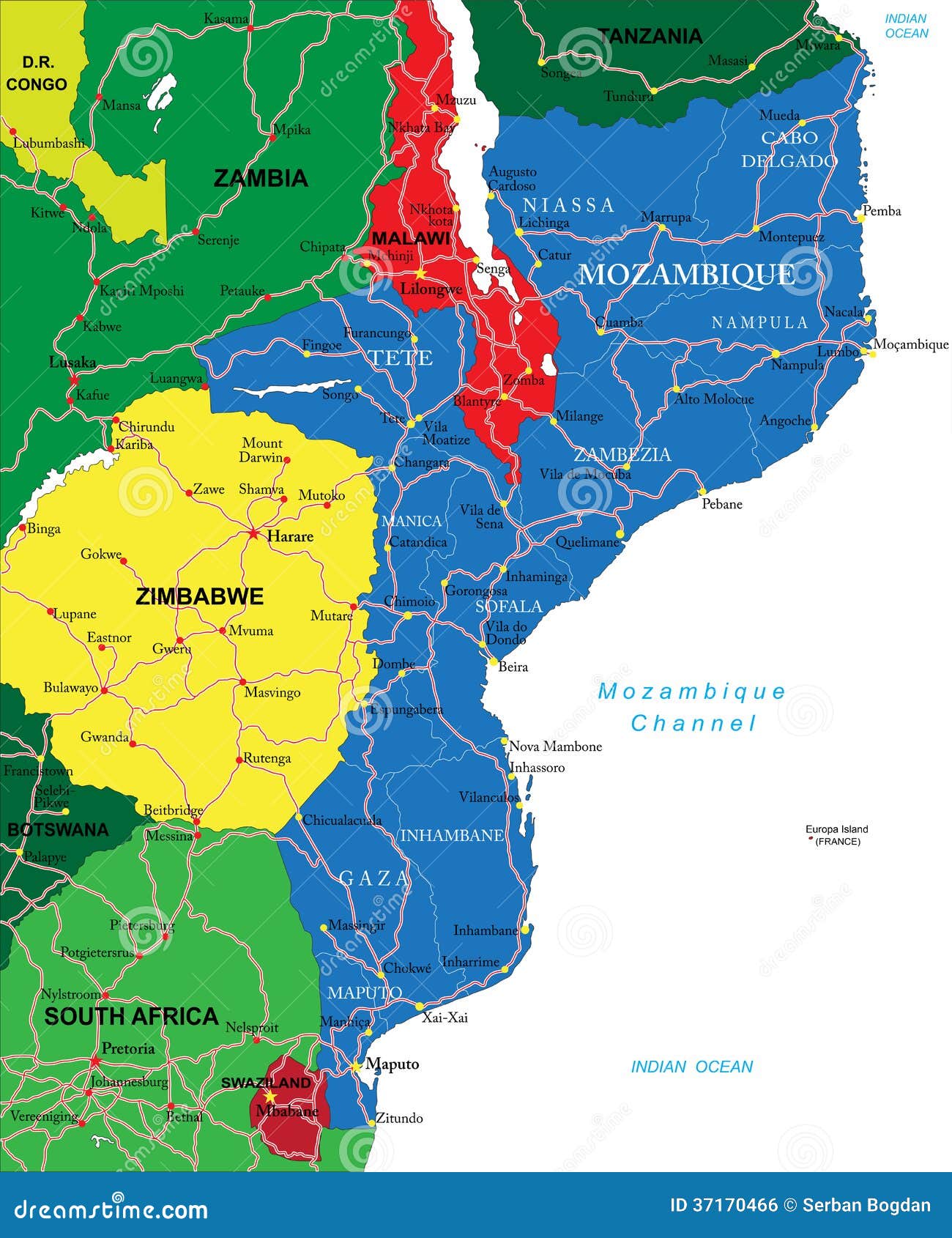 The weakening of the
Mozambican currency, the metical, against the US dollar “has exacerbated the
negative pressure on government debt levels and servicing costs, due to the
high share of foreign-currency denominated debt”, the release adds.Nonetheless,
Mozambique’s public debt is currently sustainable. “While government debt has
risen in recent years, at the end of 2014, 74% of it was composed of bilateral
and multilateral loans on favorable terms, translating into high debt
affordability”, Moody’s noted.As for the negative outlook, this “reflects the
uncertainties surrounding the government's strategy for covering its increasing
external, foreign currency denominated debt payments.” Moody's expects such
payments to increase in the medium-term largely because of the 850 million
dollar loan which EMATUM took on the Eurobond market in 2013. The loan was only
possible because the Mozambican government guaranteed it. If EMATUM cannot
repay, the burden falls on Mozambican taxpayers. This loan has to repaid in
seven years, with just a two year grace period, and at the high interest rate
of LIBOR (London Inter-Bank Offered Rate) plus 6.5 per cent. Although the loan
repayments have been split into two, with EMATUM taking responsibility for 350
million dollars, and the government for the remaining 500 million, Moody’s
doubts that the company will be able to repay any of the loan, so that
repayment ”will likely fall, in full, on the government”.Debt servicing,
Moody’s adds, “could pressure government liquidity in the medium-term, the
extent to which will depend on the government's debt management strategy”. That
strategy, the agency claims, has not yet been defined, and it thinks it likely
that the government will seek external funding, the impact of which “would
depend on whether the financing takes the form of debt, the level of
concessionality in the aforementioned debt, and/or if the government receives
additional budget support”.The alternative would be to finance the foreign debt
domestically, in meticais, which could prove very expensive. “This would still
add pressures to the country’s foreign exchange reserves, as this financing
would need to be converted into dollars to repay the EMATUM bond”, the release
says.
Moody’s warns that
Mozambique’s rating could be further downgraded “if the government does not
find a medium-term plan to deal with increasing external debt payments. Given
the government guarantee, a debt restructuring of the EMATUM bond amounting to
a distressed exchange would also lead to a downward rating adjustment”.A
“distressed debt” is defined as the debt of companies that have filed for
bankruptcy or have a significant chance of filing for bankruptcy in the near
future.Recovery in the Mozambican rating seems to depend entirely on the debt
question. Moody’s remarks that “a stabilization of the outlook could however
result if uncertainties surrounding the government debt management strategy
dissipate”.
GOVERNMENT ACCUSES RENAMO OF ATTACKING POLICE
The Mozambican government, through its delegation for the political
dialogue, which has been dragging over the last two years and with no end in
sight, has blamed the main opposition party and former rebel movement Renamo of
launching five attacks against the police force in Tsangano district, in the
western province of Tete.
 This accusation was made this Monday at the Conference
Centre Joaquim Chissano in Maputo, venue of the ongoing political dialogue with
Renamo, by the deputy head of the Mozambican government delegation, Abduremane
Lino de Almeida.'Our discussion gravitated around a report drawn up by military
experts and in the same report it is written there were five attacks carried
out by Renamo against the police,' said De Almeida, who is also Minister of
Justice, Constitutional and Religious Affairs.He added that the armed militia
belonging to the party lead by Afonso Dhlakama, also attacked a civilian
vehicle.Questioned by reporters about the number of deaths, the Minister said
“there were no casualties”.For his turn, the head of the Renamo delegation, Saimone Macuiane,
said there is a need to set up a commission of inquiry which should include
members of both delegations and national mediators, who would embark on a fact
finding mission.'The government presented issues which it feels are related to
possible violations of the Agreement on Cessation of Military Hostilities,
signed in September last year,' said Macuiane, adding 'we at the table level,
said it is crucial the creation of a commission of inquiry for the area
mentioned by the government'.In the current round, the 113th, it was expected tha both
delegations would start discussing the fourth and last point of the political
dialogue which deals with economic Issues. According to Renamo the idea is to
discuss the equitable distribution of national resources.However, once again the party led by Afonso Dhlakama failed to submit
its proposal on the issue. 'It was our expectation that Renamo would bring its
proposal for the fourth point of the political dialogue, now we are waiting for
the next steps,' said De Almeida, adding 'in fact, it was Renamo who brought
the substance of which is the fourth point (of the political dialogue) '.In the
meantime, the parties continue to differ on the procedures to be followed with
the declaration of party state separation. This is because the Renamo wants the
document to be approved by the Assembly of the Republic, the Mozambican
parliament, while the government disagrees. 'For our surprise the government
says that only Renamo has a responsibility to submit this document to Assembly
of the Republic (the Mozambican Parliament), while it is clear that both
parties should do so,' exclaimed the head of Renamo delegation. On the agenda
of this dialogue are the electoral package, party state separation, military
issues, and economic Issues. However, only the first point, regarding the
Electoral Package, was completed so far.
QATAR AIRWAYS TO RESUME MAPUTO FLIGHTS
 Qatar Airways has announced that it will resume flights between
Doha and Maputo on 21 August.The airline suspended the Doha-Maputo route for
what it described as “operational reasons” on 1 May. Despite skepticism in some
of the Mozambican press, it was clearly always the intention of Qatar Airways
to reactivate the route. Anyone attempting to book a Maputo-Doha flight online
would have found that no flights were available in May, June or July – but
bookings could be made as from late August.There will be three flights a week,
on Wednesdays, Fridays and Sundays. The main difference from the flights that
operated between October 2012 and April this year, is that Qatar Airways is
putting one of its Boeing 787 “Dreamliners” on the route.The flights go via
Johannesburg, but passengers who boarded in Maputo will not be obliged to leave
the plane in Johannesburg. According to a Qatar Airways release published in
the Mozambican press on Tuesday, the “Dreamliner” has one of the spacious
cabins of any commercial airliner, with an on-board entertainment system of
over 2,000 options. Depending on the number of classes (first, business and
economy) on any flight, a Dreamliner can cater for between 234 and 296
passengers. The Deputy Chairperson of Qatar Airways for Africa, Jared Lee,
cited in the release, declared “Mozambique is an important market, and we are
very pleased with the resumption of operations to Maputo”.
Subscribe to:
Posts (Atom)