Friday, August 11, 2017

BM cuts interest rates

Imagem relacionadaThe Bank of Mozambique decided yesterday to reduce the monetary policy interest rate, MIMO rate, by 25 basis points to 21.50 percent. In addition, the Central Bank’s Monetary Policy Committee (CPMO) reduced the rates of the Permanent Lending Facility (FPC) and the Permanent Absorption Facility (FPD) by 25 basis points to 22.50 percent and 16.0 percent respectively, and reduced the Mandatory Reserves (RO) ratio for liabilities in local and foreign currency by 50 basis points to 15.0 percent. The central bank hopes the measure will reduce interest rates charged by commercial banks, long considered unaffordable by the private sector and households alike.
The metical appreciated from 61.43 meticais to the US dollar on 19 June to 60.35 on 9 August. The South African Rand was quoted at 4.63 meticais, on the same date, as against 4.71 meticais on June 19. This recent metical trend, together with the reduction of inflation, has helped halt the losses of external competitiveness that the Mozambican economy had been experiencing.
According to data from the central bank, liquidity in the money market is excessive, reflecting the purchases of foreign currency by the Bank of Mozambique at the initiative of commercial banks in an environment where credit to the private sector has remained stagnant. Between June and August 9, the central bank bought US$347.7 million from commercial banks, increasing the balance of Treasury bonds of different maturities to 82,177 million meticais against 70,306 million on June 30.
Meanwhile, monetary accounts show that as of June 2017, bank credit to the private sector has decreased by one percent in annual terms, maintaining the trend that has been observed since October 2016. The Bank of Mozambique’s international reserves continue to strengthen. By August 9, the central bank had sold US$264 million in the Interbank Foreign Exchange Market, destined to contribute to the liquid fuels import bill. In that period, it bought a total of US$812.7 million, leading the balance of gross international reserves to increase to US$2,446 million, sufficient to cover 6.1 months of imports, excluding large projects transactions. Provisional trade balance figures indicate a substantial improvement, with exports increasing by US$673.2 million in the first half of 2017. Large projects targeting the external market, especially in the areas of mining and aluminum production, accounted for the largest share. Meanwhile, imports increased by only US$20 million.
Imagem relacionadaThe Bank of Mozambique states that the risks of inflation demands prudence in monetary policy.“The level of domestic public indebtedness remains high and represents a risk factor for inflation projections. The collection of public revenues below expectations, in a context of suspension of external support to the budget and high internal indebtedness (97.7 billion meticais), requires a more robust fiscal consolidation,” the Bank of Mozambique reads. From the Bank of Mozambique’s perspective, other risk factors to be taken into account are extreme weather, commodity price volatility and the political environment in neighbouring countries, particularly in South Africa, which could impact on the desired trajectory of prices of diverse goods and services if certain scenarios were to occur.

Eni and Anadarko prepare production phase

Imagem relacionadaThe Mozambique government and concessionaires Eni and Anadarko yesterday passed a significant milestone for the beginning of production of liquefied natural gas (LNG) in areas 1 and 4 of the Rovuma basin in Cabo Delgado. The parties have signed the concession contracts for the unloading facility, the LNG Maritime Terminal and their special licenses, all crucial for the mobilisation of LNG production financing. The contracts were signed by Minister Leticia Klemens, Anadarko’s deputy chairman for International Relations John Grant and Eni East Africa SPa’s director Fabio Castiglion.
Resultado de imagem para Eni and Anadarko prepare production phase mozambique
Other uses, such as the production of fertilisers, liquid fuels and electricity, will require even more work, dedication and cooperation between the parties involved, Minister of Mineral Resources and Energy has said.
Minister Klemens stressed that the contracts signed yesterday impose rights and obligations on all parties and appealed to the concessionaires to comply with their obligations and observe the legal and contractual framework applicable to projects in the Rovuma basin. One of the steps to be taken is the resettlement of the more than 5,000 inhabitants of the Afungi peninsula in Palma to make way for the construction of the liquid gas plant. Klemens says the resettlement must be handled with great care, as Mozambique has learned from other similar projects that this must be approached in a sustainable manner. The signing of the maritime concession contracts comes months after Eni and its partners signed contracts for drilling and the construction of production facilities, as well as agreements on the financing and legal framework of their gas project. In this context, Klemens said she hoped that yesterday’s ceremony would also be a major step towards a final investment decision for the Area 1 project operated by American company Anadarko, which, unlike Eni’s, will be developed on land. The completion of production projects in the Rovuma basin could make Mozambique one of the world’s top three natural gas producers in the world.


Imamanti ismaili community

Imagem relacionada
The imamanti ismaili community in Mozambique celebrated the Diamond Jubilee of Prince Aga Khan as the spiritual leader (Imam) of Muslim Ismailis last Monday (7). The event, which took place in the city of Maputo and had the participation of several individuals of Mozambican cream, reinforces Aga Khan's commitment to partnerships that are based on the ethics of action, peace and pluralism. It is recalled that on July 11, 1957, His Highness Aga Khan assumed the mandate of spiritual leader of the Ismaili community, the 49th Iman who follows a direct and hereditary lineage with more than 1400 years. Within this historic ephemerality, His Highness emphasized the Jubilee's priorities, including poverty alleviation, promotion of pre-school and primary education, strengthening of institutions and reinvigoration of civil society.

"Over the course of 60 years, the Aga Khan Development Network (AKDN) has transformed the quality of life of millions of people around the world, regardless of their origin, race and religion," said the AKDN Diplomatic Representative, Nazim Ahmad. In the areas of health, education, cultural revitalization and economic empowerment, AKDN organizations have been working to inspire excellence and improve living conditions and opportunities, also in some of the world's most remote and troubled regions.

Monday, August 7, 2017

Nyusi and Dlhakama in the Gorongosa Mountains

Pledged to continue the peace dialogue Mozambican President Filipe Nyusi and Renamo President Afonso Dhlakama met on Sunday (7) in Gorongosa.
The Mozambican presidency says the two leaders discussed and agreed on next steps in the peace process, which they hope will be completed by the end of the year.
Without details, the note said that they agreed to maintain their dialogue and closely monitor the work of the two committees, aiming at a new meeting, soon, to prepare the final steps.
Gorongosa, headquarters, and refuge of Dhlakama, leader of the opposition and its main military base.
This meeting was not announced before.

Wednesday, August 2, 2017

3 countries cooperating with Mozambican

Authorities in Portugal, Brazil and São Tomé are now providing information to the Mozambican attorney general about alleged corruption in the purchase of two Embraer aircraft by Mozambican Airlines, according to an official source quoted by daily newspaper Notícias.
Resultado de imagem para embraer lam
The authorities of the three countries responded to a request in connection with alleged corruption during the purchase of the aircraft between 2007 and 2009.
“It is a long road, but it is being driven. We are pleased that there is cooperation from the countries we requested information from,” the source said.
In addition to the three countries mentioned above, the Mozambican attorney general, who has already charged three defendants in the case, also requested information from France, the United States and the United Kingdom, who said they were still working on the information requested.
Resultado de imagem para sao tome & principe mapBrazilian court documents released at the end of last year show that Embraer paid US$800,000 (EUR 741,000) to managers of national airline Linhas Aéreas de Moçambique (LAM) and an intermediary, also Mozambican, for the sale of two aircraft in 2009.
The amount was deposited into the São Tomé and Príncipe account of a fictitious company created as part of the suspected corruption scheme, one of a number of illicit payments that the Brazilian manufacturer is alleged to have made in several countries.Last week, Brazilian officials took evidence from people directly involved in the aircraft acquisition process at a hearing that attended by prosecutors from the Mozambican attorney general’s office.

Moza Banco recapitalisation

The Mozambican central bank yesterday announced that the recapitalisation process of Moza Banco had been completed and that the bank would from now on “function normally with its own bodies”.In a statement sent to newsrooms, the Bank of Mozambique “announces the conclusion of the recapitalisation process of Moza Banco, SA” and adds that this process was only “possible through the increase of capital by the entry of a new shareholder in the credit institution in reference”.
Resultado de imagem para mozabanco
“With the recapitalisation and consequent normalisation of the financial and prudential situation of Moza Banco, the reasons that dictated the intervention of the regulator, in this case the Bank of Mozambique, cease to exist,” the statement says. Thus, the regulator determines “the termination of the extraordinary reorganisation measures imposed on Moza Banco, SA and on the exoneration of the provisional Board of Directors, with the credit institution operating normally with its own bodies”.
The Bank of Mozambique announced at the end of May the sale of Moza Bank to Kuhanha, a company which manages the pension fund of the central bank workers, after having intervened in September of last year, suspending Moza’s board of directors and executive commission to protect the interests of depositors.“The financial and prudential situation of Moza Banco has been deteriorating in an unsustainable way”, which made it necessary to “reinforce the extraordinary reorganisation measures” provided for by law to “protect the interests of depositors and other creditors”, safeguarding “the normal operating conditions of the banking system,” the central bank said at the time. Following the intervention, the regulator injected around 8 billion meticais (EUR 105 million) into Moza Bank to forestall its collapse and prevent “an earthquake” in the Mozambican financial system.

Russia funds National School

Resultado de imagem para World Food ProgramMozambique’s Ministry of Economy and Finance (MEF) and the World Food Program (WFP) signed in Maputo a Memorandum of Understanding for the implementation of the National School Meal Programme (PRONAE).The program is part of an initiative under which the Russian government will convert part of Mozambique’s debt into development projects.Budgeted at US$40 million, the programme will run over the course of the next five years. Signing the memorandum, MEF Permanent Secretary Domingos Lambo said that the program is aligned with the development strategy aimed at boosting agricultural production, productivity, education, health and social protection for the vulnerable population.“This memorandum responds to the priorities defined in the Government’s Five Year Program for the implementation of school meal programmes across the country,” Lambo said.
Imagem relacionada
For his part, the Russian ambassador to Mozambique, Andrey Kemarsky, praised the efforts of both governments to improve students’ nutritional health and assured that his country will continue to support the education sector in Mozambique.WFP representative Karin Manente said that the Memorandum is the culmination of talks started in 2015 between the governments of Russia, Mozambique and WFP.“The WFP will continue to work to materialise its desire to see improved of student enrolment rates in schools, their retention and better passing rates,” said Manente.For her turn, the National Director of Nutrition and School Health at the Ministry of Education and Human Development, Arlinda Chaquisse, explained that the memorandum falls within the initiatives for social protection, seeking to promote inclusive social development.According to Chaquisse, cited in a press release received on Tuesday, the gesture of the Russian government is one of the best initiatives to improve food security and the level of learning for most vulnerable children.PRONAE is based on local purchases of food products and supported by three pillars, namely improving the nutritional status and health of students; food and nutrition education in schools; development of skills for agro-livestock production.The program also provides for the gradual coverage of all pre-primary and primary schools, with emphasis on community participation and nutritional education.


Police unit suspended of corruption

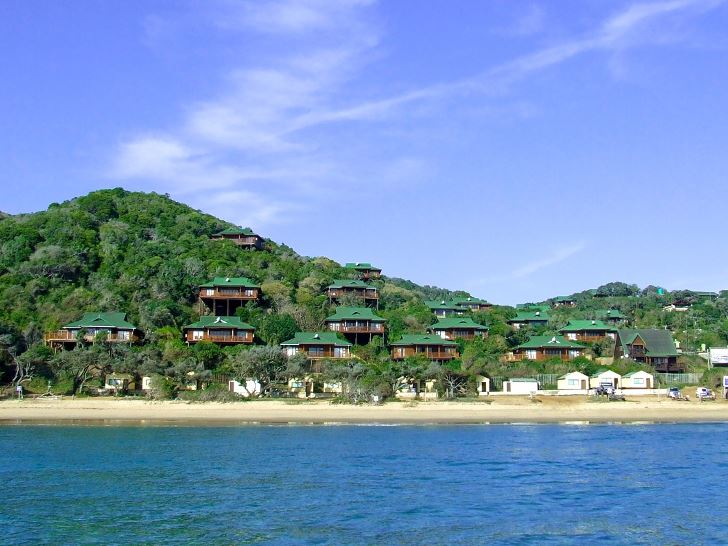
The Mozambican police force has suspended all the policemen stationed in the tourist resort of Ponta do Ouro, in the far south of the country, after local residents accused them of extorting money from tourists.
Imagem relacionada
It is feared that corrupt behaviour by the police may be one reason for a decline of tourism in Ponta do Ouro. This area borders the South African province of Kwazulu-Natal, and tourists from South Africa are key to the local economy. Speaking on Tuesday at the weekly police press briefing in Maputo, the spokesperson for the General Command of the police, Claudio Langa, said “The Command has decided to remove the entire police unit stationed in Ponta de Ouro until the truth of the complaints raised by the public is established. Meanwhile, another unit will be placed there”.
Imagem relacionadaThe General Command’s decision came after an amateur video, showing the moment when an angry crowd blocked a police vehicle, circulated widely on social media. The crowd intervened to rescue a tourist who was about to be dragged to a local police station, where they feared money would be extorted from him.
Langa explained that the incident occurred when the car used by a group of tourists became stuck in a sandy Ponta de Ouro road. The police saw that the car was obstructing the road, and demanded to see the driver’s documents. The tourist presented the legally required documents – but nonetheless, the police demanded that he accompany them to the station.
Imagem relacionada
At this stage, the crowd intervened and physically prevented the police from taking the tourist with them.Langa added “the public say that the police treat tourists badly. Tourists don’t visit places where the police mistreat them. When tourists who are badly treated go back to their home countries, they tell their colleagues that Mozambique is not a good place for tourism”.

This is far from the first case in which video evidence has been used against corrupt police officers. In the recent past, videos shot on cell phones have shown members of the traffic police extorting money from motorists. When these policemen can be identified, they have been expelled from the police force.

Tuesday, August 1, 2017

Port of Beira to handle 12 million tons

Imagem relacionada
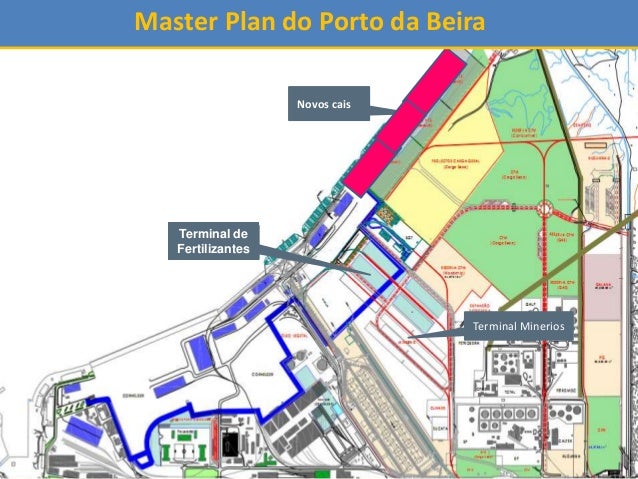
The Port of Beira in Sofala province expects to handle 12 million metric tons of merchandise this year for Zimbabwe, Zambia, Malawi and the Democratic Republic of Congo, Mozambique’s hinterland countries. Goods transited included fertilisers, agricultural products and liquid fuels, Minister of Transport and Communications Carlos Mesquita noted yesterday in Beira when speaking to reporters after landing at Beira International Airport to attend the meeting of SADC transport ministers responsible for the Beira and North-South corridors.
sadc.map.flagsRadio Mozambique quotes Minister Mesquita as saying that he would evaluate investments at the Port of Beira, and that some agreements aimed at boosting development in the region would be signed.


Is the debt illegitimate?

Budget support donors, the World Bank and Japan have all said recently that the Kroll forensic audit of the $2 bn secret debt was insufficient to allow a resumption of direct funding to the government. This suggests the squeeze on government spending will continue for at least another year, which could have an impact on municipal elections in October 2018. The government is already surviving by not paying its bills and through domestic borrowing, and the World Bank in its Mozambique Economic Update issued earlier this month noted that government was recently unable to sell bonds even at an interest rate of 28.3%. The World Bank has been one of the biggest providers of budget support and in March Bank country representative Mark Lundell said he hoped budget support could be resumed this year. But on 24 July Bank Executive Director Andrew Bvumbe dashed any such hopes. On a visit to Maputo he stressed that budget support could not be resumed without a restructuring of the debt, including the $2 bn secret debt, and agreement on an IMF programme, which in turn requires filling the information gaps left by Kroll. (Savana 28 July, Lusa 25 July).
Imagem relacionada“The auditors were however denied full cooperation from all institutions (national and international)” noted a report accepted last week by the Group of 14 (G14) budget support donors. “Despite being refused essential information, the summary suggests major misconduct from national and international parties.” The G14 demanded “publication of the full report and additional information to fill the major gaps”, as well as “accountability” and fiscal and governance reforms. (Savana 28 July) So no budget support soon. Japan has cut off all new lending to Mozambique, Yamashita Chigiru, the representative of the Japanese International Cooperation Agency (JICA), told O Pais (20 July) in Tokyo. He said it was necessary not only to clarity the secret debts, but to ensure that such a situation cannot be repeated; until then, “it is not appropriate to give loans to Mozambique.” Although the World Bank continues to approve new projects not involving direct funding of the government budget, Japan has stopped all new lending although it will continue with projects already under way. In a statement 24 July Minister of Economy and Finance, Adriano Maleiane, accepted that there would be no IMF programme this year, but said there was the possibility of a program in 2018.
Resultado de imagem para MaputoThe Kroll audit underlined that whatever the responsibility of the Mozambicans who took the loans, the lending banks VTB and Credit Suisse should have done (and probably did do) “due diligence” studies which would have shown that the loans violated Mozambican law and constitution, that the companies would be unable to repay, and that the purposes of the loans were dubious. Thus it can be argued that the loans were “illegitimate” and the responsibility of the lenders, VTB and Credit Suisse, and not the Mozambican government. Donors are divided and this has caused debate within the budget support group. The EU and UK argue that the Mozambican government is liable and should repay. But Switzerland, Sweden, Canada and others argue that Mozambique should declare the debt illegitimate and refuse to pay. Frelimo and the government are also divided, with some fearing that a refusal to pay would point the finger at former President Armando Guebuza and current president (and former defence minister) Filipe Nyusi as being responsible for taking obviously improper loans. The alternative to refusing to pay would be to negotiate to delay repayment for at least a decade.  Civil society is increasingly calling for not paying. The Budget Monitoring Forum (Forum de Monitoria do Orcamento) last week published a paper “Mozambique should not pay the hidden debt” by the editor of this newsletter, Joseph Hanlon. The paper argues that the secret loans are illegitimate loans to private companies, with no liability to the government. Loan guarantees given by the finance minister violated Mozambican law and the constitution. Under the loan contract, any action relating to failure to repay would be taken in English courts. Mozambique has been advised that English courts would not consider the violation of the Mozambican constitution, but this is not true. A March 2017 ruling in the High Court in London said that failure to follow domestic rules by a borrowing state must be considered by an English court. This means that if the lenders brought an action in English courts against the government, the lenders stand a high chance of losing. Therefore they will surely prefer to negotiate a deal with partial repayment, and to try to force the banks which organised the loans, Credit Suisse and VTB, to accept some share of responsibility. (Savana 28 July) The report is available in English here and in Portuguese here. In 1998-2000 Joseph Hanlon was policy officer for the Jubilee 2000 campaign to cancel the unpayable debt of poor countries and has written extensively on illegitimate debt. “We cannot permit the Mozambican people to be charged with the responsibility of paying with misery, blood and death for debts contracted on their behalf in an illegal and unconstitutional way,” the Catholic Episcopal Commission on Justice and Peace said on 4 July. The statement, signed by the Bishop of Pemba, Luis Fernando Lisboa, also demands that those who contracted the debts should be held responsible for their actions, as should those who obstructed the audit by Kroll. Asked about the statement on 19 July, President Filipe Nyusi in effect told the church to keep out of politics: “I would not like the religion of my country to be confused with politics. … They need to know what is their area of leadership
Imagem relacionada
The report on the summary of the Kroll audit which was accepted by the G14 group of budget support donors raises a series of questions. It is unhappy with the summary, which did not include the Terms of Reference (ToR) of the audit, and notes that “the lack of the ToR impedes a proper evaluation of the report.” It says the full report should be published by the end of September, but points to the “major gaps” in information. The points in the Kroll summary it highlights include the lack of any viability or value for money assessments and high fees of “about 10% of the total loan”. It notes “Kroll concludes a potential overcharging of approximately 55% of the net proceeds of Ematum and Proindicus” noting that “for MAM, Kroll was unable to evaluate potential overpricing.” Thus overpricing could be as much as $1.2 bn of the $2 bn loan. No one has been able to identify the use for the $500 mn eventually put on the state budget from the Ematum loan. Little of the money entered Mozambique which means the majority of transactions were made outside the country and thus outside purchasing and financial management systems. And it stresses that “there are accountability issues that stretch beyond the borders of Mozambique.”


Reaches significant Mozambique

Imagem relacionada
Anadarko Petroleum Corporation today announced that it had finalised two agreements with the Government of Mozambique – together known as the “marine concessions” – which would allow it to design, build and operate the marine facilities for its LNG project in northern Mozambique. This follows the publication of the Mozambican Government Decrees approving those agreements. “This is a key milestone on the path to a final investment decision (FID) for our initial two-train LNG project,” said Mitch Ingram, Anadarko Executive Vice President, Global LNG. “It marks the completion of the core components of the Legal and Contractual Framework with the Government. We will now look ahead with our plans to begin resettlement, which will enable the construction of the LNG plant. In addition, we continue to make good progress with our efforts to secure long-term LNG Sales and Purchase Agreements (SPAs) with premier buyers, and we will intensify our work to put in place the necessary financing for the project. We expect to take FID once the SPAs and financing are in place.”
Anadarko is developing Mozambique’s first onshore LNG plant consisting of two initial LNG trains with a total capacity of 12 million tonnes per annum (MTPA) to support the Golfinho/Atum field located entirely within Offshore Area 1.
Resultado de imagem para Anadarko Petroleum CorporationAnadarko operates Offshore Area 1 with a 26.5-percent working interest. Co-venturers include Empresa Nacional de Hidrocarbonetos E.P. (ENH) (15 percent), Mitsui E&P Mozambique Area1 Ltd. (20 percent), ONGC Videsh Ltd. (16 percent), Bharat PetroResources Ltd. (10 percent), PTT Exploration & Production Plc (8.5 percent), and Oil India Ltd. (4 percent).
Anadarko Petroleum Corporation’s mission is to deliver a competitive and sustainable rate of return to shareholders by exploring for, acquiring and developing oil and natural gas resources vital to the world’s health and welfare. As of year-end 2016, the company had approximately 1.72 billion barrels-equivalent of proved reserves, making it one of the world’s largest independent exploration and production companies.

This news release contains forward-looking statements within the meaning of Section 27A of the Securities Act of 1933 and Section 21E of the Securities Exchange Act of 1934. Anadarko believes that its expectations are based on reasonable assumptions. No assurance, however, can be given that such expectations will prove to have been correct. A number of factors could cause actual results to differ materially from the projections, anticipated results or other expectations expressed in this news release, including Anadarko’s ability to successfully plan, secure additional government approvals, enter into long-term sales contracts, finance, build, and operate the necessary infrastructure and LNG park in Mozambique. See “Risk Factors” in the company’s 2016 Annual Report on Form 10-K, Quarterly Reports on Form 10-Q and other public filings and press releases. Anadarko undertakes no obligation to publicly update or revise any forward-looking statements.

Let Justice do its job, urges Nyusi

Mozambican President Filipe Nyusi on Friday declared that the bodies of the administration of justice must be allowed to do their job in prosecuting anyone responsible for criminal activities in the scandal of the country’s “hidden debts”.
Speaking in his capacity as President of the ruling Frelimo Party, at the end of a meeting of the Party’s Central Committee in Maputo, Nyusi said that now is the time for the Attorney-General’s Office to work on the results from the independent audit which showed “there were irregularities that might indicate crimes” in the contracting of the debts.
Resultado de imagem para nyuse“It is time to allow justice to work within the spirit of the separation of powers”, declared Nyusi. This is the clearest indication so far that the President will not stand in the way of prosecutions of members of the previous government, headed by his predecessor Armando Guebuza, who were responsible for illegally guaranteeing loans for over two billion dollars, contracted in 2013 and 2014 by the security-related companies Ematum (Mozambique Tuna Company), Proindicus and MAM (Mozambique Asset Management) from the European banks Credit Suisse and VTB of Russia. While the 850 million dollar loan to Ematum was in the public domain, since it took the form of a bond issue in Europe, attempts were made to keep the loans to Proindicus (622 millon dollars) and MAM (535 millon dollars) secret. When the scandal finally erupted into public view in April 2016, the International Monetary Fund (IMF) suspended its programme with Mozambique, and other western donors and funding agencies also cut off their financial aid.
The IMF made it clear that an international, independent audit of the three companies was a basic condition for resuming normal relations. The PGR thus hired Kroll Associates, regarded as the world’s foremost forensic auditing company, to undertake the audit. The PGR published the executive summary of the audit report in June, in which Kroll protested that it had not received full cooperation from the companies. The information they provided was incomplete, and thus failed to give a complete picture of the debts. To make matters worse, Antonio do Rosario, the agent of the State Security and Intelligence Service (SISE), who is the chairperson of the three companies, in a message widely reproduced on social media, boasted that he had obstructed the audit and even expelled the Kroll auditors from his office. Since Kroll as working for the PGR, Rosario’s actions clearly constitute the crime of obstruction of justice. The failure to cooperate with the audit clearly angered the IMF, which has demanded publication of the full Kroll report, and shows no sign of agreeing to a speedy resumption of its programme with Mozambique.
But even the incomplete audit drew damning conclusions. Kroll compared the prices on the invoices of assets purchased, such as Ematum’s fishing boats, and the patrol vessels of Proindicus, with an independent valuation and found a discrepancy of 713 million dollars. It was also impossible to account for 500 million dollars of the Ematum loan supposedly used for military purposes. As for the guarantees for the loans, given by the Guebuza government, it was clear, even before Kroll was hired, that these were illegal. They smashed through the ceilings on loan guarantees fixed in the 2013 and 2014 budget loans. They were also unconstitutional, since a clause in the Mozambican constitution establishes that only the country’s parliament, the Assembly of the Republic, can authorise such debts.
“As we always said”, Nyusi told the Central Committee, “it is in the interests of the government and of the entire Mozambican people, that the investigations clarify the contours of this case, which involves national institutions, and international suppliers and banks”. He pledged that the government will continue to cooperate with the PGR in implementing the recommendations from the Kroll report. The government would not make any “pre-judgment”, he promised, since that would “run the risk of usurping powers that belong to the judiciary”.

Imagem relacionada
“International experiences have shown that cases of this kind have required time for investigation”, added Nyusi. “The government will continue to provide its support in order to contribute to greater speed in this process”. He added that the government is drawing up a Plan of Action “intended to strengthen the mechanisms for managing the public debt, and boosting transparency in managing public assets”. Nyusi stressed that the country’s agenda should not be reduced just to clearing up the debt scandal, and so he once again urged Mozambicans to work for increases in production and productivity, in order to advance the overall development of Mozambique.

Introduce environment friendly fuel

National fuel authorities confirmed in Maputo on Monday that Mozambique will introduce fuel with low sulfur content this September complying with the recommendations from the United Nations Agency for Environment.The National Director of Hydrocarbon and Fuel, Moises Paulino said that this move is part of the harmonisation of fuel specifications to be used with low potential to harm the environment, reports the local media.
Resultado de imagem para fuel“The introduction of fuel with low sulfur content was initially established in June, but it did not happen because at that time the country experienced problems in its system of fuel supply so the government decided to postpone the deadline,” said Paulino. Mozambique has been planning to introduce environment friendly fuel since last year and from this September it will gradually introduce to national consumers fuel with 50 ppm (parts per million) to replace the 500 ppm kind drivers are using in their vehicles presently. According to the national director, Mozambique will also abandon the type of gasoline it is using from 93 octanes to 95 octanes.With this move Mozambique will not only contribute for environment protection but also extending the lasting period of vehicles driven by its citizens.

On the other hand, Mozambique is slowly introducing alternatives to the consumption of fuel in the country, promoting the conversion of vehicles to use gas which is already produced in the country and few stations are already functional in the capital Maputo.In June, when the supplying system failed few cities were restricted from accessing fuel creating a scenario of speculation, and disrupting the normal business operation. The experience informed the authorities again the need to accelerate the use of alternative fuel in the country.