 This iconic and landmark hotel has just completed an
extensive renovation which included the addition of 111 guestrooms, a complete
refurbishment of the existing 158 guestrooms, the addition of 3 conference
venues and all the public areas. The rich Portuguese heritage of Mozambique
flows through the décor, detail and hospitality of Southern Sun Maputo. Located
on the Maputo beachfront, this hotel is a popular haven for business and
leisure travellers, and is conveniently situated a mere 7km from the Maputo
International Airport. While you may well be tempted to indulge in the many
excellent services and facilities offered by the hotel, a variety of things to
see and do can be found in the area too. From the world-class golden beaches of
Mozambique, to travel highlights such as Inhaca Island, Maputo Elephant
Reserve, Casa do Ferro (The Iron House), Parque dos Continuadores, Natural
History Museum, Maputo Central Market and many other fascinating sights, each
day is sure to be even more memorable than the last.
Tuesday, August 11, 2015
Tsogo Sun
This iconic and landmark hotel has just completed an
extensive renovation which included the addition of 111 guestrooms, a complete
refurbishment of the existing 158 guestrooms, the addition of 3 conference
venues and all the public areas. The rich Portuguese heritage of Mozambique
flows through the décor, detail and hospitality of Southern Sun Maputo. Located
on the Maputo beachfront, this hotel is a popular haven for business and
leisure travellers, and is conveniently situated a mere 7km from the Maputo
International Airport. While you may well be tempted to indulge in the many
excellent services and facilities offered by the hotel, a variety of things to
see and do can be found in the area too. From the world-class golden beaches of
Mozambique, to travel highlights such as Inhaca Island, Maputo Elephant
Reserve, Casa do Ferro (The Iron House), Parque dos Continuadores, Natural
History Museum, Maputo Central Market and many other fascinating sights, each
day is sure to be even more memorable than the last.
Manga-Mungassa
 Entrepreneurs interested in the EEZ, the Director General of
GAZEDA responded positively, saying there are three essential components of
investment, including international logistics center, industrial free zone,
which can hold up to 40 companies in the first phase, and the installation of
industrial units high technology."The EEZ of Manga-Mungassa is
evolutionary, occupying 217 hectares at present. Can grow up to a thousand
hectares, which will depend much of its development and the conditions that
exist around them in terms of availability of space, "Nala said.
The location of this EEZ in the port city of Beira is seen as
another factor that contributes greatly to attract more investors who make the
Port of Beira coming from hinterland countries, including Zimbabwe, Zambia,
Malawi and Tanzania.Nalá said that for reasons of special economic zones
strategies should be located near the ports and railways in order to attract
more investors, hence Sofala enjoys a strategic geographical position in the
context of the national economy and the region, highlighting the "Beira
Corridor "an authentic input and output for various SADC countries through
the National Road Number Six and the rail and port system, composed of the Port
of Beira and the Beira rail-lines-Machipanda, Beira-Moatize and the Sena line."As
you know, the city of Beira is the second largest economic center of
Mozambique, a major international port city, making it an important passage of
transport to the countries of Southern Africa. The National Road Number Six is
being built and is expected to be completed within three years, "he
viewed the Director-General of GAZEDA.
 COMPANY Chinese Dingsheng International Investment, the
Special Economic Zone operator Manga-Mungassa in Beira, said they have started
the preparatory works of 785 thousand square meters intended for processing
free trade. After the ten stores to be completed and leased by both
national operators and foreign will be built a set of industrial deposits of
merchandise to meet the growing demand of these services. The warehouses cover
an area of 2500 square meters.These data were presented by the representative
of Dingsheng International Investment, Peter Han, at the seminar to promote
investment opportunities in the EEZ Manga-Mungassa.Han noted that the work that
your company is to carry out is aimed at attracting more businesses by
providing a package of tax incentives and non-tax."On the other hand, the
free trade processing zone, with an area of 785 thousand square meters, is
already in the construction phase and is expected to attract more businesses,
by providing a tax incentives and non-tax package," he said the
representative of the operating company of the EEZ of Manga-Mungassa.The
logistics center with an area of 50 thousand square meters, has more than 60
vehicle transport and distribution with international transport permits that
meets the EEZ of the business sector's needs 24 hours a day.
 For Maria Helena Taipo, the Special Economic Zone project
Manga-Mungassa is an asset as it will contribute to increased production and
productivity of the province in the near future.Helena Taipo speaking on the
sidelines of the second seminar to promote investment opportunities for the EEZ
of Manga-Mungassa.At the time it revealed that, in addition to increasing the
province's economy, the SEZ has been creating more jobs for young people,
especially Mozambicans, thus reducing the unemployment rate in the province in
particular and the country in general.Helena Taipo invited domestic and foreign
investors to do their utmost for the realization of the project which is the
first to be created in the country, followed by Nacala.
"We have great
confidence in the potential that the EEZ property, including its good location,
safe investment environment and favorable policy incentives EEZ Manga-Mungassa,
which in addition to making grow the province's economy will also bring great
returns to domestic and foreign investors.
Friday, August 7, 2015
NYUSI STRESSES INTEREST IN DEFENCE COOPERATON WITH INDIA
 Mozambican
President Filipe Nyusi on Friday repeated the interest of both Mozambique and
India in boosting their cooperation in maritime security.Speaking at a press
conference in Ahmedabad, the largest city in the state of Gujarat, at the end
of a three day state visit to India, Nyusi recalled that ships from the Indian
navy have put in regularly to Mozambican ports, and have carried out
hydrographic surveys in Maputo and Beira.The Indian navy had played an
important role in the fight against piracy in the Indian Ocean. It was Indian
warships which, in 2011, hunted down Somali pirates who had seized a Mozambican
fishing vessel, the “Vega 5” and enslaved its crew. The Indians were able to
release most of the Mozambican crew members and return them to Beira.Other
maritime threats to be countered, Nyusi added, include illegal fishing and
pollution on the high seas (this takes the form, for example, of ships
illegally flushing out their tanks in the Mozambique Channel).Mozambique was
working with its immediate neighbours, South Africa and Tanzania, to improve
security in the Mozambique Channel, Nyusi said, and some Mozambican seamen have
undergone training on Indian ships that pass through the Channel.At Nyusi’s
discussions with Indian Prime Minister Narendra Modi on Wednesday, both men
spoke of the need to boost their security cooperation, although so far no
specific measures have been mentioned. The two leaders agreed that a meeting of
the Mozambique-India joint working group on defence cooperation should be held
in the near future.Nyusi told the Mozambican journalists who had accompanied
him to India that the visit had succeeded in all its objectives. “We aimed to
strengthen our relations of friendship and cooperation, and to boost our
economic ties”, he said. “I believe we have certainly achieved these goals”.60
Mozambican business people were on the Presidential delegation, and Nhyusi
spoke at two business forums, one in New Delhi and one in Ahmedabad. Among the
messages he delivered, Nyusi said, was that, while there is no single solution
to poverty relief in Mozambique, “neither mining, nor tourism, we are now
stressing agriculture”,In Amedabad, Nyusi visited the Arvind Mills textile
factory, where he had been briefed on all aspects of this company’s cotton and
textile production, including the use of improved cotton seeds, laboratories to
test the soils, and all the manufacturing processes leading from the harvesting
of cotton to ready made clothes.Some of the necessary facilities for the
industrialization of Mozambican agriculture were already in place, Nyusi said.
This was the case, for example, with a soil laboratory that he had recently
inaugurated in the northern city of Nampula. A similar facility already existed
in Sussundenga, in the central province of Manica.“Productivity will only rise
if we know which types of seeds do well in which types of soil”, the President
added. “It is better if we use seeds that are already resistant to pests and
diseases”.Nyusi was confident that Mozambican peasant farmers want to improve
the technology they use. “Our farmers want to use tractors and abandon the
short handled hoe”, he declared.
Thursday, August 6, 2015
Mozambique millionaires seen leading growth of Africa’s rich
 Mozambique millionaires seen leading growth of Africa’s rich South Africa is expected to remain home to most of the continent’s wealthy.Mozambique is expected to add dollar millionaires at the fastest rate in Africa over the next decade followed by Ivory Coast and Zambia as a mix of construction, financial services and property developments boost the ranks of the rich on the world’s poorest continent.The number of people with net assets, excluding their primary residence, of more than $1 million will surge 120% in Mozambique by 2024 to 2,200, Johannesburg-based research company New World Wealth predicted. The number of millionaires in Ivory Coast will jump 109% to 4,800 while those in Zambia will double, the company forecast.
“High net worth individual numbers are expected to rise by 45% over the next 10 years, reaching approximately 234,000,” New World said in the report given to Bloomberg.Mozambique’s economy is being boosted by the biggest natural gas find in the world in the last decade, Ivory Coast is recovering from a civil war and Zambia’s rich are expected to benefit from real estate development. The countries will take over from oil producers Angola and Ghana, where the number of millionaires rose more than fivefold between 2000 and 2014, according to New World.Over that period the number of millionaires in Africa rose 145% compared with a global average of 73%.
Asset Managers
While South Africa, with 46,800 millionaires, and Egypt, with 20,200, remain Africa’s biggest wealth centers, growth in the numbers of the rich have been held back by emigration from a stuttering economy in South Africa and instability in Egypt.Still, South Africa is expected to remain home to most of the continent’s wealthy, with their numbers rising 40% in the next decade to 65,700.About $120 billion in African wealth is overseen by asset management companies with Investec Ltd. holding the biggest market share followed by Rand Merchant Bank and UBS AG, New World said. The African private banking market is forecast by the research company to grow 8% per annum over the next decade.
5th hydrocarbon licensing round
 Three majors are vying for the same block offshore Mozambique in Mozambique's fifth licensing round, according to the round application details released by the country's National Petroleum Institute (INP). It reveals that ExxonMobil, in partnership with Rosneft, Eni, with partners Sasol and Statoil, and Total, have all separately applied for area A5-A in the Angoche basin, offshore northern Mozambique. Rosneft had already revealed its application led by ExxonMobil for area A5-A/B in the Angoche basin and Z5-C/D in the Zambezi Delta late last week. Eni has also both applied for the A5-B area.Mozambique has become one of the most promising countries in Africa in terms of natural gas and coal resources. There have been prolific natural gas discoveries in Mozambique's northern offshore Rovuma basin since 2010, led by Anadarko and Eni in Areas 1 and 4, with plans for a four-train LNG plant underway.In total, some 15 areas were included in the round, within the offshore Rovuma, Angoche, and Zambezi areas, as well as onshore areas, together covering 74,402sq km. But, most of the applications have been for a limited number of areas, with stiff competition for some areas.The round was launched 23 October 2014 and closed, after six months delay, 30 July with applications received for the following offshore blocks:
Angoche basin A5-A
- ExxonMobil Exploration & Production Mozambique with partner RN-Exploration (Rosneft)
- Eni Mozambico, with partners Sasol Petroleum Mozambique Exploration and Statoil
- Also, as a non-operator Petroinveste Mozambique and, separately Namoza Natural Resources
Angoche basin A5-B
- ExxonMobil Exploration & Production Mozambique with partner RN-Exploration (Rosneft)
- Eni Mozambico, with partners Sasol Petroleum Mozambique Exploration and Statoil
- Total E&P Mozambique with partner Sonangol Hidrocarbonetos Internacional
- Also, as a non-operator Petroinveste Mozambique and, separately Namoza Natural Resources
Zambezi Delta Z5-C
- ExxonMobil Exploration & Production Mozambique with partner RN-Exploration (Rosneft)
- Zambezi Delta Z5-D
- ExxonMobil Exploration & Production Mozambique with partner RN-Exploration (Rosneft)
- Also as a non operator Namoza Natural Resources
Empresa Nacional de Hidrocarbonetos de Mocambique (ENH) will have a minimum 10% interest in all fifth round licenses. As a non-operator, Namoza Natural Resources also applied for areas R5-A/B/C, Z5-E, and PT5-B/C. INP will now evaluate the submitted applications on defined criteria which include the Health Safety and Environmental (HSE), the financial strength, technical competence and capability and Economic terms offered to the Mozambican State. INP anticipates that it will announce the results within the next three months.
Applications were also received for onshore areas:
- Troisade Energia Mozambique (Onshore areas PT5-B and PT5-C)
- Shoreline Canoverseas Petroleum Development, with partners Bluegreen Investments and Indico Dourado (Onshore area PT5-B)
- Sasol Petroleum Mozambique Exploration (Onshore area PT5-C)
- Delonex Energy with partner Indian Oil Corporation (Onshore area P5-A)
There were also applications for areas not included in the fifth round from:
- Eni Mozambico (Reconnaissance - Angoche area)
- Delonex Energy (EPCC - Palmeria Northern Extension
According to Deloitte, exploration for hydrocarbons in Mozambique dates back to 1948 and prior to 1971, 54 exploration wells had been drilled, including 10 offshore. No discoveries were made which were deemed commercial at the time and activities ceased during the independence struggle and ensuing civil war.Recently most interest has focused offshore, with Anadarko and Eni acquiring concessions in the Rovuma basin, off the northern coast in 2006 (offshore Areas land 4 respectively), and making their massive gas discoveries in 2010-2011.
Wednesday, July 29, 2015
Chinese financing to Mozambique increases 160 pct in 2 years
China is now Mozambique’s largest creditor, after increasing its funding to the African country by 160 percent since 2012 as significant Chinese investments are being prepared.The weight of financing from China to Mozambique will grow nearly 50 percent, compared with current loan values, with a new loan of US$400 million announced last week.The new loan is for construction of a 600-kilometre power transmission line between the Mozambican provinces of Zambézia and Nampula, according to the Mozambican government.
 Construction of the northern plant of the Cahora Bassa hydroelectric facility is scheduled to begin soon and the Mozambican government expects the project will cost US$413 million (368 million euros) and has attracted the interest of China Three Gorges and China State Grid, according to Portuguese financial daily Diário Económico.China State Grid also intends to finance and build the hydroelectric plant of Mpanda Nkua, designed to be the second largest hydroelectric in the country and awarded to Brazilian construction companies in 2010, but which ran into difficulties.According to data compiled by the Portuguese bank in its latest report on Mozambique, total debt to China was US$886 million in 2014, 160 percent more than in 2012, when the main creditor of Mozambique was still Portugal.
Debt to China already accounts for about one-third of Mozambique’s total debt, which has nearly doubled since 2010.The recent increase in debt was “essentially based on taking on bilateral loans with China, which accounted for about 70 percent of new disbursements in 2014,” along with multilateral loans, said the BPI report.Taking on foreign loans has been a way for Mozambique to offset the declines in extraordinary income and donations, which resulted in an increase in the state budget deficit.BPI expects total debt will continue, in this scenario, to increase to “levels considered high for a country with the level of development of Mozambique,” and recommends reducing the general state deficit, even taking into account expected economic growth that will tend to “dilute debt levels.”Last year, the pace of economic expansion continued “high,” BPI said, up from 7 percent for the fourth consecutive year, based on the mining and quarrying, construction and financial services sectors.This year, it is possible that growth will “decelerate slightly” compared to 7.5 percent estimated by the Mozambique government, but “the economic outlook for Mozambique remains largely positive, with strong growth rates enhanced by megaprojects and low inflation rates.”Some recent setbacks for investment in the coal sector, due to the fall in the price of this raw material, have been offset by new agreements signed, particularly with Chinese companies, said BPI.
Illegal wood exports cost Mozambique US$540 million
The Mozambican state has lost about US$540 million in revenue from the illegal export of timber from its national forests over the last 10 years. The revelation is contained in a report released by the University Eduardo Mondlane (UEM) at the launch of the'Forest Governance in Mozambique: The Urgency of the Moment' project, a World Wildlife Fund (WWF) for Conservation of Nature initiative being conducted with Swedish financial support.The study reveals that forest resources are being exploited unsustainably and that the contribution of the forestry sector to the national economy would be much larger if illegalities in the exploitation and export processes were addressed.In addition to voicing these concerns, the survey, conducted by a group of three researchers at UEM in the south, centre and north of Mozambique, makes specific recommendations including the revision of laws concerning wood processing, the reclassification of tree species, the monitoring of license allocation and the improved evaluation of management plans submitted.National forests, especially in the centre and north of the country, are visibly dimishing and some species, such as ironwood, ebony, umbila, jambirre, chanfuta and mondzo, are now endangered.
 The WWF is undertaking various actions to alert the government, civil society and the media to the extent of the forestry depletion and the gloomy environmental outlook that can be expected if action is not taken.Anabela Rodrigues, Director of the WWF, describes the situation as worrying not only because revenues are lost to the state and local communities deprived of economic opportunities, but because of forests’ role as regulators of climate change."Disasters resulting from the deforestation along the banks of rivers can be expected. As an example, witness the serious impact floods have had in recent times," she said.
According to the WWF, the solution is to make information on the subject more widely available, helping civil society organizations advocate and solve problems which cannot be left solely to government.Acting through its embassy here, Sweden has expressed its commitment to supporting the country as it addresses these matters, while encouraging stakeholders to work together in seeking solutions to the problem.
What happens in the case of exports, according to the authors of the study is the existence of irregularities characterized by unfair competition with foreigners who take the lead in terms of exploration and also income.For example, ‘Notícias’ learned that more than 90 percent of the wood harvested in the country is destined to China, to the detriment of some countries traditionally partners of Mozambique in this field.In exploration the Chinese appear as Mozambican partners, but in the end most of the income is reversed in favour of foreigners.
Mozambican companies will have to pay to get their VAT
 The announcement that the Mozambican government will issue treasury bonds to repay the value added tax (VAT) that the state owes companies has cheered the private sector, but surely, reports ‘O País’ today, companies did not expect to have to pay for getting their own money back. The Minister of Economy and Finance, Adriano Maleiane, yesterday clarified the matter, assuring the public yesterday that refunding the VAT owed to companies by issuing treasury bonds would not increase the national debt. The reason being, said Maleiane, that the state will pay the amount of the bonds issued only to creditor enterprises. If companies that are state creditors choose to go to the bank, they will have to negotiate their reimbursement with the financial institution, and on the assumption that interest will be deducted in the amount of the treasury bond.So companies that have waited years to have their VAT refunded will get their money back in a transaction that will cost them part of it to the benefit of the commercial banks which purchase the bonds from the state. Their loss will depend on the margin that the taxpayer and the bank agree on, and it will represent the interest rate or the commission of the transaction. The state will in fact settle the debt with the commercial bank in an arrangement under which the treasury comes out of the transaction without paying any charges.
Company that acquired Rio's Mozambique

A year after Rio Tinto pulled the plug on its Mozambique coal venture, the Indian company that bought the assets is planning an ambitious expansion.The Benga mine acquired from Rio by International Coal Ventures Private Limited (ICVL) has a current production capacity of about 5.3 million tonnes per year but its target is 13 million tonnes in five years' time, ICVL's Mozambique director Nirmal Chandra Jha said on Monday.Jha, speaking at a Mozambique coal conference, said the mine is currently producing about 4 million tonnes per year, less than half of which is export quality.Any expansion will hinge on upgrades to Mozambique's rail system, which can only handle about 6 million tonnes per year."We hope that in five years, the infrastructure will also improve. That's a big hope," Jha told Reuters on the sidelines of the conference.Infrastructure challenges were a big reason behind Rio's decision to exit Mozambique, which has some of the world's largest untapped sources of coal but is still recovering from a civil war that ended two decades ago.The coal assets Rio bought through a $4 billion acquisition of Riversdale in 2011 were sold for just $50 million to ICVL.Depressed prices are an obstacle to investment and expansion in the present environment.But ICVL was set up by the Indian government to acquire and develop coal assets to meet the needs of state-owned firms such as the Steel Authority of India, and so the company has potentially deep sources of finance to tap.Of the 13 million tonnes targeted, about 4.5 million would be for coking coal, used in the production of steel.India is keen on Mozambique as a potential source of coal because of its ideal local on the western rim of the Indian Ocean, and it needs the commodity to fuel its industrialization.Indian imports of thermal coal used for power generation are seen outpacing China's in 2015.
Mozambique Judokas win bronze in African Cup
 Mozambique’s judokas are up in the medals rankings again.Artur Carlos Junior in the cadets, Ayton Siquir in the under-73 kg category and Yanick Martins in the 90 kg and over, all took bronze on Saturday and Sunday in the African Cup judo tournament being held in Sharm El Sheik, Egypt.Artur was the first to make it to the podium, having bested Gabonese Oliver Ikake. Ayton Siquir easily won against Moroccan Ashraf Mjoum, and Yanick Martins triumphed over South African David Stöckigt.The team going to Egypt were Artur Júnior (-60 Kg), Ayton Suqir (-73 Kg) and Yannick Martins in the cadets. Kevin Loforte particpated in Juniors.The Mozambican judokas’ participation was made possible by the state’s Sports Promotion Fund (Fundo de Promoção Desportiva) in collaboration with Moza Banco.The African Cup ends on July 30.
Two Mozambicans arrested in Swaziland
 A teenage boy and two Mozambican men have been arrested by the police in connection with the murder of Prince Ncabeni, who was also known as Makoya.The prince, who ran a pirate taxi business in Mbabane, was allegedly murdered by people who hired his taxi on Monday night.
His body was found lying next to the road at Nhlambeni, three hours after he had been hired by unknown people in Mbabane.In the afternoon, yesterday, Manzini police made a major breakthrough and arrested and charged three suspects in connection with the murder of the prince. The arrest of the trio was confirmed by the Police Information and Communications Officer, Assistant Superintendent Khulani Mamba. “Three men were arrested and charged in connection with the murder of the prince.""They are a 19-year-old man of Nyembane (Inhambane?)in Mozambique, another 20-year-old man of Mozambique and a 20-year-old man of Mhlaleni. They were found in possession of a 9mm Parabellum loaded with six live rounds of ammunition without a licence or permit while at KaShali. The suspects will appear at the Manzini Magistrate’s Court today,” said Mamba.Mamba said so far, the suspects have been charged for being found in possession of the 9mm Parabellum.He said the trio are yet to make a confession today upon which the charge sheet would be amended to murder.Mamba said the car, a blue Honda Fit which was used by the prince, was recovered and that it was currently in custody of the police. Prince Ncabeni was the son of the late Prince Phiwokwakhe, brother of King Mswati, and he was running his business from The Mall parking lot in Mbabane.When the body of the prince was found, the police said he was hacked in the head, as he had a gashing wound.It is speculated that the prince and the person who hired him might have been joined by others in the taxi along the way.It is suspected that the prince never knew the customer who hired him on the day and he just engaged his service randomly.
Mozambique has only 1810 doctors
 Health Minister Nazira Abdula says that Mozambique has only 1810 doctors, a number considered too low to service the population's needs.According to the minister, 36 medical specialists graduated in 2014, of which ten graduated in internal medicine and seven in paediatrics. The minister said that the training of medical specialists is a priority for the Mozambican health ministry.Speaking about the long-running shortage of medicines, the minister assured the public that there would be no lack of drugs in the country's hospitals.
Wednesday, July 22, 2015
FOR AUDIT OF SOCIAL SECURITY INSTITUTE
Mozambican Prime Minister Carlos Agostinho do Rosario on Monday demanded
an audit of the overdue accounts of the National Social Security Institute
(INSS).Making what he described as a routine working visit, Rosario said “I
note that the accounts for 2013, 2014 and 2015 are delayed. This does not
benefit transparency, and so I am urging the Institute to publish these
accounts with all possible urgency, and to hold an internal audit”. He also
wanted the Labour Ministry (to which the INSS is subordinate) to send in
inspectors “to help the Institute. We want there to be an internal audit before
the Financial Inspectorate arrives. We want there to be absolute transparency
in the system”. The missing accounts should be published in November or
December this year.He urged Labour Minister Vitoria Diogo to assess the
performance of the INSS management. “We want the Ministry of Labour to assess
the performance of the directors in the areas of finance, human resources and
investments”, said Rosario.
 “There must be a constant assessment to know if these
are the people who are going to ensure security and efficiency, or whether it
ought to be done by others”. He demanded improvements in the way the INSS
attends to beneficiaries who visit its offices – these, he pointed out, were
the people who own the money that the INSS handles. He gave the INSS a deadline
of two months to modernize the counter at which users are seen. Rosario also
wanted to see an end to manual registers of beneficiaries by December.The
number of contributors to the social security system has been growing in recent
months, he noted, and it was essential that INSS staff behave correctly towards
contributors. The point of such visits, the Prime Minister said, was to
understand how services are being provided and to check whether they are in
line with the government’s five year programme for the 2015-2019 period. “You
are the guardians of our money”, he stressed.
For his part, the chairperson of the INSS board, Francisco Mazoio, said
his team was working “to modernize the Institute, and we are struggling to
reach a level of excellence in attending our beneficiaries”. There are
currently 1.3 million INSS beneficiaries, of whom 45,000 are pensioners. The
Institute claims to be financially healthy with a total revenue last year of
7.4 billion meticais (about 195 million dollars) and expenditure of 5.5 billion
meticais.
NYUSI CLAIMS VISIT TO FRANCE WAS SUCCESSFUL
 Mozambican President Filipe Nyusi told reporters on Tuesday that he had
achieved all the objectives he had hoped for from his three day visit to
France.Speaking to the Mozambican journalists who covered the visit, Nyusi said
he was sure there would now be greater cooperation between the Mozambican and
French governments, and also in the field of business. Nyusi revealed that one
of the major French banks, Societe General, intends to open
a branch in Maputo
in the near future. He believed that this would act as a signal for other
French banks and companies to invest in Mozambique.Cooperation with France, as
with many other countries, would be based on the “win-win” principle of mutual
gains, said the President. “The fact is that Mozambique is no longer a country
that is talked about, but a country with which one talks”, he added. He noted
that in the meetings he attended, companies were represented not just by
managers, but by their owners. “This shows that they have a great interest in
investing in our country”, he claimed, “and I have no doubt that within a short
time these companies will begin to flow into Mozambique”. Attracting foreign
investment was essential, Nyusi said, in order to provide jobs for the
thousands of young Mozambicans who leave the countries schools and universities
every year. “It is companies that create wealth for a country to prosper”, he
declared.

Nyusi said he had urged French businesses to invest in the areas which
his government believes will contribute most rapidly to the well-being of
Mozambicans, particular agriculture in order to guarantee the country’s food
security and produce a surplus for export. He believed that Mozambique enjoys
all the conditions necessary to become a major food exporter, since it has
around 40 million hectares of arable land, and its many rivers provide plenty
of water for irrigation. But to ensure that agriculture develops in Mozambique,
measures must be taken to end the situation in which vast fertile areas are in
the hands of people who are not putting it to productive use. Nyusi said this
has frustrated those who really want to farm and to produce food.Mozambican government officials have frequently warned that people who
do not use their land will be stripped of their land titles. Now that this
threat comes from the President himself, perhaps there is a greater chance that
it will become reality.
Mozambique’s port of Nacala, Mozambique to start exporting coal
The new Nacala-a-Velha coal terminal, in Mozambique’s Nampula province, has received 50 tons of coal, and this is the first time coal will be exported from this port, said the director of the Nacala Integrated Logistics Corridor.This corridor includes a 900-kilometre railway between Moatize and Nacala-a-Velha, crossing through part of Malawi, costing an estimated US$4.4 billion and is the result of a partnership between Brazilian group Vale and Mozambican state port and railway company CFM.José Ottoni, director of the Nacala Integrated Logistics Corridor, said the Interior Minister Jaime Basilio Monteiro, visiting Nampula province, said legal procedures were underway to bring the first ship to Nacala, because the vessel is licensed to load from the port of Beira.He gave assurances that normal coal shipments will be provided from August, when conditions should be in place to transport the coal.“In 2017, when we reach the installed capacity of the port, we will export 22 million tons of coal per year and until then we will export 18 million tons of coal a year, when we will be operating with 89 locomotives and 1,862 wagons,” Otoni said.
Party blocks parliamentary inquiry on EDM's
The parliamentary group of the opposition Mozambique Democratic Movement (MDM) on Thursday once again called for the arrest of former President Armando Guebuza.The spokesperson for the MDM parliamentary group, Venancio Mondlane, first made this demand on the floor of the Mozambican parliament, the Assembly of the Republic, on 17 June, in connection with the US$850 million loan to the Mozambican Tuna Company (EMATUM), guaranteed by the government in 2013.This time he demanded that Guebuza be detained in connection with contracts between the publicly owned electricity company, EDM, and companies in which Guebuza is a shareholder. He alleged that the contracts were obtained without going through a proper tendering procedure.The relations between EDM and supplying companies in which Guebuza and other leading figures in the ruling Frelimo Party had interests were “promiscuous”, accused Mondlane.He was speaking in a debate on an MDM proposal to set up a parliamentary commission of inquiry into the affairs of EDM. The MDM queried the legality of the contracts EDM had signed with other companies, and claimed that EDM was currently running at a huge loss, owing around US$50 million to its main supplier of power, HCB, which operates the Cahora Bassa dam on the Zambezi river.The MDM also attacked the EDM rural electrification programme, claiming that it was only a few institutions and families living in district capitals which benefitted from this programme, and that almost none of the power was used in agriculture,
 But the MDM proposal, backed by the former rebel movement Renamo, ran up against clauses in the Assembly’s standing orders, which state that the Assembly may not set up commissions of inquiry on any matter that is before the courts – and the finances of EDM are currently before the Administrative Tribunal, the body that inspects the legality of public expenditure.Last year, the Finance Ministry sent the auditors into EDM. The General Inspectorate of Finance (IGF) undertook an audit and submitted the audit report to the Administrative Tribunal. The Tribunal informed the Assembly that it is currently working with the Attorney-General’s Office to ascertain the truth of the findings in that report. If there is evidence of financial wrongdoing, that will be appended to the EDM’s accounts for possible proceedings against those responsible.
For the Frelimo parliamentary group, this meant that the affairs of EDM were indeed before the courts, and so it would be against the Assembly’s own statutes to set up the commission of inquiry demanded by the MDM.The opposition, however, argued that an audit report before the Administrative Tribunal does not count as a judicial case. It was just “a normal procedure”, said MDM deputy Jose Manuel de Sousa, while Eduardo Namburete of Renamo insisted that the IGF audit “does not prevent the Assembly from holding its own inquiry”.The opposition drew a distinction between an “administrative matter” and a “judicial case”, but Frelimo insisted that the very fact that the EDM finances were in the hands of the Administrative Tribunal meant that the MDM’s demand was illegitimate, and would violate the separation of powers.Frelimo deputy Lucas Chomera praised the government’s decision to call on the IGF “which shows its commitment to fighting mismanagement and corruption”. A parliamentary commission, he argued, might interfere with the work of the Tribunal.As for EDM’s financial woes, Chomera said they predated Guebuza’s presidency by decades – they began in the 1980s when, during the war of destabilization, Renamo repeatedly blew up pylons, downed power lines and murdered EDM workers.At times the debate was embittered. Not only did Mondlane call for Guebuza’s arrest, but he suggested that the government was “a criminal association”, while Antonio Muchanga of Renamo claimed that those who opposed a commission of inquiry “are allies of organized crime”. The Frelimo overall majority ensured that the MDM proposal went down to defeat. The 133 Frelimo deputies in the chamber voted against it, while the 87 opposition deputies present voted in favour.
Albinos ‘hunted’ in Nampula
 Following the disappearance of three albino Mozambicans, the Police of the Republic of Mozambique (PRM) have put out an alert regarding the existence of a possible network dedicated to the hunting of albinos – individuals with a genetic mutation causing partial or total loss of pigmentation in the skin, eyes and hair – allegedly for body parts.According to the provincial commander of the PRM in Nampula, Abel Nuro, two of the three albinos abducted have been rescued while one is still missing. Nuro also said that all three were kidnapped by people suspected of belonging to a crime ring trafficking humans for the removal of organs.According to ‘Notícias’, as soon as the abductions were reported, the police set to work identifying the gang, culminating in the release of the two victims. The abductions took place at different times.The albino still missing was identified by police as Basilio Abacar, 20 years of age, who was taken from his home in Nataleia, in the district of Malema by two individuals who are still at large. The men sought have been named as Horácio Carolino and Feliciano Sebastião, who had, days before the young man's disappearance, told the family that they were looking for albinos.
5.6 earthquake
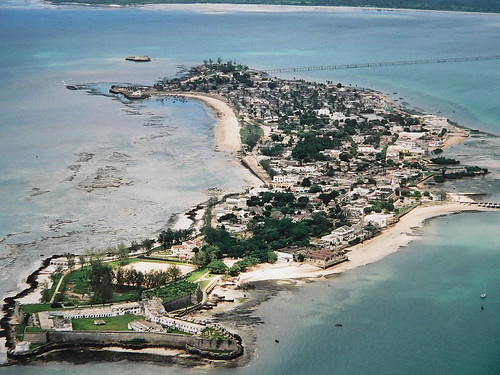 An earthquake measuring 5.6 on the Richter scale rocked Island of Mozambique on Wednesday causing panic among the population of this district of Nampula, in the north, although no injury or damage to property was reported.According to Ismael Amade, coordinator of Community Radio Mozambique Island, the earthquake struck at 16h10m and "caused some people to panic, who then fled to the mainland side of the island, taking some of their property with them."According to the American Geophysical Institute, the quake took place in the Mozambique Channel at a depth of 15 kilometres, about 76 kilometres away from the Island of Mozambique and 202 kilometres from the provincial capital, Nampula.Although announcements on ‘Rádio Comunitária’ stated that the situation was safe, many residents nevertheless delayed their return home for fear of a tsunami.Now a UNESCO World Heritage site, the Island of Mozambique was the capital of the country during the colonial era, and has an estimated population of 52,000 inhabitants, the majority of whom live on the mainland side.
Subscribe to:
Posts (Atom)