Thursday, November 17, 2016

Inhambane aerodrome at risk of being closed

The National Civil Aviation Institute may, at any moment, close Inhambane city’s aerodrome due to lack of security for landing and takeoff of aircraft, reports Noticias.The reason is the invasion of the airport surrounds, which are reserved for the aerodrome,  by the local population for the purpose of building houses.According to provincial director of Transport and Communications, Acissa Márcia Carimo, more than 400 homes, ranging from conventional houses to shacks, have been built nearby, compromising the view of the runway.Following visits to the airport, Carimo told the governor of Inhambane province, Daniel Chapo, on Thursday that the security department of the Civil Aviation Institute had expressed concern over the untrammelled occupation of the reserved and prohibited area as a threat to the security of aircraft manoeuvres.
Resultado de imagem para aeródromo inhambane“The Inhambane airport is in serious danger of being banned because of the danger resulting from the proliferation of homes. There are many facilities around, for which the owners are now requesting the supply of electricity and water,” Carimo complained.The Inhambane governor promised to launch awareness-raising among the institutions involved to avoid the transfer of land and granting of housing construction permits in the area.Chapo said that everything would be done to prevent the city of Inhambane, one of the tourism hotspots of the country and the region, from having domestic and regional air connections cut.“The institutions managing urban land will be urged to correct mistakes and take urgent measures to discourage anything which jeopardizes security at Inhambane airport,” the governor promised.Data obtained by ‘Noticias’ and confirmed by the airport manager, indicates that 3,000 meticais is being charged for land for housing in the reserved airport surrounds, and that the alleged vendors of plots live in the area and have connections with some Inhambane Municipal Council officials.

Friday, November 11, 2016

Tobacco Control

Resultado de imagem para CIGARRO MOCAMBIQUEThe Mozambican parliament, the Assembly of the Republic, on Wednesday voted unanimously to ratify the World Health Organisation’s Framework Convention on Tobacco Control.The Convention dates from 2003, and Mozambique signed it in that year. But of the African signatories to the convention, all, except Mozambique and Ethiopia, have ratified it by now. Of all the 15 member states of the Southern African Development Community (SADC), only Malawi has not signed the convention.To date, 179 countries have ratified the convention, including major tobacco producers such as Zimbabwe and Brazil.Introducing the ratification proposal, Health Minister Nazira Abdula said “tobacco is the only legal product which kills half the people who use it”.She said that, despite its delay in ratifying the convention, Mozambique had taken a series of measures intended to reduce smoking – these include a ban on smoking in all public places, and a ban on tobacco advertising. The current estimate if that 16.7 per cent of adult Mozambicans smoke.In recent years tobacco has become a significant cash crop in Mozambique. Despite this, the cigarette industry in Mozambique, Abdula said, is not opposed to ratifying the convention. She added this did not mean that the government was in discussions with the cigarette industry or had any connection with it.One aspect covered by the convention is the provision of alternative activities work people dependent on the tobacco industry. Abdula said this would mean alternative crops, offering the same level of income to farmers as tobacco.The Convention urges all its signatories to take measures to reduce tobacco consumption, including pricing and taxation measures, advertising bans, and health warnings on cigarette packets.The ratification proposal was entirely uncontroversial, and was thus passed unanimously and by acclamation.

“Mozambique needs to eliminate ‘hate walls’”

Resultado de imagem para graça machelOn Thursday 27 October, social activist and former first lady of Mozambique, Graça Machel, argued that Mozambique needs to eliminate the “hate walls” in society, warning that political intolerance has already begun to enter the villages and it is “extremely dangerous”.
“This conflict, the way it is being unleashed, especially in recent times, when you kill a secretary of the neighbourhood, it is no longer only on a political level, is already entering the village and this is extremely dangerous”, said Machel.Stressing the need for the country to start paving the way for reconciliation as a way to end the political and military crisis, Machel said that Mozambicans need learn to live with differences.
Resultado de imagem para graça machel“When we disagree, we shall say so, but we will not kill each other”, said the first minister of Education in Mozambique after independence, adding that to overcome the political crisis, the country will need to do the impossible.
Resultado de imagem para graça machel
“We have to look at each other with the same sense of common belonging and destiny”, said Machel, reiterating the need to immediately stop military confrontations, which have already killed an unknown number of people.For Machel, Mozambique needs to reinvent its own social models, respecting the dynamics and demands of new times, in a climate of tolerance and transparency to ensure the future of Mozambicans.On the subject of the current economic challenges facing the country, Machel said that the issue of hidden debt,contracted between 2013 and 2014, reached “alarming proportions”, calling attention to the fact that the political leaders in Mozambique are becoming increasingly distanced from the people. “From a certain point, we tolerate this way of doing things [corruption] and accepted this way of life as normal”, lamented the Mozambican activist, adding that under these conditions, it will take the country more than 50 years to emerge from poverty.

Kimberley Process looking to add Mozambique as... .

Kimberley Process (KP) chairperson Ahmed Bin Sulayem, has met with Mozambique President Filipe Nyusi to discuss the country’s compliance with KP requirements, as well as best practices in rough diamond valuation.Mozambique is not currently a member of the KP, but has been an aspiring candidate since it presented its membership portfolio in 2012. Following the discovery of diamonds earlier this year in the Massangena district of the Gaza province, local authorities have undertaken efforts to garner more support for its KP candidacy to get clearance to export conflict-free diamonds.While the country’s economy remains heavily dependent on agriculture, accounting for around 25% of gross domestic product, the export of precious metals and gemstones is emerging as one of the country’s major economic pillars. The discovery of diamonds will add to this vibrant sector, but the size of the Mozambican diamond resources remains undeclared for security reasons.The country currently faces difficult headwinds that are further aggravated by a regional drought, falling investments levels and rising debt levels.
Resultado de imagem para Ahmed Bin Sulayem
According to the ‘Mozambique Economic Update’ report, foreign direct investment (FDI) fell by 24% in 2015, exports declined by 14%, and growth decelerated to 6.3%. There is a need for FDI to accelerate the country’s significant, untapped potential.Several international mining companies have joined the country’s diamond exploration rush and, as such, receiving the KP stamp of approval would allow the country to export diamonds and spur its economic growth.“For years, the precious metals and gemstones sectors have been among the main drivers of the country’s growth and given the challenging economic conditions today, it is now more important than ever to extend our support to the Mozambican leaders to help them meet the KP Certification Scheme requirements.“At this stage, it is critical to ensure they have a firm understanding of best practices in rough diamond valuation thus stimulating better returns for the local population and miners, as well as provide them with a fair share of the country’s newly-found wealth,” said Bin Sulayem.In a bid to strengthen the country’s KP candidacy and support its application, the Maputo government has approved a number of measures that will come into effect on November 20. These include the creation of a supervising agency, the KP management unit, and a decree which regulates diamond, precious metals and gemstone sales.Bin Sulayem is currently traversing the continent to enter into dialogue with African countries around the rough diamond trade and strengthening the KP’s mandate.

Assembly passes bill on Cinema

The Mozambican parliament, the Assembly of the Republic, on Thursday unanimously passed a government bill on cinema and audio-visual production.In its justification for the bill, the government said that existing legislation did not stipulate what obligations the state and private business have towards cinema “in the face of the multiple and recurrent transformations, resulting from the development of new information technologies”.Without local support, Mozambican filmmakers resort to foreign sponsorship or international co-productions. The government noted that this “puts conditions on the content of films, thus limiting the freedom and creativity of our directors”.The bill thus declares that the state will promote Mozambican cinema and other audio-visual arts. It will create incentives, and promote investment in small and medium enterprises in this area.
Resultado de imagem para cinema moçambique
The state, the bill says, must also “create support mechanisms for the distribution and promotion of Mozambican audiovisual and cinema works on the national and international markets”.
The distribution, sale or rent of films or other audio-visual materials for commercial purposes will be subject to a licence issued by the National Audiovisual and Cinema Institute (INAC). To prevent piracy all audiovisual works must bear a sticker and a hologram, and the companies distributing videos, DVDs and the like will be subject to regular inspection to ensure that their wares bear the sticker and the hologram.Many of the bill’s provisions (including the sticker and hologram) are already in force, as the result of scattered earlier regulations. But they have proven ineffective in preventing informal vendors from hawking unlicensed DVDs on the streets.

The bill does not even mention the internet – but nowadays the main problem filmmakers face is that people download videos from the internet at almost zero cost. It is this that has driven once thriving video clubs out of business, and there is little that the cinema business or the government can do about it.One Mozambican filmmaker, interviewed by AIM, gave the bill a cautious welcome, since it will at least compel the state to provide some support for the Mozambican cinema industry.The bill was entirely uncontroversial and so passed its first reading unanimously and by acclamation. It will now be amended in committee, before a second and final vote in the Assembly plenary next week.

Wednesday, November 9, 2016

MOZAMBIQUE IS RUNNING OUT OF FUEL

A senior official in the Mozambican Ministry of Mineral Resources and Energy has denied rumours that the country is about to run out of fuel.Speaking to reporters on Monday, in an interval during a regional seminar on reducing the sulphur content of liquid fuels, the National Director of Hydrocarbons and Fuel, Moises Paulino, dismissed rumours in social media that the country’s reserves of fuel will soon be exhausted because the importing companies cannot pay the suppliers.Paulino said there is plenty of fuel in the reserves in the country’s three main ports, and resupplying is continuing to occur normally.“In the Maputo oceanic terminal we have a reserve margin of 20 to 25 days until the next resupply ships arrive”, he said. “In Beira there are reserves for 15 to 20 days, and in Nacala the quantities available are enough for the same period”.He also denied the social media rumour that there are tankers anchored in the ports which are not unloading their cargoes because the Mozambican state fuel company, Petromoc, is unable to give guarantees of payment.Paulino pointed out that the fuel distribution network in Mozambique is owned by several companies and not just Petromoc. He insisted that there is no interruption in supply.Paulino put total imports of liquid fuels at 1.2 million cubic metres a year, an amount which has been increasing as the number of vehicles on Mozambican roads increases.

Kool & The Gang in Maputo


COCA-COLA PUTS UP ITS PRICES

The Mozambican branch of the Coca-Cola company has just put up its prices for the second time in just over a year.There was no public announcement, but the Coca-Cola director of public relations and communication, Francisco Ferrao, confirmed to the independent newssheet “Mediafax”, that the prices of some of his company’s products rose as of 1 November. 
Resultado de imagem para coca colaThus a pack of six two litre plastic bottles of Coke and of the other soft drinks produced by the company has risen in price by 7.8 per cent, from 320 to 345 meticais (4.2 to 4.5 US dollars). The retail price for a two litre bottle is now 75 rather than 65 meticais, a 15 per cent rise. (However, many retailers chose to ignore the recommended retails price, and were already selling the two litre bottles for 70 meticais).The price of the packs of 24 330 millilitre cans of coke rose from 520 to 600 meticais (15.4 per cent). The retail price for an individual can goes up from 25 to 30 meticais (a 20 per cent rise).The price for glass bottles of coke remains unchanged. Thus the price of a 300 millitre bottle stays at 15 meticais, while the slightly larger, 350 millilitre bottle, still costs 20 meticais.In the last price increase, in October 2015, it was the glass bottles of soft drink that rose in price, while the cans and the two litre plastic bottles remained untouched. The new price rise contradicts a promise given by Coca-Cola two months ago that no further price increases were being planned. Ferrao justified the rise by the depreciation of the metical against the US dollar and the South African rand, which is driving up the price of the imported materials the company uses. He claimed that, even with the increases, the prices of the drinks are below what the company would regard as ideal.Asked why there had been no change in the price of the drinks sold in glass bottles, Ferrao said that, because the glass bottles are returnable, they are cheaper than cans or plastic.

Friday, November 4, 2016

US AUTHORITIES SAY LAM CORRUPTION INVOLVED CEO

Resultado de imagem para embraer erj-190 cockpit
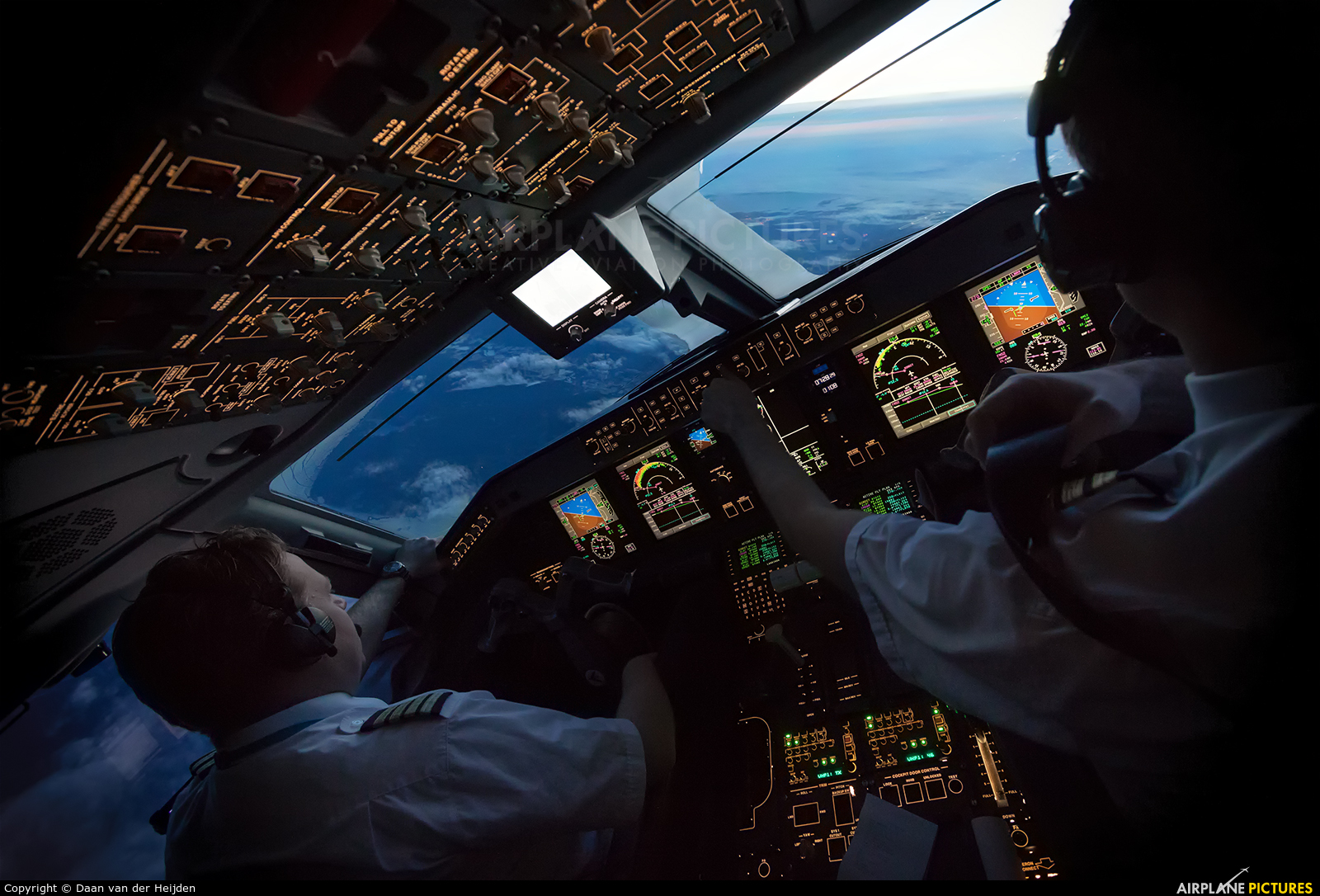
At least two Mozambican officials, including the then chief executive officer of Mozambique Airlines (LAM), were involved in taking a massive bribe from the Brazilian aircraft company, Embraer, according to documentation from the United States Securities and Exchange Commission (SEC). On 24 October, the US Department of Justice issued a very summary account of the charges Embraer faced in connection with bribes offered in four countries – India, Dominican Republic, Saudi Arabia and Mozambique. It said the Mozambican bribe was paid via what it described as “a false agency agreement with an intermediary designated by a high-level official” in Mozambique Airlines (LAM).
But Embraer was also taken to court by the SEC, and the SEC complaint against Embraer is much more detailed, although, like the Justice Department, it does not name the guilty parties. On Mozambique, it gives a blow by blow account of how, between May and September 2008, Embraer negotiated the sale of two of its aircraft to LAM. The sales price was 65 million US dollars, but Embraer also ended up paying a bribe of 800,000 dollars.SEC says that “on or around 13 August 2008, a Mozambique national (referred to as the “Mozambican Agent”) told at least one senior Embraer employee that Embraer should make ‘a gesture’ to unidentified officials in the government of Mozambique when delivering the first aircraft”. The Embraer staff involved in the negotiations believed that “the Mozambican Agent was well connected with officials in the government of Mozambique”.This unnamed agent, the SEC document continues, “did not have any legitimate role” in the negotiations between Embraer and LAM: “instead, he appeared to be acting as a middleman or agent for the government officials involved in the deal, and Embraer officials believed they needed to pay the Mozambican official in order to win the contract”.So senior Embraer officials “approved an offer to the Mozambican agent of between 50,000 and 80,000 dollars per aircraft sold, even though the Mozambican agent had not rendered any legitimate services to Embraer during the negotiations”.
But this bribe was too small, and so, on or around 25 August 2008, the then LAM chief executive officer “called an Embraer sales employee and suggested that a one million dollar ‘gesture’ to the Mozambican agent would be appropriate, but that Embraer could ‘get away’ with only paying 800,000”. Then came a menacing warning – this official threatened “to torpedo the ongoing negotiations with Embraer by giving a competing bid priority over Embraer’s bid”. In other words, without the bribe there would be no sale.The threat clearly worked, since on 15 September, Embraer signed the 65 million dollar purchase agreement for the two aircraft. The official who made the threat was one of three LAM executives who signed the agreement.To make the bribe look legitimate, the Mozambican agent set up a phoney company in Sao Tome and 
Principe through which the bribe was channeled. SEC found that “on or around 22 April 2009, Embraer’s US-based subsidiary, Embraer RL, executed a consulting agreement with a company based in Sao Tome and Principe which the Mozambican agent controlled and which had only been incorporated in or around November 2008”.The agreement authorized this company, referred to by SEC as “the Mozambican Consultant” to promote sales of the Embraer-190 aircraft to LAM “even though the sale of such aircraft had been completed seven months earlier”. The agreement stated that “the Mozambican Consultant” had begun promoting the Embraer aircraft to LAM in March, even though “the Mozambican Consultant” did not even exist at that date.
Resultado de imagem para linhas aereas de mocambique
Embraer RL then agreed to pay 400,000 dollars per aircraft – exactly the 800,000 dollar bribe mentioned in August 2008. This agreement was signed by two Embraer executives, while “the Mozambican Agent who had initially proposed the bribe payment as ‘a gesture’ signed the consulting agreement on behalf of the Mozambican Consultant”. The Mozambican Consultant, the SEC found, submitted two invoices to Embraer RL, each for 400,000 dollars, and dated 15 August and 25 September 2009. The invoices were both paid to the Mozambican Consultant’s bank account in Portugal. SEC notes “these payments bore no relation to any legitimate services rendered in Mozambique, and were bribes to foreign government officials”, although in Embraer’s accounts they were described as “Sales Commissions”. 
Resultado de imagem para linhas aereas de mocambiqueNone of this is in dispute. Just as in the cases of the illicit payments in India, Saudi Arabia and the Dominican Republic, Embraer made no attempt to deny that it had paid the bribe.Because it is quoted on the New York Stock Exchange, Embraer falls under US jurisdiction, and had to answer to the US Justice Department and to the SEC. The Justice Department says that Embraer entered into a three-year deferred prosecution agreement (DPA) to resolve the case. As part of the DPA, Embraer admitted to its involvement in a conspiracy to violate anti-bribery and books and records provisions and to its ”willful failure to implement an adequate system of internal accounting controls”. 
Resultado de imagem para cockpit embraer 190 LAmThe Justice Department fined Embraer 107 million dollars, and its settlement with the SEC cost it 98 million dollars. Embraer will pay the Brazilian authorities 20 million dollars.The Brazilian authorities have charged 11 individuals for their alleged involvement in Embraer’s bribery in the Dominican Republic, while the Saudi authorities have charged two individuals for their alleged involvement in similar offences in Saudi Arabia. Nobody has been charged in Mozambique, and none of the Mozambicans involved have so far not been named. Last week, Deputy Attorney General Taibo Mocubora told a Maputo press conference that Mozambican prosecutors will investigate. Doubtless if the Attorney-General’s office were to approach the US authorities, it could obtain more relevant information on the case, including the names of those involved.

Thursday, November 3, 2016

Gemfields and the ruby revolution in Mozambique

In the Maninge Nice pit, the ground is literally littered with rubies. They sit in among the dirt, throwing up glints of red and pink. We play a somewhat novel game – who can collect the most stones in the space of a few minutes – but it’s too easy. I get to a handful before becoming steadily distracted by the magnitude of it all.
Resultado de imagem para rubis pemba
I am with a group of journalists in Mozambique’s northeastern Cabo Delgado Province, at the Montepuez Ruby Mine. Lauded as the most significant ruby-deposit discovery of recent times, about 50 per cent of the world’s ruby supply now comes from this mine. "Montepuez Ruby Mine covers over 33,000 hectares, making it the world’s largest ruby deposit," explains Rupak Sen, director of marketing and sales, Asia and Middle East, for Gemfields, which owns a 75 per cent stake in the mine. "Although the deposit was only discovered in 2009, the rubies at the Gemfields Montepuez deposit have been established as approximately 500 million years old."
To boot, some of the rubies found here are of a quality previously only thought possible in gemstones from Myanmar. "They are comparable with the legendary ‘pigeon blood’ rubies of Myanmar, which frequently command the highest price per carat of any coloured gemstone," says Sen.
Resultado de imagem para rubis pemba
Getting to the mine is no easy task, of course. There are flights from Dubai to Tanzania and then onto Pemba, on Mozambique’s northern coast – where a tiny airport and convoluted entry process highlight the area’s limited number of tourist arrivals – and then a lengthy drive that takes us through acres of untamed land, past abandoned colonial-era buildings and villages made of mud huts.
The following morning brings expansive horizons and clear, uninterrupted blue skies – the kind that seem specific to Africa – along with a tour of the Montepuez Ruby Mine. It’s a revelation. The mining industry has a notoriously bad reputation, but here we are greeted with signs such as: "Stop, think, act" and "Safety awareness saves lives", highlighting Gemfields’ aim of operating a zero-accident mine.
Resultado de imagem para rubis pemba
Every employee we see is appropriately dressed and equipped; and there is only minimal visible damage to the landscape, courtesy of Gemfields’ practice of filling in old pits as mining teams move along, replanting local plant species to bring verdant cover back to the land. We contribute to this process during our stay, with each member of the group planting a tree as a marker of our time spent here.
Rubies were first discovered in Montepuez in 2009. As the story goes, a man working the land, which was formerly a hunting concession, happened across one of the red stones. Given the volume of rubies that we see during our trip, it seems incredible not that they were discovered, but that they managed to remain hidden for so long. The local owners of the land contacted Gemfields; they had heard about the success of the company’s ethically operated emerald mine in Zambia and wanted to replicate the model in Mozambique. Gemfields acquired a 75 per cent stake in the mine and arrived on-site in 2012.
Resultado de imagem para rubis pemba
The team remembers trying to decide where to place their camp. They picked a spot, started digging a hole for the latrine and promptly unearthed handfuls of rubies. The jokingly dubbed "million-dollar toilet" stayed, and is now flanked by the Sort House, but the camp was moved farther away.
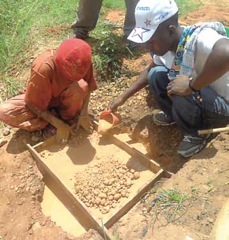
The sheer number of rubies here makes the mining process relatively straightforward. This is open-pit mining – in simple terms, mountains of rich red earth are scooped up in enormous diggers, transported to the wash plant and processed. The rubies are then picked out from the resultant gravel by hand.
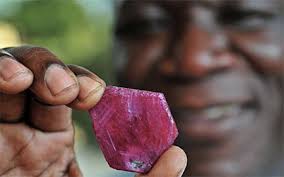
Mining may be a controversial business, but there’s magic in it, too. There is something indescribable about picking up a ruby and knowing that it has sat under the Earth’s surface for hundreds of millions of years – that you are the first person to ever touch it.
While diamonds have dominated the market for the best part of the past century, rubies have been coveted by certain cultures throughout the ages. "Rubies were treasured by early cultures as they represented the redness of the blood that flowed through their veins, and many believed that rubies held the power of life and so were often carried into battle for protection," says Sen. "In fact, the ruby has always been highly esteemed in Oriental countries, being regarded as endowed with extraordinary powers. As western empires rose to power, rubies became the favoured gemstones of European royalty and aristocracy.
Resultado de imagem para rubis pemba"However, the advent of feisty diamond marketing, backed by consistent supply, in the past three or four decades, took coloured gemstones to the background, while diamonds took centre stage. This is now changing, with leading jewellery brands like Chopard, Bvlgari, Cartier et al launching exclusive coloured-gemstone collections, and with increasing incidence of ruby and emerald jewellery being sported by celebrities around the world."
If the tide is turning, Gemfields must be given its dues. It can now offer a consistent supply of rubies to manufacturers and polishers, with the promise that they have been ethically sourced and are of a guaranteed quality. Much as it did with emeralds in Zambia, the company has also created the first official classification system for rubies, which in addition to the standard four Cs (colour, clarity, cut and carat) that will be familiar to any diamond buyer, includes two other Cs: certification and character.
Resultado de imagem para rubis pembaBeyond logistics, Gemfields’ global marketing campaigns are contributing to creating an aura of covetability around coloured gemstones once again. Its latest marketing campaign, Ruby-Inspired Stories, offers a triptych of films that explore three properties that rubies have long been associated with: passion, prosperity and protection.
In fact, unbeknownst to many, rubies are much rarer than other precious stones. At present, the world ruby supply consists of about three million cut and polished carats per year, compared to about five to eight million for emeralds and 50 million for diamonds, according to Ian Harebottle, chief executive of Gemfields.
But the company’s aim is not for coloured gemstones to overtake or replace diamonds in the public consciousness, but to create more balance and choice in the market. "The decade starting 2015 was actually billed as the decade of the coloured gemstone," says Sen, when asked whether he envisages a time when coloured gemstones will surpass diamonds in popularity. "Every time a consumer buys a coloured gemstone, diamonds are sold alongside. Coloured gemstones and diamonds complement each other, and that’s the way it will always be," he says.
Resultado de imagem para rubis pembaGemfields held its first ruby auction in Singapore in June 2014, and generated US$33.5 million (Dh123m). At its latest ruby auction in June, the company generated record revenues of $44.3m (Dh162.7m), with an average realised price of $29.21 (Dh107) per carat.
There is much talk during our time in Mozambique about the "1 per cent". Not the 1 per cent, that top layer of society that holds a disproportionate share of global wealth (although that is an unfortunate parallel) – but the 1 per cent of Gemfields’ annual revenue that it donates to CSR initiatives. The number feels small to me – as small as it can be, almost.
I put this point to Harebottle. "Our commitment is a minimum of 1 per cent," he says. "We are working with a luxury good in unstable economies. We are very fortunate that through our efforts we are constantly growing, but there are no guarantees. When I make a commitment, I have, to the very best of my ability, barring any major catastrophes, to be sure that I am able to keep that commitment."
The point, of course, is that whether you are talking about 1 per cent or 100 per cent, sustainability needs to be sustainable, or else it is entirely counterproductive. "When people ask me about our investment in sustainability, I say: ‘The one thing I can tell you is it doesn’t mean we are perfect and it doesn’t mean we are doing enough.’ I’ve lived in Africa and I know there is not a company or individual in the world that can do enough, because the needs are so great.
"The one thing I do know, 100 per cent, is that the areas we are in are better for us being there. We’re doing the best we can, recognising it’s not enough and constantly trying to do better."
And I am reminded on numerous occasions how even one per cent can make a major difference in a place like Mozambique. We visit some of the projects that the company is investing in – they are very real grass-roots initiatives. "After collaboration with the local community, a farming association was recently formed producing beans, okra and various other vegetables. Currently, most of the produce is being bought back by the company, where it is purchased at market prices and used for the sustenance of its own employees," Sen explains. "A poultry-farming cooperative has been formed at a nearby village with a view to further empower women in the area. Going forward, initiatives based around education (including a new skills and development centre), health care and the provision of clean drinking water will also be put in place. Conservation is also a focus."
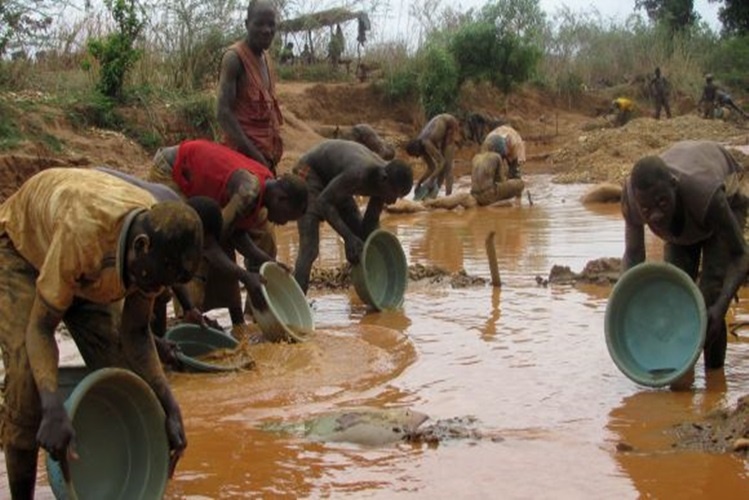
Resultado de imagem para rubis pembaBeyond this, by implementing a professional, transparent, legal mining process, Gemfields is taking the trade of Mozambican rubies out of the hands of illegal syndicates, which exploit poverty-stricken members of the community, by driving them to partake in hazardous and illegal mining work, and paying them a fraction of the gemstones’ true worth. Illegally mined rubies are then smuggled out of the country. Gemfields, on the other hand, will argue that it is able to achieve the best prices for the stones, and pays taxes and royalties to the Mozambique government (MRM is responsible for about 20 per cent of the corporate tax in the Cabo Delgado Province), while also creating employment and job security for members of the local community.
In a perfect world, Gemfields would not be an anomaly. Its ethical approach to mining would be the industry norm. But we do not live in a perfect world, so Gemfields must be lauded for its efforts. It is the only supplier of coloured gemstones that has built a holistic business model that places importance on people and the planet, as well as profit. It is introducing transparency in an industry where, traditionally, there has been none.For the first time, you can buy a ruby and know exactly where it has come from, and that it was mined in a way that is respectful of local populations. And in this imperfect world, that’s basically priceless.
*Read this and more stories in Luxury magazine, out with The National on Thursday, November 3.