Wednesday, July 19, 2017

Optimistic prediction for 2018

Resultado de imagem para standard bank maputo
Standard Bank's chief economist in Maputo, Fausio Mussa, in a 4 July presentation, predicted that the Metical will remain at MT 60 = $1 this year but improve to MT 50 = $1 by the end of next year. Inflation will average 18.3% this year but fall to 11.9% in 2018 - still well above 2012-5 average of 3.3%. Mussa argued that "monetary policy tightening was severe enough" to restore macro-economic stability in Mozambique, but at a price of a sharp cut in imports (from $10.6 bn In 2015 to $8.0 bn in 2016) and a "collapse in economic activity not always reflected in GDP statistics". He hopes for "a private sector led recovery but prospects [are] highly contingent to progress in natural gas" and on an IMF programme to improve confidence and release increased donor assistance - which, with IMF and donor disappointment over obstruction of the Kroll report, now seems unlikely. The drop In donor grants is dramatic, to one fifth the level of five years ago - aid grants were $1 bn in 2013 but are forecast to fall to just $216 mn this year. The gap has been filled by borrowing, with foreign debt nearly doubled from $5.8 bn in 2013 to a forecast $10.8 bn this year. (Detailed graphs are in the attached pdf version of this newsletter.)

Monday, July 17, 2017

IMF wants to replace Mozambican justice

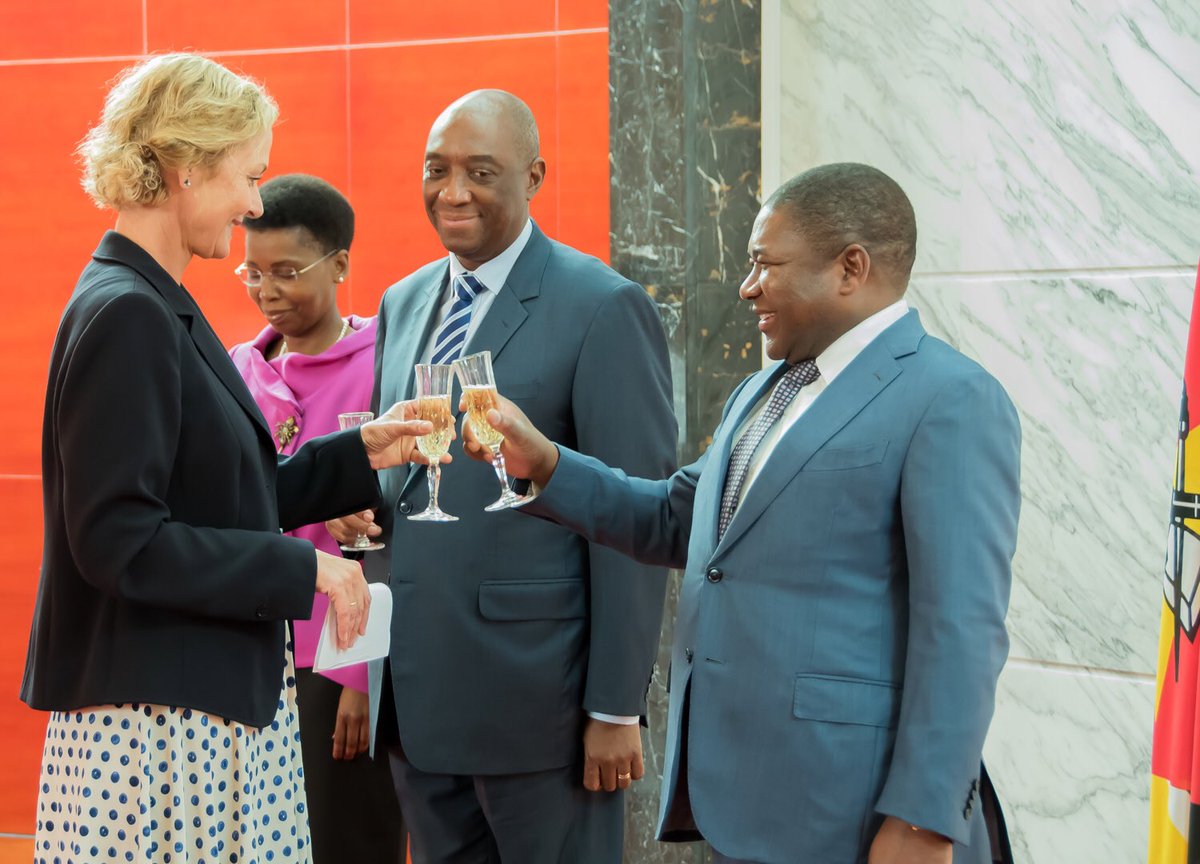
One of the factors that will make it difficult to negotiate between Maputo and that Bretton Woods international financial institution is that Kroll's unconvincing report on so-called "hidden debts".  Norway's ambassador to Maputo, Anne Lene Dale, says the ongoing negotiations between the International Monetary Fund (IMF) and the Mozambican government will be "very difficult", contrary to what many may imagine.
Imagem relacionada"I think the negotiations between Mozambique and the IMF will be very difficult. The IMF will demand the reform of State structures, an important factor in clarifying the relationship between the state and the private sector, "said the diplomat, adding that the negotiation process between the parties will be crucial for Other donors, especially on the issue of budget support. Emphasizing that his country (Norway) will continue to maintain close contact with other donors to discuss the implementation of Kroll's report on the debts of EMAUMUM, Proindicus and Mozambic Asset Management (MAM). Two billion US dollars.
It should be noted that the front-to-front between the Executive of Filipe Nyusi and the IMF has the expected outcome for this Wednesday (19 July).One of the factors that will make negotiations between Maputo and Bretton Woods an international financial institution difficult is that Kroll's little-known report on so-called "hidden debts" has found that many more billions of US dollars, Americans also in loans will have disappeared, but even worse is that the subject is kept secret.According to the conclusion of the 57-page summary of the Kroll report on the biggest financial scandal in the history of Mozambique, it points out that the illegal loans taken in the last term of the Government of Armando Guebuza (2009 to 2014) constitute 20% Of the country's total lending, which is currently at more than 110% of gross domestic product (GDP).
Independent international auditing was one of the calls of the International Monetary Fund to resume cooperation with the Government of Mozambique.The same applies to other donors who have frozen their direct support of the Mozambican State Budget (OE) since April 2016, following the boom in the country's public debt scandal.
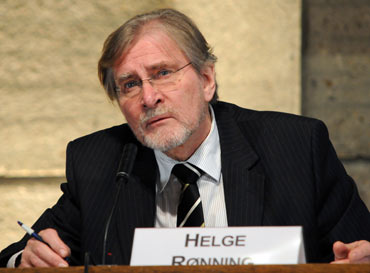
Resultado de imagem para Helge Ronning
But Helge Ronning, a media expert and professor at the University of Oslo in Norway, says the Kroll-led audience will not be enough to convince donors because it has not been able to collect a range of key information. Ronning, who has been on a tour of Mozambique between 1996 and 1998 and 2004/6, says that Kroll's report is "disturbing" because he does not understand how one of the most capable and reputed companies in the field of audi ¬toria could not get to the bottom of who did what? And what was actually done with the money?

In his turn, the director of the Public Integrity Center (CIP), Adriano Nuvunga, believes that the current President, Filipe Nyusi, "will not risk much" in persecuting those responsible for these mega-loans, even if What you want to do. (Edson Arante)

Friday, July 14, 2017

Anadarko supports School Games

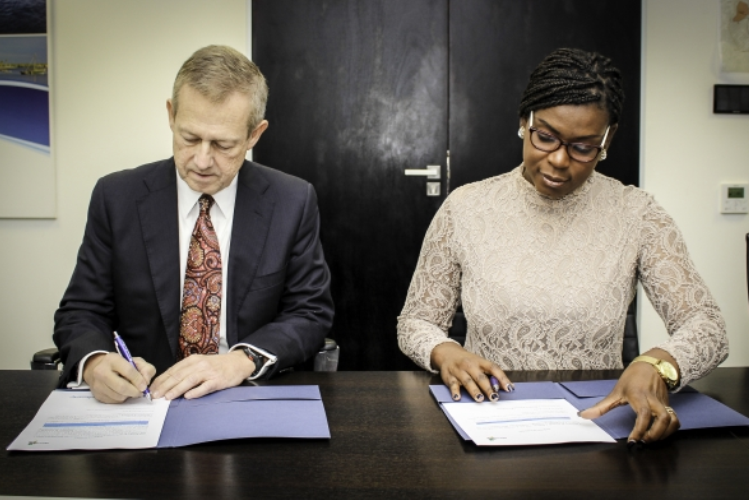
Imagem relacionadaUS oil giant Anadarko is to spend about 1.5 million meticais [around US$24,863 at current exchange rates] supporting the 13th Festival of School Games, which starts tomorrow, Friday, in Xai-Xai city, Gaza province.A statement from the Ministry of Youth and Sports says that the agreement formalising the support was signed in Maputo by the Deputy Minister of Youth and Sports, Ana Flávia Azinheira, and by the Director of Anadarko, in Mozambique, John Bretz.Speaking at the time, the Deputy Minister Azinheira stressed the importance of school games, which this year will take place under the motto “School Sports, Conserving Nature”, combining the search for talent and the environmental protection agenda.The event would also help athletes prepare for the the Community of Portuguese-speaking Countries (CPLP) games, she added.“This support will help us achieve our main goal, which is to bring value to school games. We want to identify talented individuals and refer them to a training programme,” Azinheira said.
According to the deputy minister, the agreement signed with Anadarko is the beginning of a partnership that could be extended to other institutions.“We are sure we will find more partners, because this is a project all companies can identify with because it involves society, children and communities”, she noted, adding that the games would also serve as an opportunity to spread an anti-poaching message.Anadarko Mozambique director John Bretz said that the support was part of the company’s efforts to contribute to sustainable development in Mozambique.“We are proud to support this initiative, which enhances Mozambican sports and the country, and which introduces in this edition awareness about the protection of nature, which is of great importance for the sustainable development of Mozambique and the world,” Bretz said.“Being aware of its importance, Anadarko has been supporting various initiatives in the environmental area,” Bretz said, citing as an example the support given to Gorongosa National Park and the Niassa Reserve.The 2017 edition of the School Sports Games, to be opened by President Nyusi, will involve students from all provinces of the country competing in various modalities including football, handball, volleyball, basketball, athletics, gymnastics and traditional games.

Friday, July 7, 2017

SENTENCES OF 10 TO 16 YEARS

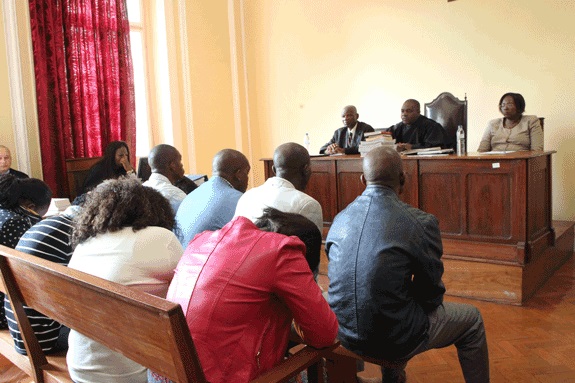
The Maputo City Court on Thursday sentenced eight of the nine people charged with stealing 36 million meticais (about 1.2 million US dollars, at the exchange rate of the time) from the Army Command, between 2010 and 2015, to prison terms of between 10 and 16 years.
They must also compensate the state to the tune of 40 millon meticais.
Judge Salomao Manhica handed down the longest jail terms, 16 years, to Ernesto Rufino and Abdul Ismael. Rufino and Ismael were the key figures in the theft. They worked in the wages sector of the Army Command. They put the names of friends and relatives on the wages sheets so that every month money to which they were not entitled would be deposited in their accounts. Rufino and Ismael used the disreputable defence that they were only carrying out orders. They claimed the corrupt scheme had been designed by the immediate superior, Alberto Martinho, who kept 60 per cent of the stolen money for himself.
Imagem relacionadaBut Martinho died in 2014, and the corrupt scheme continued after that date. In any case, army officers have the right and the duty not to obey illegal orders given by their superiors.

Guilhermina Pedro and Hussene Ismael (the brother of Abdul Ismael) were sentenced to 15 years, Anibal Joaquim and Monica Simiao to 11 years, Sonia Cossa to 11 years and six months, and Elsa Antonio to ten years.These were mostly relatives and lovers of Rufino and Ismael who allowed the stolen money to be deposited in their accounts. Their defence was that they did not know where the money that mysteriously appeared in their accounts had come from. The prosecution regarded this as no justification at all – for there is nothing normal about citizens handing over control of their personal bank accounts, and their bank credit or debit cards, to others.The court acquitted one of the accused, Sara Agostinho, because there was no convincing evidence that she had personally benefitted from the stolen money.

MALIANO DETAINED WITH 64 THOUSAND USD

Resultado de imagem para aeroporto maputoA Malian national was detained Thursday at Maputo International Airport, when he planned to illegally board 64,000 US dollars, bound for Bangkok, the capital of Thailand.The value, not stated to the competent authorities, was hidden in the middle of his luggage.According to Stélio Langa, head of the police station at Maputo International Airport, quoted by "Notícias" today, the citizen will be investigated to ascertain the legitimacy and provenance of the money, because there was no statement about it.The individual, known by the surname Saka, is a trader and has lived in Maputo for more than five years.He was barred from traveling until the outcome of the investigations. Before the authorities, he explained that he was going to Bangkok to shop and should climb Addis Ababa, Ethiopia.

Wednesday, July 5, 2017

“HIDDEN DEBTS”

Imagem relacionadaThe Mozambican Catholic Church has added its voice to those demanding that the debts of the security-related companies Ematum (Mozambique Tuna Company), Proindicus and MAM (Mozambique Asset Management) be declard unconstitutional.The debts, for a total of just over two billion US dollars were contracted from the European banks Credit Suisse and VTB of Russia in 2013 and 2014. The government of the day, headed by President Armando Guebuza, issued illicit guarantees, which smashed the ceiling on loan guarantees laid down in the 2013 and 2014 budget laws, and also violated the Mozambican constitution which states that only the country’s parliament, the assembly of the Republic, can authorise such debts.A statement issued on Tuesday by the Catholic Episcopal Commission on Justice and Peace, cited in the independent daily “O Pais”, denounces the debts of the three companies as “contracted in a unilateral, illegal and illegitimate way”.   The message from the Episcopal Commission, signed by the Bishop of Pemba, Luis Fernando Lisboa, also demands that those who contracted the debts should be held responsible for their actions, as should those who obstructed the audit into Ematum, Proindicus and MAM carried out by the company Kroll Associates.
Resultado de imagem para Mozambican Catholic Church“We are surprised that the auditors indicate that they did not receive full collaboration from all those involved in the investigation, putting the brakes on the process, and even refusing to hand over some necessary documents”, said the statement.In the executive summary of the audit report, released on 24 June, Kroll said the three companies “only provided “limited financial data, including incomplete trial balances and bank statements for certain periods, and incomplete supporting documentation, such as loan facility agreements and supplier contracts. As a result, it became apparent that a significant amount of the information originally envisaged to be held by the Mozambique Companies in Mozambique was not available”.
Kroll said it was denied access “to full and complete documentation, including internal confidential documents of the parties involved, nor has it met with all key personnel of the parties involved. The main challenge in completing the Independent Audit was the lack of documentation available from the Mozambique Companies. Kroll spent a considerable amount of time requesting and liaising with representatives of the Mozambique Companies to obtain documentation and information that was, in some cases, either ultimately incomplete or not provided at all.”
Imagem relacionadaThis obstruction was proudly confirmed by the chairperson of all three companies, Antonio do Rosario, who is a senior official in the State Intelligence and Security Service (SISE). In a message he circulated in late June he boasted that he had thrown the auditors out of his office “because they wanted details of questions about state security.”
“We do not give in to pressure and we are not afraid,” added Rosario. He treated Kroll as if it were a foreign intrusion – but in reality Kroll was hired by the Mozambican Attorney-General’s Office (PGR), which is investigating the loans and their guarantees. Obstructing Kroll is obstructing the work of the PGR, and Rosario thus laid himself open to arrest on charges of disobedience and obstruction of justice.The statement from the Episcopal Conference also demanded that the government should not pay the debts. “We cannot permit the Mozambican people to bear the responsibility of paying with misery, blood and death the debts that were contracted in their name, in an illegal and unconstitutional manner”.In its message the Commission adds that nobody can be obliged to obey the discipline of any political party, when such obedience contradicts their own conscience. “We cannot place a party or its leaders above justice, the love of God or the love between brothers”, it declared.

NO BASIS FOR CLAIM THAT AL-SHABAAB

Resultado de imagem para cabo delgadoThe scare story that three men arrested last month in the northern Mozambican city of Pemba are members of the Somali terrorist group Al-Shabaab, seems to have no basis in fact.At his weekly Maputo press briefing, the spokesperson for the General Command of the Mozambican police, Inacio Dina, said “These three individuals are Muslims. But we cannot confirm any link between them and Al-Shabaab”.The story of the al-Shabaab link was broadcast, with virtually no details, by Radio Mozambique in June. The three were detained in the Mucojo administrative post of Macomia district, Cabo Delgado province.Dina said the three individuals are Mozambicans (so not Somalis). They were detained because they were inciting members of the public to disrespect the government authorities, and to pull their children out of schools. He said the three men, aged between 21 and 43, went from house to house urging people to disobey the authorities and to abandon schools.Asked if the three are still in detention, Dina said he had no information as to whether they were still being held or had been released. “Right now, I cannot tell you where they are”, he said.

Tuesday, July 4, 2017

Metical depreciates against euro

Imagem relacionada
The Mozambican metical depreciated against the euro last week, with the European currency coming into the country at an average of 67.96 meticais, up 1.20 meticais from the previous week.In turn, the euro was selling for 69.29 meticais, up 1.23 meticais, according to weekly averages calculated by Lusa from Bank of Mozambique data.The purchase price of the euro ranged between 67.26 and 68.34 meticais, while the selling price ranged between 68.57 and 69.68 meticais.Last week was a day short thanks to the Independence Day holiday falling on a Sunday, and so being celebrated on Monday, June 26.The devaluation of more than one metical last week has wiped out the slight appreciation of the previous two weeks. The Mozambican currency is nevertheless still displaying a trend of appreciation, after falling in September 2016 to an all-time low of 88 meticais to the euro.Meticais average reference exchange rates of the euro.
Day … Buy … Sell
30 June … 68,34… 69.68
29 June … 68,28 … 69.63
28 June … 67,95 … 69.29
27 June … 67.26 … 68.57
26 June… holiday
Average … 67,96 … 69,29

The Bank of Mozambique set the reference rate in the national financial market for July at 27.75 percent, holding the index for the second consecutive month, according to information distributed to the press in Maputo.The central bank also held the weighted average rate for international monetary market operations and the single index rate at 21.75 percent.The creation of the single index (prime) rate was agreed between Bank of Mozambique and the Mozambican Association of Banks on May 17 as a measure to eliminate the proliferation of different interest rates in the country.All credit operations are now based on the single rate, plus a spread according to the risk analysis of each contract.“What we have just witnessed is an important step towards crystallising the reforms introduced more than 20 years ago when it comes to determining interest rates,” Rogério Zandamela, governor of the central bank, said when the measure was announced in May. The creation of the single rate is in line with international practice, which imposes a uniform reference in the calculation of interest rates for credit operations.


Resultado de imagem para Nyusi inaugura sede do banco moçambiquePresident Filipe Nyusi will today inaugurate three new buildings in Maputo housing the Bank of Mozambique’s headquarters and various other units.A press release received by Noticias reveals that the three new buildings cover a total of 87,500 square meters and well lend a new image to central Maputo, where they are located.“Two of the three buildings are located between Avenues 25 de Setembro and Samora Machel, and the third one on Banco de Moçambique Street,” the release reads. The work was carried out by Portuguese contractor Teixeira Duarte and contains security and technological features that will guarantee the handling and storage of money according to international security standards. The 1960s building which previously served as the central bank’s headquarters was thought to be ill-suited to current times.

Friday, June 30, 2017

CIP CALLS FOR IMMEDIATE ACTION

Mozambique’s main anti-corruption NGO, the Centre for Public Integrity (CIP), has demanded that the Attorney-General’s Office (PGR) should, in the wake of the independent audit undertaken by the company Kroll Associates, act immediately to bring to justice those responsible for the scandal of the country’s “hidden debts”.Three security related companies, Ematum (Mozambique Tuna Company), Proindicus and MAM (Mozambique Asset Management), took out loans of over two billion US dollars from the banks Credit Suisse and VTB of Russia in 2013 and 2014. The loans were illicitly guaranteed by the government of the time, in violation of the ceilings on guarantees set in the budget law, and also in violation of the Mozambican constitution which states that only the Mozambican parliament, the Assembly of the Republic, can authorise such debt.
Resultado de imagem para proindicusKroll audited the three companies, and the executive summary of the audit report, released by the PGR last Saturday, is a damning indictment of financial abuses, mismanagement and incompetence.In a Wednesday press release, CIP argues that, although the report does not name the officials complicit in the loans and guarantees, “it provides enough information with legal relevance for the PGR to take immediate action to hold those involved criminally responsible in what is the largest financial scandal in the existence of Mozambique as a state”.
Imagem relacionadaAmong the report’s finding, CIP points to the unexplained fate of 500 million dollars (or a quarter of the total lent). This sum was part of the 850 million dollar loan to Ematum, and it was supposedly spent on maritime security equipment. But Kroll could find no sign of any such military equipment.
“The Ministry of Finance has not been able to confirm to Kroll any details of the maritime security equipment that was effectively included in the USD 500 million allocation, nor if the transfer of responsibility has actually been complete”, the report noted.One of the report’s key sources, referred to only as “Person A” (but who is clearly Antonio do Rosario, the chairperson of all three companies), also claimed to Kroll that the money had been used for military purposes. However, the contractor, the Lebanon-based group Privinvest, insists that it does not supply military equipment, and the report says Privinvest “categorically stated to Kroll that the assets delivered to EMATUM were per the agreed supply contract and specifically that no weapons were provided”.
“Until the inconsistencies are resolved, and satisfactory documentation is provided, at least USD 500 million of expenditure of a potentially sensitive nature remains unaudited and unexplained”, Kroll remarked.CIP also points to evidence in the report of “the diversion of 713 million dollars (more than a third of the total value of the loans) in schemes to over-invoice assets”. Unable to obtain a detailed breakdown of the invoices provided by the three companies, Kroll called on an independent expert to value the boats, aircraft and other goods purchased with the loans. A comparison of the invoiced amount and the independent valuation showed a discrepancy of 713 million dollars.
Resultado de imagem para proindicus
CIP noted that 10 per cent of the value of the loans – about 200 million dollars – went on bank charges and fees to other agents who supposedly intermediated in the loans.Furthermore, CIP accuses, there was no sign of any real cooperation by the government in the audit. Throughout the report Kroll complained of inadequate information, and this failure to assist the auditors extended from the three companies themselves to the Finance Ministry and to the State Security and Intelligence Service (SISE), which is the dominant force in the shareholding structure of the three companies.CIP found it strange that the PGR has not yet taken any visible action to hold anyone involved in the loans responsible for the financial abuses reported. For, although the summary was only published on Saturday, the PGR has been in possession of the full audit since 12 May, and the PGR opened preliminary investigations over a year ago.CIP calls for immediate action which should include “the preventive detention of those who may interfere in the investigations under way”, as well as the preventive seizure of their assets.
Resultado de imagem para Mozambique Asset Management
It also urged the PGR to take action against all those bodies who failed to cooperate fully with the audit. CIP points out that this lack of cooperation is, in itself, a criminal offence.In the first place this means the management of the three companies themselves. Kroll declared that the companies only provided “limited financial data, including incomplete trial balances and bank statements for certain periods, and incomplete supporting documentation, such as loan facility agreements and supplier contracts. As a result, it became apparent that a significant amount of the information originally envisaged to be held by the Mozambique Companies in Mozambique was not available”.

“The main challenge in completing the Independent Audit was the lack of documentation available from the Mozambique Companies”, the report said. “Kroll spent a considerable amount of time requesting and liaising with representatives of the Mozambique Companies to obtain documentation and information that was, in some cases, either ultimately incomplete or not provided at all.”CIP insists that “the Mozambican state should not pay the debts contracted by the three companies, since the money in no way benefitted the State”. Furthermore, the guarantees, since they were issued in violation of the Constitution should be regarded as “null and void, so that they cannot be invoked to justify the State paying off the debts”.

Friday, June 23, 2017

Parliament will not debate luxury cars

Imagem relacionada
The purchase of 17 luxury cars continues to stir Mozambican politics, with opposition groups calling for a debate on the issue, but there is no indication that this could happen in the near future. On the streets, in cafes and on social networks, this is one of the most talked-about themes: the purchase of 17 Mercedes-Benz cars for members of the Parliamentary Standing Committee at a cost to the state of about three-and-a-half million euros. It is egregious and even offensive, members of the public told DW Africa – not least because Mozambique is currently experiencing one of the worst economic and financial crises in its history, following the suspension in 2016 of international aid with the disclosure of state-guaranteed debts contracted by three companies without parliament’s knowledge.
“It is luxury in the midst of misery,” Helenio Ferreira said. “The country is afflicted, it is in crisis, and a small group using the name of the people is going to ride in luxury cars.”
Hélia Isabel asked: “Where is the justice in assigning Mercedes to some people while others are suffering transportation problems?”
Parliamentary opposition groups the Mozambican National Resistance (Renamo) and the Mozambique Democratic Movement (MDM) want the Standing Committee to discuss the issue, and deny any involvement in the decision to award the luxury vehicles. But DW Africa has learned that any debate on the matter cannot take place before July, as MPs are working in their constituencies and the body has no meeting convened before then. Meanwhile, MDM spokesman Venâncio Mondlane is collecting signatures from deputies petitioning against the cars, but so far only nine of the 250 deputies have been supportive.
Do the Mercedes justify themselves?
Imagem relacionadaResultado de imagem para transporte passageiros maputoRenamo spokesman and deputy António Muchanga says that the problem of the luxury cars is spurious. “There is no room for either the Assembly of the Republic or the Speaker [Verónica Macamo] to choose the brands of protocol vehicles for parliament.” Muchanga says that after more than 12 years without new vehicles, it is quite “lawful” to renew Parliament’s fleet, “as at other ministries and state institutions”. “It was the government and not the assembly,” which decided to buy the Mercedes, he adds. “Why do you not question the three vehicles that the Supreme Court judges have, which ministers have, and only question those of the deputies?” he asks.Earlier this month, National Budget Director Rogério Nkomo similarly said he thought it “legitimate for the members of the Assembly of the Republic to be transported by official cars of that level”, as is the case with members of other organs of state sovereignty. Nkomo also noted that the decision to purchase predated the 2016 crisis.

Thursday, June 15, 2017

President Nyusi visits the United States

Resultado de imagem para nyusi na américaMozambican President Filipe Nyusi declared in Washington on Wednesday that Mozambique “is back on the path to economic growth and development”, showing clear signs of overcoming the obstacles it has faced recently.He was speaking at the opening of the 11th US-Africa Business Summit, which is convened every two years by the Corporate Council on Africa. This is a trade association set up in 1993 to promote business and investment between the US and African countries.  “Today we can say that Mozambique is back as a country with a prospering economy”, said Nyusi. This was not merely because of recent discoveries of vast reserves of mineral resources, particularly natural gas, in which American companies are playing an important role. Nyusi stressed that the opportunities in Mozambique cover many other areas, including agriculture, electricity generation and distribution, and the production and sale of industrial and consumer goods.
“Thus Mozambique is back, back to transform into wealth the enormous potential and countless business opportunities that it offers”, said the President, as he invited US businesses to invest.   As a signal of the trust that Mozambique now enjoys internationally, Nyusi pointed to the official launch, on 1 June, of the project to produce liquefied natural gas on a floating platform above the Coral South gas field in the Rovuma Basin, about 50 kilometres from the coast of the northern province of Cabo Delgado.The operator of this project is the Italian energy company, ENI, heading a consortium which also includes the China National Petroleum Corporation (CBPB), KOGAS of South Korea, GALP of Portugal and Mozambique’s own National Hydrocarbon Company (ENH). The total cost of the project is put at eight billion US dollars (in addition to the 2.8 billion already spent on exploration and other preliminary work). The floating LNG project “is a great vote of confidence in Mozambique and in our government”, declared Nyusi. “Hence our statement: Mozambique is back, and foreign investment is safe”.He recognized that Mozambique still faces challenges arising from the recent economic crisis, but he believed it was possible to overcome them through the re-establishment of effective peace and political stability. This was a process, Nyusi added, in which he hoped the country could count on the support of all its friends, particularly the United States.

Resultado de imagem para nyusi na américa
“The Mozambican people and the business community are awaiting with great expectation the evolution of the hydrocarbon projects in the Rovuma Basin, particularly the exploitation of natural gas”, Nyusi declared.He considered the United States as a strategic partner in this area, and believed that American investment could help make Mozambique one of the largest producers of natural gas in the world. An American company, Anadarko, is the operator of Rovuma Basin Area One, and plans to set up LNG plants onshore, on the Afungi Peninsula, in Palma district. The giant US energy corporation, ExxonMobil, has agreed to purchase a large share in Area Four from ENI, and it too will set up onshore LNG plants. Nyusi believed that, in the coming years, the United States will become the largest single investor in Mozambique. “These are investments that transform the structure of the Mozambican economy”, he said, “and they mark a sharply positive turn in the history of Mozambique’s relations with the US”.

Friday, June 9, 2017

Mozambique natural gas

Imagem relacionadaThe Centre for Public Integrity (CPI), a Mozambican non-governmental organisation whose mission is to monitor the public administration, thinks that there is a certain level of uncertainty with regards to expectations of revenue from natural gas.The not-for-profit body is also critical of the lack of transparency in the extractive sector. “Revenue expectations for the state of about $18 billion within 30 years may well be realised, but it may also not,” the CPI says in a report published on Monday. “Everything depends on the price at which the gas will be sold.”Last week, the Italian firm Eni and its partners (Portuguese-based energy group Galp, the Japanese conglomerate Mitsui, Chinese energy giant CNPC and State-controlled ENH) finally signed off on a US$7 billion investment in a project to export natural gas from Mozambique in Area 4 of the Rovuma basin. During a ceremony in the capital Maputo, last Thursday, they also formally approved the construction of a floating liquefied natural gas (FLNG) plant with a capacity of about 3.4 million tons a year.While raising uncertainty about the management of those gas resources and the country’s exposure to price fluctuations, the CPI recognised the benefits of such projects for the country, especially in terms of job creation, making of Mozambique one of the major leading exporters of LNG in the world behind Algeria and Nigeria.

However, the CPI underscores a lack of transparency, noting that the price of the gas which British Petroleum has recently agreed to pay the Eni-led consortium is not known by the public. Moreover, the Mozambican government has indicated that the revenues will first be allocated to pay for the capital invested in the project before entering the state’s coffers as tax revenues. Of the $8 billion needed for gas extraction and liquefaction, 60 percent was sourced from a network of 15 banks with loans being rated by at least five rating agencies.The CPI is also concerned with cost management, as it is not rare to observe far higher costs than expected during the execution of an investment. This, combined with the risk of selling the natural resources at a price below the current market price, constitute significant risks for the state in its revenue management.