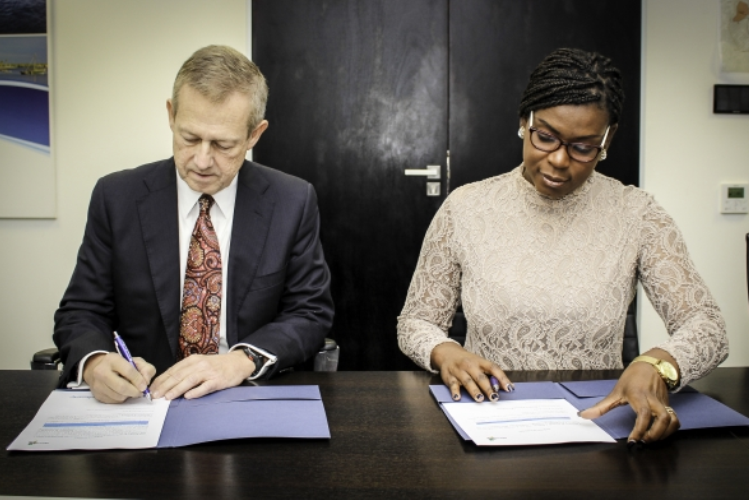
For his part,
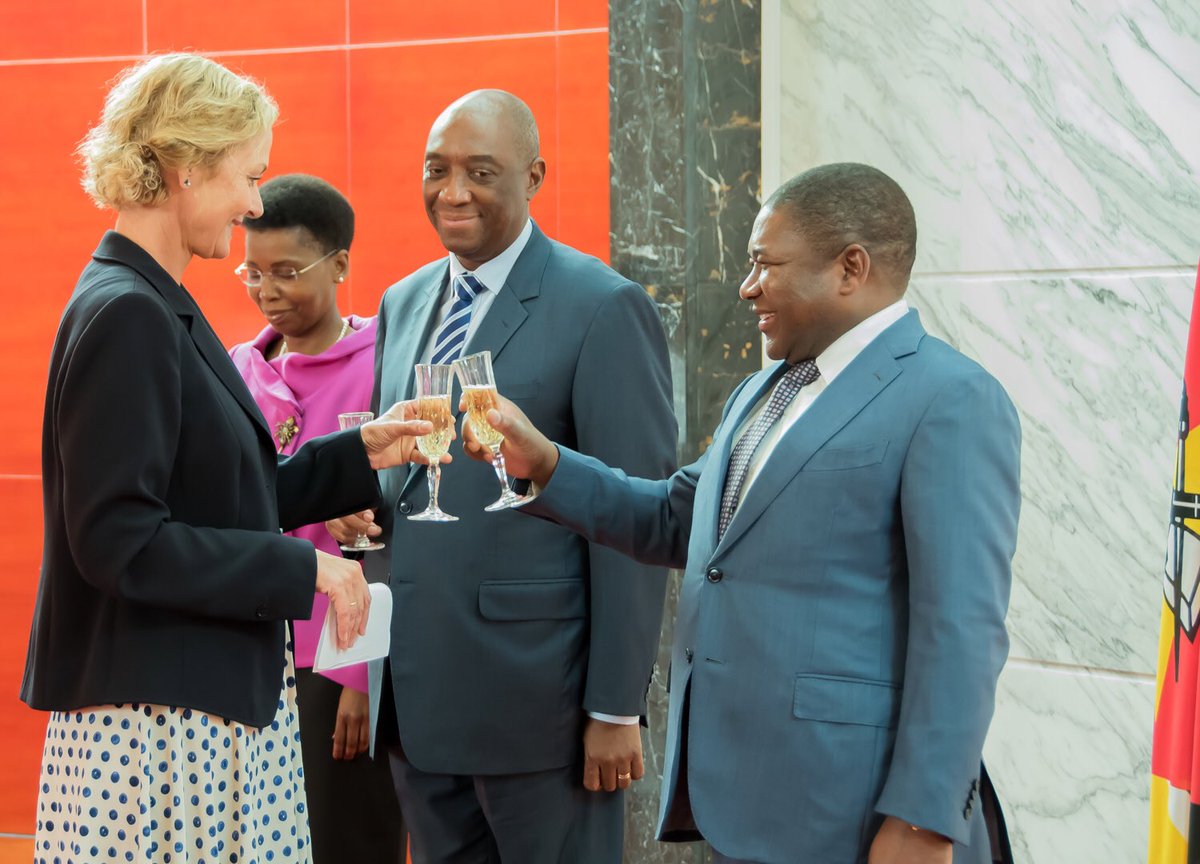
the Russian ambassador to Mozambique, Andrey Kemarsky, praised the efforts of
both governments to improve students’ nutritional health and assured that his
country will continue to support the education sector in Mozambique.WFP
representative Karin Manente said that the Memorandum is the culmination of
talks started in 2015 between the governments of Russia, Mozambique and WFP.“The
WFP will continue to work to materialise its desire to see improved of student
enrolment rates in schools, their retention and better passing rates,” said
Manente.For her turn, the National Director of Nutrition and School Health at
the Ministry of Education and Human Development, Arlinda Chaquisse, explained
that the memorandum falls within the initiatives for social protection, seeking
to promote inclusive social development.According to Chaquisse, cited in a
press release received on Tuesday, the gesture of the Russian government is one
of the best initiatives to improve food security and the level of learning for
most vulnerable children.PRONAE is based on local purchases of food products
and supported by three pillars, namely improving the nutritional status and
health of students; food and nutrition education in schools; development of
skills for agro-livestock production.The program also provides for the gradual
coverage of all pre-primary and primary schools, with emphasis on community
participation and nutritional education.
Wednesday, August 2, 2017
Russia funds National School
Police unit suspended of corruption
The
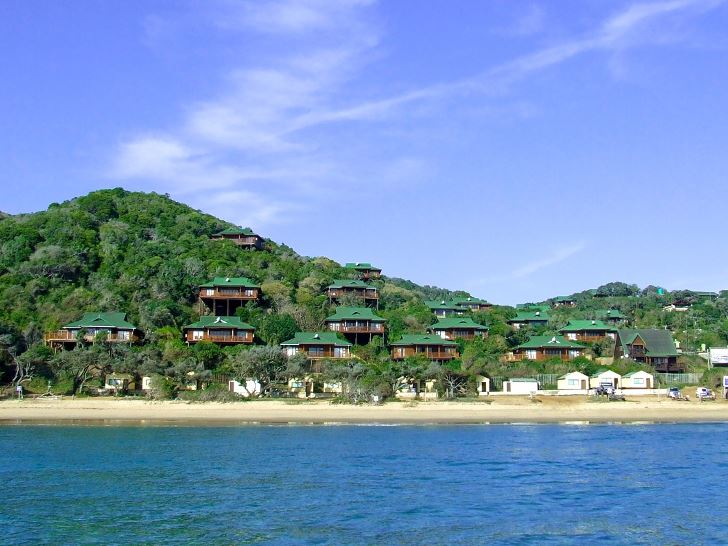
Mozambican police force has suspended all the policemen stationed in the tourist
resort of Ponta do Ouro, in the far south of the country, after local residents
accused them of extorting money from tourists.
It is feared
that corrupt behaviour by the police may be one reason for a decline of tourism
in Ponta do Ouro. This area borders the South African province of
Kwazulu-Natal, and tourists from South Africa are key to the local economy. Speaking on
Tuesday at the weekly police press briefing in Maputo, the spokesperson for the
General Command of the police, Claudio Langa, said “The Command has decided to
remove the entire police unit stationed in Ponta de Ouro until the truth of the
complaints raised by the public is established. Meanwhile, another unit will be
placed there”.
Langa
explained that the incident occurred when the car used by a group of tourists
became stuck in a sandy Ponta de Ouro road. The police saw that the car was
obstructing the road, and demanded to see the driver’s documents. The tourist
presented the legally required documents – but nonetheless, the police demanded
that he accompany them to the station.
At this
stage, the crowd intervened and physically prevented the police from taking the
tourist with them.Langa added
“the public say that the police treat tourists badly. Tourists don’t visit
places where the police mistreat them. When tourists who are badly treated go
back to their home countries, they tell their colleagues that Mozambique is not
a good place for tourism”.
This is far
from the first case in which video evidence has been used against corrupt
police officers. In the recent past, videos shot on cell phones have shown
members of the traffic police extorting money from motorists. When these
policemen can be identified, they have been expelled from the police force.
Tuesday, August 1, 2017
Port of Beira to handle 12 million tons
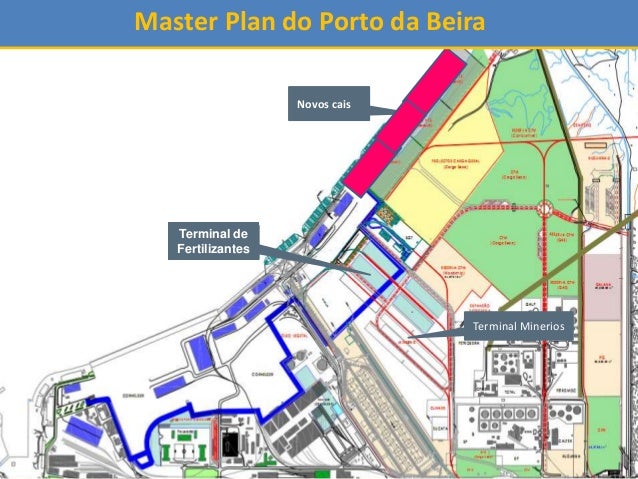
The Port of Beira in
Sofala province expects to handle 12 million metric tons of merchandise this
year for Zimbabwe, Zambia, Malawi and the Democratic Republic of Congo,
Mozambique’s hinterland countries. Goods transited included
fertilisers, agricultural products and liquid fuels, Minister of Transport and
Communications Carlos Mesquita noted yesterday in Beira when speaking to
reporters after landing at Beira International Airport to attend the meeting of
SADC transport ministers responsible for the Beira and North-South corridors.
Radio Mozambique quotes
Minister Mesquita as saying that he would evaluate investments at the Port of
Beira, and that some agreements aimed at boosting development in the region
would be signed.Is the debt illegitimate?
Budget support donors, the World Bank and
Japan have all said recently that the Kroll forensic audit of the $2 bn secret
debt was insufficient to allow a resumption of direct funding to the
government. This suggests the squeeze on government spending will continue for
at least another year, which could have an impact on municipal elections in
October 2018. The government is already surviving by not paying its bills and
through domestic borrowing, and the World Bank in its Mozambique Economic
Update issued earlier this month noted that government was recently unable to
sell bonds even at an interest rate of 28.3%. The World Bank has been one of
the biggest providers of budget support and in March Bank country
representative Mark Lundell said he hoped budget support could be resumed this
year. But on 24 July Bank Executive Director Andrew Bvumbe dashed any such
hopes. On a visit to Maputo he stressed that budget support could not be
resumed without a restructuring of the debt, including the $2 bn secret debt,
and agreement on an IMF programme, which in turn requires filling the
information gaps left by Kroll. (Savana 28 July, Lusa 25 July).
“The auditors were however denied full
cooperation from all institutions (national and international)” noted a report
accepted last week by the Group of 14 (G14) budget support donors. “Despite
being refused essential information, the summary suggests major misconduct from
national and international parties.” The G14 demanded “publication of the full
report and additional information to fill the major gaps”, as well as
“accountability” and fiscal and governance reforms. (Savana 28 July) So no
budget support soon. Japan has cut off all new lending to Mozambique, Yamashita
Chigiru, the representative of the Japanese International Cooperation Agency
(JICA), told O Pais (20 July) in Tokyo. He said it was necessary not only to
clarity the secret debts, but to ensure that such a situation cannot be
repeated; until then, “it is not appropriate to give loans to Mozambique.” Although
the World Bank continues to approve new projects not involving direct funding
of the government budget, Japan has stopped all new lending although it will
continue with projects already under way. In a statement 24 July Minister of
Economy and Finance, Adriano Maleiane, accepted that there would be no IMF
programme this year, but said there was the possibility of a program in 2018.
The report on the summary of the Kroll audit
which was accepted by the G14 group of budget support donors raises a series of
questions. It is unhappy with the summary, which did not include the Terms of
Reference (ToR) of the audit, and notes that “the lack of the ToR impedes a
proper evaluation of the report.” It says the full report should be published
by the end of September, but points to the “major gaps” in information. The
points in the Kroll summary it highlights include the lack of any viability or
value for money assessments and high fees of “about 10% of the total loan”. It
notes “Kroll concludes a potential overcharging of approximately 55% of the net
proceeds of Ematum and Proindicus” noting that “for MAM, Kroll was unable to
evaluate potential overpricing.” Thus overpricing could be as much as $1.2 bn
of the $2 bn loan. No one has been able to identify the use for the $500 mn
eventually put on the state budget from the Ematum loan. Little of the money
entered Mozambique which means the majority of transactions were made outside
the country and thus outside purchasing and financial management systems. And
it stresses that “there are accountability issues that stretch beyond the
borders of Mozambique.”
Reaches significant Mozambique
Anadarko Petroleum Corporation today announced that it had finalised two
agreements with the Government of Mozambique – together known as the “marine
concessions” – which would allow it to design, build and operate the marine
facilities for its LNG project in northern Mozambique. This follows the
publication of the Mozambican Government Decrees approving those agreements. “This is a key milestone on the path to a final investment decision
(FID) for our initial two-train LNG project,” said Mitch Ingram, Anadarko
Executive Vice President, Global LNG. “It marks the completion of the core
components of the Legal and Contractual Framework with the Government. We will
now look ahead with our plans to begin resettlement, which will enable the
construction of the LNG plant. In addition, we continue to make good progress
with our efforts to secure long-term LNG Sales and Purchase Agreements (SPAs)
with premier buyers, and we will intensify our work to put in place the
necessary financing for the project. We expect to take FID once the SPAs and
financing are in place.”
Anadarko is developing Mozambique’s first onshore LNG plant consisting
of two initial LNG trains with a total capacity of 12 million tonnes per annum
(MTPA) to support the Golfinho/Atum field located entirely within Offshore Area
1.
Anadarko operates Offshore Area 1 with a 26.5-percent working interest. Co-venturers include
Empresa Nacional de Hidrocarbonetos E.P. (ENH) (15 percent), Mitsui E&P
Mozambique Area1 Ltd. (20 percent), ONGC Videsh
Ltd. (16 percent), Bharat PetroResources Ltd. (10 percent), PTT Exploration
& Production Plc (8.5 percent), and Oil India Ltd. (4 percent).
Anadarko Petroleum Corporation’s mission is to deliver a competitive and
sustainable rate of return to shareholders by exploring for, acquiring and
developing oil and natural gas resources vital to the world’s health and
welfare. As of year-end 2016, the company had approximately 1.72 billion
barrels-equivalent of proved reserves, making it one of the world’s largest
independent exploration and production companies.
This news release contains forward-looking
statements within the meaning of Section 27A of the Securities Act of 1933 and
Section 21E of the Securities Exchange Act of 1934. Anadarko believes that its
expectations are based on reasonable assumptions. No assurance, however, can be
given that such expectations will prove to have been correct. A number of
factors could cause actual results to differ materially from the projections,
anticipated results or other expectations expressed in this news release,
including Anadarko’s ability to successfully plan, secure additional government
approvals, enter into long-term sales contracts, finance, build, and operate
the necessary infrastructure and LNG park in Mozambique. See “Risk Factors” in
the company’s 2016 Annual Report on Form 10-K, Quarterly Reports on Form 10-Q
and other public filings and press releases. Anadarko undertakes no obligation
to publicly update or revise any forward-looking statements.
Let Justice do its job, urges Nyusi
Mozambican President Filipe Nyusi on Friday
declared that the bodies of the administration of justice must be allowed to do
their job in prosecuting anyone responsible for criminal activities in the
scandal of the country’s “hidden debts”.
Speaking in his capacity as President of the
ruling Frelimo Party, at the end of a meeting of the Party’s Central Committee
in Maputo, Nyusi said that now is the time for the Attorney-General’s Office to
work on the results from the independent audit which showed “there were
irregularities that might indicate crimes” in the contracting of the debts.
The IMF made it clear that an international,
independent audit of the three companies was a basic condition for resuming
normal relations. The PGR thus hired Kroll Associates, regarded as the world’s
foremost forensic auditing company, to undertake the audit. The PGR published
the executive summary of the audit report in June, in which Kroll protested
that it had not received full cooperation from the companies. The information
they provided was incomplete, and thus failed to give a complete picture of the
debts. To make matters worse, Antonio do Rosario, the agent of the State
Security and Intelligence Service (SISE), who is the chairperson of the three
companies, in a message widely reproduced on social media, boasted that he had
obstructed the audit and even expelled the Kroll auditors from his office. Since
Kroll as working for the PGR, Rosario’s actions clearly constitute the crime of
obstruction of justice. The failure to cooperate with the audit clearly angered
the IMF, which has demanded publication of the full Kroll report, and shows no
sign of agreeing to a speedy resumption of its programme with Mozambique.
But even the incomplete audit drew damning
conclusions. Kroll compared the prices on the invoices of assets purchased,
such as Ematum’s fishing boats, and the patrol vessels of Proindicus, with an
independent valuation and found a discrepancy of 713 million dollars. It was
also impossible to account for 500 million dollars of the Ematum loan
supposedly used for military purposes. As for the guarantees for the loans,
given by the Guebuza government, it was clear, even before Kroll was hired,
that these were illegal. They smashed through the ceilings on loan guarantees
fixed in the 2013 and 2014 budget loans. They were also unconstitutional, since
a clause in the Mozambican constitution establishes that only the country’s
parliament, the Assembly of the Republic, can authorise such debts.
“As we always said”, Nyusi told the Central
Committee, “it is in the interests of the government and of the entire
Mozambican people, that the investigations clarify the contours of this case,
which involves national institutions, and international suppliers and banks”. He
pledged that the government will continue to cooperate with the PGR in implementing
the recommendations from the Kroll report. The government would not make any
“pre-judgment”, he promised, since that would “run the risk of usurping powers
that belong to the judiciary”.
“International experiences have shown that
cases of this kind have required time for investigation”, added Nyusi. “The
government will continue to provide its support in order to contribute to
greater speed in this process”. He added that the government is drawing up a
Plan of Action “intended to strengthen the mechanisms for managing the public
debt, and boosting transparency in managing public assets”. Nyusi stressed that
the country’s agenda should not be reduced just to clearing up the debt
scandal, and so he once again urged Mozambicans to work for increases in production
and productivity, in order to advance the overall development of Mozambique.
Introduce environment friendly fuel
National fuel authorities confirmed in Maputo on Monday that Mozambique
will introduce fuel with low sulfur content this September complying with the
recommendations from the United Nations Agency for Environment.The National
Director of Hydrocarbon and Fuel, Moises Paulino said that this move is part of
the harmonisation of fuel specifications to be used with low potential to harm
the environment, reports the local media.
“The introduction of fuel with low sulfur content was initially
established in June, but it did not happen because at that time the country
experienced problems in its system of fuel supply so the government decided to
postpone the deadline,” said Paulino. Mozambique has been planning to introduce
environment friendly fuel since last year and from this September it will
gradually introduce to national consumers fuel with 50 ppm (parts per million)
to replace the 500 ppm kind drivers are using in their vehicles presently. According
to the national director, Mozambique will also abandon the type of gasoline it
is using from 93 octanes to 95 octanes.With this move Mozambique will not only
contribute for environment protection but also extending the lasting period of
vehicles driven by its citizens.
On the other hand, Mozambique is slowly introducing alternatives to the
consumption of fuel in the country, promoting the conversion of vehicles to use
gas which is already produced in the country and few stations are already
functional in the capital Maputo.In June, when the supplying system failed few
cities were restricted from accessing fuel creating a scenario of speculation,
and disrupting the normal business operation. The experience informed the
authorities again the need to accelerate the use of alternative fuel in the
country.
Monday, July 24, 2017
London court case suggests Mozambique
A recent court
case in London on Ukraine debt raised issues very similar to those of the
secret Mozambican debt, and suggest that Mozambique could make the case that at
least part of the debt is illegitimate and should not be repaid. The ruling was
made in the High Court on 29 March by Sir William Blair, brother of former
prime minister Tony Blair. It is extremely complex and the full text of the
ruling is on https://www.judiciary.gov.uk/judgments/law-debenture-v-ukraine/.
The case involves Ukraine's refusal to pay a $3 bn Eurobond organised by the
Russian bank VTB, in which Russia bought all the bonds. The bonds, as with
Mozambique, are covered by English law. In an identical situation to
Mozambique, Ukraine argued that the Finance Minister agreed the loan without it
being approved by parliament as required by the constitution. Mr Justice Blair
noted that there are no precedents and this seems to be the first case of its kind.
Mr Justice Blair ruled against Ukraine, saying that a state has the capacity to
borrow, "the Minister of Finance plainly had usual authority to enter into
the transaction on behalf of Ukraine", and that the lenders had no reason
to suspect that the loan was improper.On the surface, this would seem to go
against a possible Mozambican case.
But Mr Justice Blair also says that
"it is important to emphasise that this result does not imply that a
failure to follow domestic rules as to borrowing by a state such as those
identified in the case of Ukraine is legally irrelevant as a matter of English
law. Such failure may of course be relevant." Furthermore, the decision
was based on the conditions of the Ukraine loan which were explicitly opposite
to those of Mozambique. The loan was to the government and was approved by the
cabinet, there has been many similar loans, the government of Ukraine received
the money and it was included in foreign currency accounts of the Treasury as
posted on its website, interest payments were made, and it was never stated
that the loan was improper.The opposite of these conditions apply to
Mozambique. The loans were to private companies and not the state, were not
approved by the Council of Ministers, none of the money entered Mozambique, it
was never included in any state accounts, and all statements by public
authorities (parliament, Tribunal Administrativo) said the loan was illegal and
unconstitutional. The secrecy of the loan meant that lender had no public
statements to believe in the legality and should have done their own
investigation.Thus, even though Ukraine lost its case, Mozambique could use
this case and Mr Justice Blair's statement that failure to follow domestic
rules is relevant, to make the case that at least the MAM and ProIndicus
syndicated loans are illegitimate and should not be paid.As with the Ukraine
case, it is up to the lender to bring a legal action in London, and it appears
that there is a significant chance that the lenders would lose. This could give
a major boost to Mozambique in any renegotiation of the loans. ( jh)Thursday, July 20, 2017
IMF Staff Concludes Visit to Mozambique
July 19, 2017
End-of-Mission press releases include statements of IMF staff
teams that convey preliminary findings after a visit to a country. The views
expressed in this statement are those of the IMF staff and do not necessarily
represent the views of the IMF’s Executive Board. This mission will not result
in a Board discussion.
· Performance in some sectors of the economy has
improved since the latter part of 2016.
· Growth declined to 3.8 percent in 2016 and is
now projected to edge up to 4.7 percent in 2017.
· Publication of the detailed summary of the
Kroll audit report is welcomed; more needs to be done to fill the information
gaps on the use of loan proceeds.
An
International Monetary Fund (IMF) staff team led by Michel Lazare visited
Mozambique from July 10-19, 2017 to discuss with the authorities measures
needed to follow up on the recent audit report of EMATUM, Proindicus, and MAM
public sector companies. The team also assessed recent economic developments
and discussed monetary and fiscal policies in the context of the 2018 budget.
At
the end of the visit, Mr. Lazare issued the following statement:
“Performance
in some sectors of the economy has improved since the latter part of 2016. The
decisive October 2016 monetary policy tightening helped rebalance the foreign
exchange market and resulted in the metical appreciating by about 30 percent
vis-à-vis the US dollar since end-September 2016. This monetary stance
contributed also to a decline in inflation from a year-on-year peak of 26
percent in November 2016 to about 18 percent in June, despite a large increase
in fuel prices in March. Moreover, higher international coal prices and a
marked increase in coal export volumes helped narrow the trade and current
account deficits of the balance of payments, supporting a large accumulation of
international reserves, which at end-June covered about 6 months of
non-megaproject imports. On the fiscal front, the government took important
steps by removing wheat and fuel subsidies and reinstating the old automatic
fuel price mechanism in March.
“However,
the overall outlook remains challenging. Growth declined to 3.8 percent in 2016
and is now projected to edge up to 4.7 percent in 2017, mainly on account of a
surge in coal production and exports. Inflation remains elevated but is
expected to decline further. Despite budget cuts in investment and in the
purchase of goods and services, increased spending on wages and salaries
continues to put pressure on the budget, contributing to a large accumulation
of domestic arrears. Total public debt, mostly denominated in foreign currency,
remains in distress and the government missed external debt payments.
“Macroeconomic
policy discussions centered on the urgent need to further consolidate public
finances. The team emphasized that a strong commitment to fiscal adjustment is
an essential element to ensure policy sustainability, foster a decline in
inflation and interest rates, limit further increases in public debt, while at
the same time facilitate debt restructuring. The team stressed that the 2018
budget should decisively reduce the fiscal deficit. It should focus on
eliminating tax exemptions (including for VAT), containing the expansion of the
wage bill, and prioritizing the implementation of only the most critical public
investments while avoiding the further accumulation of arrears. Protecting
critical social programs and reinforcing the social safety net should cushion
the impact of these measures on the most vulnerable segments of the population.
Urgent action is also needed to strengthen the financial position of
loss-making companies and limit the fiscal risks they represent.
“On
the monetary side, the team welcomed the recent introduction of the new
monetary policy regime centering on the use of a new policy rate (MIMO) as the
central bank’s main instrument of monetary policy. The team acknowledged the
strong commitment of the central bank to reduce inflation. To address financial
sector vulnerabilities, the team urged the central bank to remain vigilant to
risks, ensure adequate liquidity provision to the economy, and continue to step
up supervision and enforcement of prudential regulations.
“The
team welcomed the publication of the detailed summary of the Kroll audit report
by the Public Prosecutor’s Office as an important step towards greater
transparency regarding the borrowing undertaken by the Ematum, Proindicus, and
MAM public companies. However, as highlighted in a June 24 press statement 17/243, while the report
summary provides useful information on how the loans were contracted and on
assets purchased by the companies, critical information gaps remain unaddressed
regarding the use of loans proceeds. The team urged the government to take
steps to fill the information gaps and to enhance its action plan to strengthen
transparency, improve governance, and ensure accountability.
“The
team met with Prime Minister Carlos do Rosario, Minister of the Economy and
Finance Adriano Maleiane, Bank of Mozambique Governor Rogerio Zandamela, Public
Prosecutor Beatriz Buchili, senior government officials, representatives from
the Parliament, private sector, and the donor community.
“The
team thanks the authorities for their continued hospitality.”
IMF Communications Department
Wednesday, July 19, 2017
Optimistic prediction for 2018
Standard Bank's chief economist in Maputo,
Fausio Mussa, in a 4 July presentation, predicted that the Metical will remain
at MT 60 = $1 this year but improve to MT 50 = $1 by the end of next year.
Inflation will average 18.3% this year but fall to 11.9% in 2018 - still well
above 2012-5 average of 3.3%. Mussa argued that "monetary policy
tightening was severe enough" to restore macro-economic stability in
Mozambique, but at a price of a sharp cut in imports (from $10.6 bn In 2015 to
$8.0 bn in 2016) and a "collapse in economic activity not always reflected
in GDP statistics". He hopes for "a private sector led recovery but
prospects [are] highly contingent to progress in natural gas" and on an
IMF programme to improve confidence and release increased donor assistance -
which, with IMF and donor disappointment over obstruction of the Kroll report,
now seems unlikely. The drop In donor grants is dramatic, to one
fifth the level of five years ago - aid grants were $1 bn in 2013 but are
forecast to fall to just $216 mn this year. The gap has been filled by
borrowing, with foreign debt nearly doubled from $5.8 bn in
2013 to a forecast $10.8 bn this year. (Detailed graphs are in the attached pdf
version of this newsletter.)
Monday, July 17, 2017
IMF wants to replace Mozambican justice
One of the
factors that will make it difficult to negotiate between Maputo and that
Bretton Woods international financial institution is that Kroll's unconvincing
report on so-called "hidden debts". Norway's
ambassador to Maputo, Anne Lene Dale, says the ongoing negotiations between the
International Monetary Fund (IMF) and the Mozambican government will be
"very difficult", contrary to what many may imagine.
"I think
the negotiations between Mozambique and the IMF will be very difficult. The IMF
will demand the reform of State structures, an important factor in clarifying
the relationship between the state and the private sector, "said the
diplomat, adding that the negotiation process between the parties will be
crucial for Other donors, especially on the issue of budget support. Emphasizing
that his country (Norway) will continue to maintain close contact with other
donors to discuss the implementation of Kroll's report on the debts of EMAUMUM,
Proindicus and Mozambic Asset Management (MAM). Two billion US dollars.
It should be
noted that the front-to-front between the Executive of Filipe Nyusi and the IMF
has the expected outcome for this Wednesday (19 July).One of the
factors that will make negotiations between Maputo and Bretton Woods an
international financial institution difficult is that Kroll's little-known
report on so-called "hidden debts" has found that many more billions
of US dollars, Americans also in loans will have disappeared, but even worse is
that the subject is kept secret.According to
the conclusion of the 57-page summary of the Kroll report on the biggest
financial scandal in the history of Mozambique, it points out that the illegal
loans taken in the last term of the Government of Armando Guebuza (2009 to
2014) constitute 20% Of the country's total lending, which is currently at more
than 110% of gross domestic product (GDP).
Independent
international auditing was one of the calls of the International Monetary Fund
to resume cooperation with the Government of Mozambique.The same
applies to other donors who have frozen their direct support of the Mozambican
State Budget (OE) since April 2016, following the boom in the country's public
debt scandal.
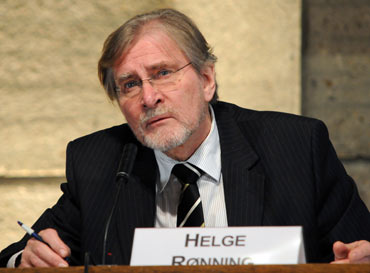
But Helge
Ronning, a media expert and professor at the University of Oslo in Norway, says
the Kroll-led audience will not be enough to convince donors because it has not
been able to collect a range of key information. Ronning, who has been on a tour
of Mozambique between 1996 and 1998 and 2004/6, says that Kroll's report is
"disturbing" because he does not understand how one of the most
capable and reputed companies in the field of audi ¬toria could not get to the
bottom of who did what? And what was actually done with the money?
In his turn,
the director of the Public Integrity Center (CIP), Adriano Nuvunga, believes
that the current President, Filipe Nyusi, "will not risk much" in
persecuting those responsible for these mega-loans, even if What you want to
do. (Edson Arante)
Friday, July 14, 2017
Anadarko supports School Games
US oil giant
Anadarko is to spend about 1.5 million meticais [around US$24,863 at current
exchange rates] supporting the 13th Festival of School Games, which starts
tomorrow, Friday, in Xai-Xai city, Gaza province.A statement from the Ministry
of Youth and Sports says that the agreement formalising the support was signed
in Maputo by the Deputy Minister of Youth and Sports, Ana Flávia Azinheira, and
by the Director of Anadarko, in Mozambique, John Bretz.Speaking at the time,
the Deputy Minister Azinheira stressed the importance of school games, which
this year will take place under the motto “School Sports, Conserving Nature”,
combining the search for talent and the environmental protection agenda.The
event would also help athletes prepare for the the Community of
Portuguese-speaking Countries (CPLP) games, she added.“This support will help
us achieve our main goal, which is to bring value to school games. We want to
identify talented individuals and refer them to a training programme,”
Azinheira said.
According to the deputy minister, the agreement signed with
Anadarko is the beginning of a partnership that could be extended to other
institutions.“We are sure we will find more partners, because this is a project
all companies can identify with because it involves society, children and
communities”, she noted, adding that the games would also serve as an
opportunity to spread an anti-poaching message.Anadarko Mozambique director
John Bretz said that the support was part of the company’s efforts to contribute
to sustainable development in Mozambique.“We are proud to support this
initiative, which enhances Mozambican sports and the country, and which
introduces in this edition awareness about the protection of nature, which is
of great importance for the sustainable development of Mozambique and the world,”
Bretz said.“Being aware of its importance, Anadarko has been supporting various
initiatives in the environmental area,” Bretz said, citing as an example the
support given to Gorongosa National Park and the Niassa Reserve.The 2017
edition of the School Sports Games, to be opened by President Nyusi, will
involve students from all provinces of the country competing in various
modalities including football, handball, volleyball, basketball, athletics,
gymnastics and traditional games.Friday, July 7, 2017
SENTENCES OF 10 TO 16 YEARS
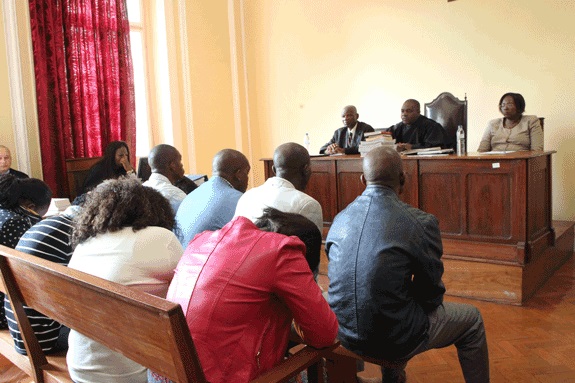
The Maputo City Court on Thursday sentenced eight
of the nine people charged with stealing 36 million meticais (about 1.2 million
US dollars, at the exchange rate of the time) from the Army Command, between
2010 and 2015, to prison terms of between 10 and 16 years.
They must also compensate the state to the tune of
40 millon meticais.
Judge Salomao Manhica handed down the longest jail
terms, 16 years, to Ernesto Rufino and Abdul Ismael. Rufino and Ismael were the
key figures in the theft. They worked in the wages sector of the Army Command.
They put the names of friends and relatives on the wages sheets so that every
month money to which they were not entitled would be deposited in their
accounts. Rufino and Ismael used the disreputable defence
that they were only carrying out orders. They claimed the corrupt scheme had
been designed by the immediate superior, Alberto Martinho, who kept 60 per cent
of the stolen money for himself.
But Martinho died in 2014, and the corrupt scheme
continued after that date. In any case, army officers have the right and the
duty not to obey illegal orders given by their superiors.
Guilhermina Pedro and Hussene Ismael (the brother
of Abdul Ismael) were sentenced to 15 years, Anibal Joaquim and Monica Simiao
to 11 years, Sonia Cossa to 11 years and six months, and Elsa Antonio to ten
years.These were mostly relatives and lovers of Rufino and Ismael who allowed
the stolen money to be deposited in their accounts. Their defence was that they
did not know where the money that mysteriously appeared in their accounts had
come from. The prosecution regarded this as no justification at all – for there
is nothing normal about citizens handing over control of their personal bank
accounts, and their bank credit or debit cards, to others.The court acquitted
one of the accused, Sara Agostinho, because there was no convincing evidence
that she had personally benefitted from the stolen money.
MALIANO DETAINED WITH 64 THOUSAND USD
A Malian national was detained Thursday at Maputo
International Airport, when he planned to illegally board 64,000 US dollars,
bound for Bangkok, the capital of Thailand.The value, not stated to the
competent authorities, was hidden in the middle of his luggage.According to
Stélio Langa, head of the police station at Maputo International Airport,
quoted by "Notícias" today, the citizen will be investigated to
ascertain the legitimacy and provenance of the money, because there was no
statement about it.The individual, known by the surname Saka, is a trader and
has lived in Maputo for more than five years.He was barred from traveling until
the outcome of the investigations. Before the authorities, he explained that he
was going to Bangkok to shop and should climb Addis Ababa, Ethiopia.
Subscribe to:
Posts (Atom)