Thursday, February 5, 2015

Mambas recruit Germans to attack Uganda

The national coach, John Chissano, Mozambique expects to have three players born in Germany to the tie with Uganda, whose first leg will be played on the afternoon of February 21 this year in Maputo. The game has for the first round of access to the African Games Congo-2015.O Afrin field, in Machava, will be the venue of the first leg of the first round of access to the African Games Congo-2015. The second leg will be held two weeks later, Uganda. The winner of this contest will face Ghana, the last step to enter the JA September and if you qualify, fight for a space for access to the 2016 Olympic Games.For these games, the coach wants to rely on all Mozambicans players to act abroad, three of which play in Germany, particularly Ronny Marcos, Hamburg, Jeffrey (BSV) and Gelício Banze (Dynamo Dresden).
- I wish I could count on these players, especially those playing in Germany, expressed João Chissano. Continuing his speech, the coach said that they do not know the Mozambican reality. This is an opportunity to begin to acclimatise themselves. Know the country and our habits, for they were born and raised in Germany, expressed the técnico.Além these players, who are children of Mozambican emigrants, hopes to have Clésio Baúque (Benfica of Portugal), Faisal Bangal (Atalanta Italy), Witti (Nacional da Madeira, Portugal) and Edson Almeida (Union of Madeira, Portugal). However, because the February 21 date is not FIFA, João Chissano fears be without such the players, but also expect some difficulties to form a group capable of facing the round smoothly, since operating in Mozambique not are competing and playing outside rely on the goodwill of the clubs they represent.
- It will be a very difficult round. We will have to work to take solutions to present a strong team. Players operating in Mozambique can make a round without having made a single game. The playing outside have pace, but you must wait for the understanding of their clubs, Chissano said.


GORONGOSA ANTI-POACHING

The Anti-Poaching Unit of the Gorongosa National Park in central Mozambique in 2014 seized about 180 homemade guns from local poachers, and removed over 3,300 snares and traps. The Administrator of the park, Mateus Mutemba, declared on Thursday, when signing an anti-poaching protocol with the Portuguese Entreposto Group, that he is worried by the fact that an industry manufacturing these lethal artefacts is still thriving in the area surrounding the park. “Year after year we register growth in the number of poaching incidents”, he said. “Last year we arrested about 250 poachers. There is a recurrent trend to manufacture these weapons and use them in poaching”.Unlike what is happening in the Niassa Reserve in the far north, so far there is no record of military firearms being used to decimate wild life in Gorongosa. “But we don’t make a great distinction between weapons of war and home-made guns”, said Mutemba, “because they all have the same purpose, which is to kill our animals, and to threaten the life of our wardens while they are doing their job of protecting the Park”. Home-made guns could be very powerful, he noted. Last year one of the locally manufactured firearms which Park wardens had seized was powerful enough to bring down an elephant. In 2014, the park lost three of its elephants to poachers.
At the ceremony, the Entreposto Group donated 125,000 US dollars to the Anti-Poaching Unit. The protocol covers a five year period, with Entreposto disbursing 5,000 dollars per year.The aim of the protocol is to increase the effectiveness of patrols, covering even the most remote areas in the park, and to ensure rapid intervention in neutralising poachers. Other goals are to prevent illegal logging within the park, to avoid conflict between wild animals and communities (some of whom are still living inside the park boundaries), to step up the detection and collection of snares, and to make communities aware of the importance of preserving biodiversity.Entreposto Group director Jose Cardoso said the company intended to make a long term contribution to the Anti-Poaching Unit. Among the immediate uses of the money, he said, would be to acquire a patrol boat that can operate on the lakes and waterways of the park, to develop advanced and specialist training programmes for the wardens, and provide them with uniforms, boots and walkie-talkie radios. With the Entreposto money, Mutemba said, “we intend to improve our capacity to confront the poachers. We have a force of 120 men who are protecting the Park day and night. We need to step up their training and improve the equipment they use”. This year, aerial patrols will also be introduced, Mutemba added. The Park has acquired a light aircraft, giving it the capacity to spot illegal activity from the air.The Gorongosa National Park covers an area of about 4,000 square kilometres in Sofala province, and is located at the southern end of the Great African Rift Valley.


Tuesday, February 3, 2015

The possible democracy?

Our political system lacks some retouching. Dhlakama is right when he speaks of the islands, but is wrong to talk of dividing the country. This country is indivisible. Not a politician who will divide this country to accommodate your wishes. Where understand Dhlakama?
I understand and give reason to Dhlakama when he speaks of the autonomous regions. Again understand and give reason to Dhlakama. But are not autonomous regions that Renamo claims. Renamo claim rule where he won. Is wrong? For me it has. If you do not want federation, then we must move towards a situation where the governors are elected. What does it mean? It means that the opposition will govern where he won, or will elect their governors, being thus its provincial government.
And since there is a halfway because Frelimo already set a precedent by creating provincial assemblies. Now the Provincial Assemblies can only make sense when provincial governments are elected as members of the Provincial Assemblies. We can not have an elected Provincial Assembly which oversees a named provincial government. If we have the municipal elected assemblies, with binding decisions, overseeing the elected municipal governments and have the Assembly of the Republic elected, also with binding decisions, which oversees the Central Government Elected, we also have a Provincial Assembly elected, with binding decisions, the oversee the elected provincial government. At this time, the provincial assemblies, though elected, their decisions are not only not binding, but also are organs with a null action.Second, there are overlapping functions, because the provincial governments are overseen by the Assembly of Deputies of the Republic, elected in these constituencies and are further monitored by the Provincial Assemblies, the latter with non-binding decisions.If governors were elected at this time, Renamo would be the rule in the province where he won and which holds the majority in the provincial assemblies. Frelimo and MDM would be opposition. Similarly, Renamo and the MDM would be opposition where Frelimo won. That is, Frelimo would form the central government under the most votes obtained, but the provincial governments would share with Renamo.(L.Mabunda in f.book)

President Nyusse not imposes conditions to Dhlakama

Mozambican President Filipe Nyusi declared in Maputo on Tuesday that he is willing to speak with Afonso Dhlakama, leader of the former rebel movement Renamo, following the latter’s threats to set up a separatist “Republic of Central and Northern Mozambique”.Nyusi was speaking to reporters after laying a wreath at the Monument to the Mozambican Heroes, in honour of Heroes’ Day, which commemorates the assassination on 3 February 1969 of Eduardo Mondlane, the founder and first president of the Mozambique Liberation Front (FRELIMO), generally regarded as the architect of Mozambican national identity. Dhlakama has made a string of inflammatory speeches promising to carve out “within days” a separate republic in six northern and central provinces, of which he would be president. Nyusi said that the only weapon the government would use against these belligerent declarations is dialogue. “I am ready, right now I am prepared”, he said, “because the people must be certain that we are going to live in peace. I have given a sign of my willingness to talk – right now, if possible. Only by talking are we going to reach an understanding”.“Through conversation, through dialogue, we can reach conclusion about what we think is useful for Mozambicans”, he added. “This is the great weapon we are going to use, dialogue and speaking among Mozambicans”.Nyusi declared that he would respect the Constitution, since he had sworn to defend the Constitution when he took the oath of office in January.As he had first stressed in his inauguration speech, he insisted that his governance would be one of inclusion, by which he meant giving opportunities to all Mozambicans to participate in the creation and distribution of wealth.Nyusi called on all Mozambicans to value the legacy of Eduardo Mondlane and all the other heroes who had sacrificed their lives for an independent and sovereign Mozambique. “I would like to take advantage of this moment to call for peace, this peace which makes us live and develop Mozambique”, he said. “Our country belongs to all Mozambicans and so, in this moment of reflection, it is very important that we find each other and be together”. Nyusi’s predecessor, Armando Guebuza, did not mince his words when reporters asked him what he thought of Dhlakama’s promises of a “Republic of the Centre and North” – he described them as “disastrous”. “When the entire people is speaking about construction, when the people are trying to solve the problems of those who are suffering because of natural disasters, he (Dhlakama) is persisting with a destructive discourse”, said Guebuza. “He doesn’t want to make a contribution for our country to live in peace”.

In contrast to Dhlakama’s call for separatism, Guebuza stressed that Mozambique is “one and indivisible”, with no place for speeches that encourage violence and instability.The chairperson of the Mozambican parliament, the Assembly of the Republic, Veronica Macamo, told reporters that despite the Renamo boycott ordered by Dhlakama, the Assembly was functioning.The deputies elected from Frelimo and from the second opposition party, the Mozambique Democratic Movement (MDM), had taken their seats and so there was no problem of meeting the quorum of half the elected deputies plus one (126).“The Assembly has the majority necessary to function”, said Macamo. “We must just urge our colleagues from Renamo to take their seats. They made promises to the Mozambican people and they can only keep those promises if they are inside the Assembly”. Members of Frelimo and of the MDM attended the ceremony and paid tribute to Mondlane and other fallen heroes, but, as usual with commemorative dates, Renamo boycotted the event.

Thursday, December 18, 2014

TETE PROVINCE DECLARED FREE OF LAND MINES

The western Mozambican province of Tete on Wednesday was formally declared free of land lines.According to Alberto Augusto, director of the National Demining Institute (IND), speaking at a ceremony in Chitima, in Cahora Bassa district, during the demining operations, 74,915 anti-personnel mines were destroyed, and about five million square metres of land (equivalent to 467 football fields) was released for productive use.The operations also discovered three anti-tank mines, 389 other items of unexploded ordnance, and 134 small caliber munitions.In its National Mine Action Plan for 2008-2014, the IND described Tete as the most mined province in the country. The mines uncovered in Tete account for about 85 per cent of the mines destroyed throughout the country.There were two main areas where the land mines were concentrated – along the 11 kilometre perimeter protecting the Cahora Bassa dam, and along a stretch of 15 kilometres on the border with Zimbabwe. The lengthy and complex demining operations in Tete involved the three main humanitarian mine clearance operators working in Mozambique – Norwegian People’s Aid (NPA), the Halo Trust and Apopo – and more than ten commercial operators.Eight provinces and 123 districts have now been declared free of mines. The mine-free provinces are Maputo, Gaza, Inhambane, Tete, Zambezia, Nampula, Niassa and Cabo Delgado.According to Augusto all that remains to be done is to clear “a few square metres of land where the presence of anti-personnel mines is suspected in five districts in Manica and Sofala provinces”. He expected the work in Manica and Sofala to end in the first quarter of 2015. Mozambique is a party to the Ottawa Convention banning anti-personnel landmines. It ratified the treaty in 1999, and had ten years to completely demine the country. This proved impossible, and so Mozambique sought and was granted a five year extension, to 2014.

MUNICIPAL BUS COMPANY RUNNING AT HEAVY LOSS

Maputo’s publicly owned municipal bus company, EMTPM, made a loss of over 174 million meticais (about 5.5 million US dollars, at current exchange rates) in 2013, according to the company’s report and accounts for that year, published this week.This result was a dramatic shift in fortune, since in 2010 EMTPM had run at a profit of slightly more than 98 million meticais.The main problem faced by the company has been a sharp fall in the number of passengers. In 2012 the company’s buses carried 41.9 million passengers, but in 2013 this figure slumped to 21.4 million, a decline of 49 per cent.EMTPM blames this on the congested Maputo roads, which slow the buses down, so that they made fewer journeys in 2013 than in 2012. The average daily number of journeys fell by 32.7 per cent and the distance travelled by 36.5 per cent.The company has also faced irregular supplies of spare parts, particularly for buses of the Indian mark Tata. This was due both to EMTPM’s financial difficulties and to the failure by some suppliers to meet deadlines. In particular, the company that won the tender to supply tyres, provided them late.56 per cent of the buses are from Tata, and the report describes them as “fragile”. Their constant breakdowns have a severe impact on the company’s productivity. The rest of the operational fleet come from Volkswagen (26 per cent) and from the Chinese company Yutong (18 per cent).At the end of 2013, EMTPM had 349 buses, of which 258 were operational and 89 were off the roads. During the year the company had hoped to recover 45 of the buses that were out of order, but only managed to repair 14 of them. The total number of buses in operation rose slightly – from 256 in 2012 to 258 in 2013.EMTPM does not hold out much hope of recovering the other 89 buses. The report states that repairing them “is not viable, in most cases, due to their advanced state of decay”.


METICAL RESULTS OF DEPRECIATION "PSYCHOLOGICAL EFFECTS" POST - ELECTION

The Governor of the Bank of Mozambique, Ernesto Gove said that this sharp depreciation of the metical, the national currency against the US dollar, the result of several factors including the "psychological" resulting from the post-election aftermath.Speaking today in Maputo, during the year-end toast with representatives of the institutions of the financial system, Gove said that to bring political and social instability elements, the aftermath post - election conveys nervousness and negative expectations."It transmits to the markets, nervousness and negative expectations regarding the maintenance of the pillars supporting macroeconomic stability, leading to some operators anticipate payments of imports, while exporters feed higher earnings expectations in a high depreciation of the currency environment" Gove said.Indeed, according to the governor, the Interbank Foreign Exchange Market data (MCI) for the closure last November show that the US dollar was quoted at 31.22 meticais, "which corresponds to a monthly depreciation, accumulated and annual metical 1 04; 4.24 and 4.31 percent, "respectively.However, the operations of commercial banks with economic operators and the general public is no record of a further depreciation of the metical, "a monthly variation of 3.78 percent and accumulated 13 percent, up to ten current December".'We must all work together to keep our country as a champion of lower inflation in the region and highlighted the stability and world economic growth, "said Ernesto Gove, a clear reference to all stakeholders, including politicians who express opinions that negatively influence the market .

The Bank of Mozambique put in the forex market, by 12 December, a total of 1,114 million dollars, against 615 million in the same period 2013, causing the balance of international reserves to settle at around 2.8 billion dollars ."In terms of gross reserves, this balance can cover about four months of imports of goods and non factor services, while excluding transactions of major projects," said Gove.The governor associated wear the reserves in 2014, with increasing making liquid fuels that the dynamics of the economy demand, including electoral character issues, pressures in anticipation of imports and currency fluctuations arising from "a stronger dollar in international market relative to other assets that are denominated in our international reserves (gold and Euro). "In his speech, Gove said that Mozambique have told, this year, with more - gains of transactions by some dealers who exploit mineral resources with non-resident companies, amounting to 520 million dollars, a sum which "allowed cushion the adverse impact on international reserves. "Even at the level of the external sector, the balance of payments data indicate that, despite the global economic environment present less favorable, with the fall of the main tradable goods prices, Mozambique remains a preferred destination of foreign direct investment, together with the projects to exploit the coal and hydrocarbons.The country received in the first nine months of this year, a flow of capital in the form of foreign direct investment nearly 3,316 million, compared with 4,885 million in 2013, most of which, 52 percent, for the major projects the extractive industry.

That's what Mozambicans ask you.

Sometimes look back and sides helps you navigate. It is clear that things are complicated in Mozambique. Against this were the last elections and the various "pronouncements" of competitors and electoral bodies, is divine-difficult times for the country.The legalistic arguments and constitutional express a cause despair and a graceful exit attempt at a situation that has no consensus.A thank you visit by Afonso Dhlakhama raises or puts very strong questions that cement the belief that the "curious" who come to their rallies are Mozambicans who believe that he and his party won the elections.If a parliament moves a containment strategy based on the financial accommodation and protocol of a leader who repeatedly declared winner, but the electoral bodies refuse to recognize, in the country breathes an air of well-founded suspicions that things can skidding the worst.Who was accustomed to maneuver and to make electoral and political engineering has reason to be worried because it seems that the patience of the "defeated" run out.Reveals the naked eye that Mozambique and its people want change and that this was expressed by their vote.When it was said that without an assembly or handling of elections realization of all conditions would be too complicated for Frelimo to stay in power, some voices of "scholars" were multiplying in "pronouncements" and looking analyzes prove otherwise.Without the strategic assistance of PRM / FIR, it is known and it is believed that even the past municipal elections would have produced different results announced. Without the difficulties of access to polling stations surgically defined and implemented, the city of Maputo Municipal Assembly meet a different costume. Mocuba would have a president of the municipality of another party, and Milange too.Due to the results of these local, it was clear that the party of change in power was a very possible and next question.Renamo, after the end of the last political and military hostilities, it raises up-and showed that she was alive and dynamic. In the ride of your leadership and the experience, organized in record time and took part in the elections in dispute.MDM, galvanized by their local victories, set up his machine and showed that it is a party to take into account the country.Faced with these two opponents weight, Frelimo and the government had to change strategies and devise methods that would ensure their stay in power.That's where we can see it was voted the strategy of mixing methods. With the judiciary under its control, it was easy to refuse outright the opposition claims. With the help of PRM / FIR, tried to take scene nuisance opposition activists. With full participation of STAE, it was possible to delay the opening of the polls and eventually disappear notebooks. To complicate the picture further, district notices are untraceable. The professional and experienced machine STAE failed or was all premeditated?
When repeatedly says that the "procurement" electoral account, some ignore. When we say that it is dangerous to the operating space, some say they are prepared, but in the end it turns out that missed.When it is said that the mass media is skewed and biased to favor the ruling party, this is understood as something of little importance.Mozambicans of all latitudes and political spectrum want peace as ever.But what with playing strategists connected to the ruling party, what usually has been used as a weapon infallible, repeat that Renamo and MDM do not know lose, is not having traction or legs to walk.The use of important figures in national politics, as Joaquim Chissano, striking low blows on an opponent who knows, and that prevented militarily and politically defeated, is symptomatic. This is not to launch "campaigns of terror." "Lawyers of the devil" arise and multiply the national level and in the diaspora. All seek to defend its share, and do not mind the media.Meanwhile, entrepreneurs rulers subscribed in full swing concession agreements and attribute operating licenses to all that is company and project.There is a widespread perception that AEG needs to remain in control at least of their party machine to ensure that your business empire will not collapse. What happened to the acolytes of Joaquim Chissano may well happen to him once out of the picture. The other wards or sensitivities within the Frelimo understand that it is time to unite and defend "nails and claws" its political dominance. That is why even those who were criticized yesterday for not being "gem of Mozambicans" are united in their discursive campaign supported by the media aligned with this agenda.It is felt that the characteristic mediocrity of some leading figures of the regime, in different segments of national life, not resist a transparent competition situation.For some it is the "all or nothing", even praise the opponent every day. Saying "opponent" please, because in their design, it is actually the enemy to beat.There will be enough wisdom and patriotism to circumvent the pitfalls and take the boat to fruition?
There will be calm and coolness to within the competing parties to find a formula that ensures good governance and political stability?

When the PR spokesman trasveste irreducible constitutional, as we have used, there is reason to stay grounded concerned.Mozambique does not need nor in a similar situation to Angola, where José Eduardo dos Santos has remained in power even without the completion of the presidential election that was to rival and opponent Jonas Malheiro Savimbi.AEG does not sleep and certainly that, as astute politician, has all options open and on the table.But as a political and nationalistic should be equating output that guarantees peace.That's what Mozambicans ask you. Ask Joaquim Chissano. Ask Afonso Dhlahkama. Ask Simango.What are Mozambique and Mozambican expect from their leaders. To lead thinking about what people most want and not what you bring more personal benefits.Halting the indecision and prevent political barbarism is in your hands. (N.Nhantumbo)

Tuesday, December 16, 2014

GUEBUZA INAUGURATES NACALA AIRPORT

Mozambican President Armando Guebuza on Saturday officially inaugurated the new international airport in the northern port city of Nacala, costing over 250 million US dollars, and built with the financial support of Brazil.Guebuza declared that the imposing new buildings are yet further proof that “there are people committed to the construction of a prosperous Mozambique, and who oppose those who only know how to make speeches which incite to violence and destruction”. In a clear reference to Afonso Dhlakama, leader of the former rebel movement Renamo, Guebuza said he hoped that those who make such speeches will stop doing so “in order that Mozambique and its people may attain the well-being they long for”. The President stressed that this airport, which can accommodate planes of any size, “shows that the development of Nacala is unstoppable”. The airport, he added, was one of several major investments in Nacala. These include the new coal terminal at Nacala-a-Velha, and the railway connecting it to the Moatize coal basin in Tete province, the expansion of the existing Nacala port, and two new hotels nearing completion.
Guebuza said that, in the almost ten years of his two presidential terms of office, a great deal has been done to build the infrastructures which will form the basis for the accelerated development of Mozambique. Nacala is the fourth major civil aviation investment of the past decade. The others are the complete reconstruction of domestic and international terminals at Maputo airport, the rehabilitation of Pemba airport in the far north, and the transformation of Vilamkulo airport, in Inhambane province, into an international airport, aimed essentially at the tourist trade. The first airline using the new airport is Mozambique’s publicly owned carrier, LAM (Mozambique Airlines). As from last Monday, LAM has been operating the Maputo-Nacala route three times a week. There are also tentative plans to fly from Nacala to Dubai and to the Indian city of Mumbai.During the ceremony, Transport Minister Gabriel Muthisse praised the work Guebuza in transport and communications, which he described as a continuation of the work he had done when he held that ministerial portfolio bretween 1987 and 1994. He stressed Guebuza’s leadership in the construction and rehablitation of rail and port facilities which are “a major lever for the country’s development”.


EU KEEPS MOZAMBICAN AIR COMPANIES ON BANNED LIST

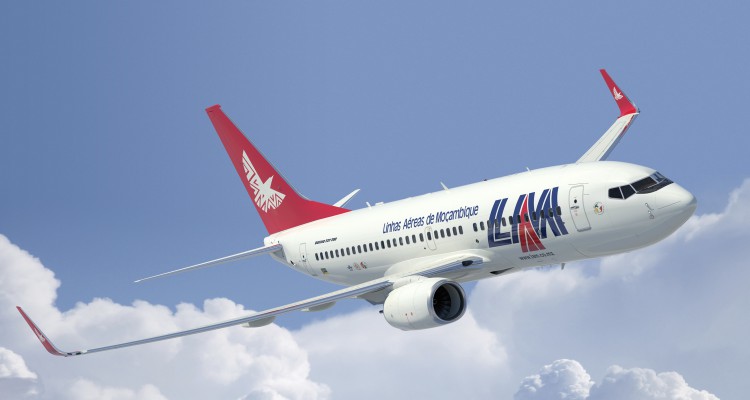
LAM 737-700 ArtworkThe European Commission has kept all Mozambican air companies on its black list of airlines that are not allowed to operate in the air space of the European Union.In a press release issued in Brussels on Thursday, the EU Commissioner for Transport, Violeta Bulc, said that Mozambique was one of several countries were “progress has been made”. “Hopefully this progress can lead to a positive decision in the future”, she said. Mozambique is one of 21 counties whose airlines, with a few exceptions, are completely banned from European air space. The EU says that countries are on the list, either because their airlines “are considered not to be able to respect international aviation safety standards”, or because their civil aviation authorities “are deemed unable to provide the necessary safety oversight as foreseen by international aviation safety rules”.Mozambique was first put on the list in 2011, and the problem has always been, not with the country’s airlines, but with the regulator, the Mozambique Civil Aviation Authority (IACM), which the EU deems does not meet its standards.Asked about the continued ban on Saturday, Transport Minister Gabriel Muthisse was clearly angered by the EU position and declared “I don’t work for the Europeans, I work for the Mozambicans. Our work to improve the airports, to acquire new aircraft, and to upgrade the capacity of our regulatory authority are not for the Europeans”.Cited by the independent daily “O Pais”, he added that the government is not worried by the EU decision since the national carrier, LAM (Mozambique Airlines), has no intention of flying to Europe in the near future.

SOLDIERS CAUGHT SELLING GUN

The Mozambican police on Monday announced the arrests of three members of the armed forces (FADM) who were caught trying to sell an AK-47 assault rifle.According to the spokesperson for the Maputo City Police Command, Orlando Madumane, the incident took place on Sunday in the municipal district of Katembe.The men arrested are a lieutenant and two privates (whose names were not released). They were attempting to sell an AK-47 and two ammunition clips. The police arrested the three after receiving a tip-off.Mudumane said the three men had been in the armed forces for at least two years. He suspected they had stolen the gun from an FADM arsenal.He showed reporters the seized gun, and pledged that the police are doing all in their power to ensure a peaceful festive season in the capital.

DHLAKAMA ACCUSED OF VIOLATING CEASEFIRE

The Mozambican government on Monday accused Afonso Dhlakama, leader of the former rebel movement Renamo, of violating the agreement on cessation of hostilities that he had signed with President Armando Guebuza on 5 September.Speaking at the end of the 89th session of the dialogue between the government and Renamo, the head of the government delegation, Agriculture Minister Jose Pacheco, declared that the rallies Dhlakama has been addressing in central and northern cities constitute incitement to violence and thus violated the terms of the agreement.During these rallies, Dhlakama has repeatedly called for the formation of a “caretaker government” to run the country for the next five years – even though the results of the 15 October general elections have not yet been validated and proclaimed by the Constitutional Council, the country’s highest body in matters of constitutional and electoral law. He has threatened that, if the ruling Frelimo Party rejects his demands, he will form his own government and “make a revolution”.“The agreement is being violated by the Renamo president in his travels to the various provinces in premeditated and repeated incitement to violence, at a time when the competent bodies are still analyzing the election dossiers”, said Pacheco. He accused Dhlakama of trying to usurp the powers of the electoral bodies and “spreading disinformation about the political, economic and social reality of our country”. “We repudiate this behaviour”, he stressed, “and once again we call on the Renamo president to respect the Constitution of the Republic, and to respect the undertakings which he has signed”. Pacheco also said that 20 members of the Renamo militia (referred to delicately as “residual forces”) who had come from the northernmost province of Niassa, were intercepted by the armed forces when they tried to march to the south. He said that Renamo failed to notify the government that it was moving these men. “When a movement of forces is made, notification should be given”, he said. “When no notification is given, it’s a violation of the agreement’. This round of the dialogue failed to break the impasse on disarming Renamo and integrating its “residual forces” into the FADM and the police. 
Once again Renamo refused to deliver the list of names of the people it wishes to see him the army and the police. Pacheco said Renamo was still making integration of its forces dependent on a share-out of senior military and police positions. Renamo is demanding a division of the military leadership between itself and the government, which the government rejected as unthinkable weeks ago. For his part, the head of the Renamo delegation, Saimone Macuiana, denied that Dhlakama had violated the agreement. “He is urging all Mozambicans to be calm”, he claimed – although anyone who watches televised coverage of Dhlakama’s rallies knows that he has threatened to set up a parallel government.He said the 20 armed men mentioned by Pacheco had indeed left Niassa, but had been allowed to continue their journey and were now with Dhlakama in Vilanculo, in the southern province of Inhambane.He also attacked the National Elections Commission (CNE) accusing it of “not presenting the results sheets” (from the elections). He thought the public prosecutor’s office should investigate “to understand how this body is unable to present the results sheets”.In fact, the results sheets were fixed on the doors or walls of the polling stations immediately after the count on the night of 15 October. Copies were given to polling station monitors of the political parties, including Renamo. Other copies of the same results sheets were sent to the district and provincial elections commissions, for tabulating the results at those levels.According to the CNE, the results sheets used to calculate the provincial results are now all stored in a Maputo warehouse, and the keys are in the possession of CNE members appointed by the three main political parties, Frelimo, Renamo and the Mozambique Democratic Movement (MDM).

CONTRACT FOR SALE OF GAS TO EDM

Mozambique’s National Hydrocarbons Company (ENH) will sell two million gigajoules of natural gas a year to the publicly owned electricity company, EDM, which will be used to generate power at the Ressano Garcia thermal power station (CTRG), on the border with South Africa.A contract to this effect was signed in Maputo on Monday by the chairpersons of the two companies, Nelson Ocuane of ENH and Gildo Sibumbe of EDM According to an ENH press release, the contract is for the 2015-2017 period, and is renewable. The release did not disclose how much EDM will pay for the gas.The CTRG, built at a cost of 250 million US dollars, was inaugurated in August, and is 51 per cent owned by EDM and 49 per cent by the South African petro-chemical giant Sasol.It can generate 180 megawatts, which represents 23 per cent of the total energy consumed in the country, and 42 per cent of the power consumed in the southern region (excluding the Mozal aluminium smelter).CTRG ends the power deficit, of about 150 megawatts, in southern Mozambique, and eliminates the need to import power from South Africa, which was costing EDM about 26 million dollars a year.The gas comes from the fields at Pande and Temane in Inhambane province, which are operated by Sasol. EDM is the largest consumer in Mozambique of the Inhambane gas. The gas is already used to generate electricity for the districts in the north of Inhambane, and EDM is described as “a strategic client” for the Maputo and Marracuene Gas Distribution Network, inaugurated by President Armando Guebuza in September, and now in its second phase of implementation. The ENH release declares that the company “is a pioneer in the distribution of natural gas on the Mozambican market and has been committed to increasing the consumption of this energy resource to promote the country’s growth”.